
Everyone blamed AI for the outages. That is not the role it played.
A wave of US tech failures sent the public straight to AI as the culprit, but the technology's actual job inside those systems looked nothing like the accusation, and that gap is the part executives should study.
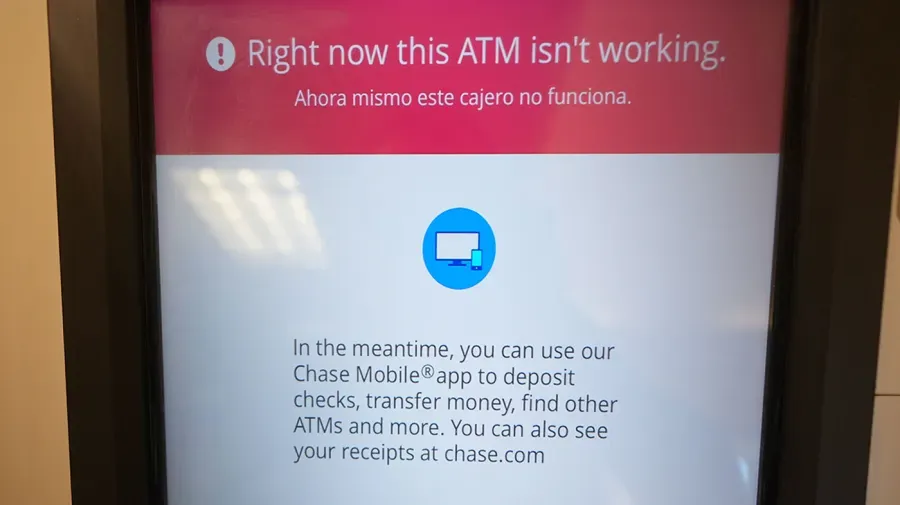
A wave of technology outages and issues across the United States prompted the public to quickly blame AI, even though the technology might not have been used in the way people assumed. For executives running AI in production, the episode is a case study in how fast misattribution hardens into reputation, regulation, and board-level risk before any root cause is confirmed.
When a wave of technology outages and issues rolled across the United States, the public did what the public now does: it pointed at AI. That reflex was fast, loud, and, according to reporting from The Hill, aimed at a target that may not have deserved it. The technology did figure into what went wrong. It just might not have been used in the way most people thought, and that distinction matters far more than the initial finger-pointing suggested.
The gap between "AI was involved" and "AI caused this" is where the real story sits. Blaming AI for a systems failure is intuitive, because the technology now touches code generation, traffic routing, monitoring, and customer support, which makes it a plausible suspect in almost any modern stack. Plausible is not the same as causal. The reporting indicates the public's assumption about how AI figured into the outages did not match what was actually happening inside the systems that failed, and the hedge in that finding is the whole point: the loudest explanation was not the accurate one.
For context on why the reflex is so strong, consider where AI typically lives inside a large technology company. Over the past few years it has been woven into the operational layer, usually in places customers never see. It drafts and reviews code, flags anomalies in server logs, triages support tickets, and helps engineers sort through the flood of alerts that follow any major incident. Historically, when something breaks at scale, attention lands on the newest component in the chain, because novelty is easy to blame and hard to defend. That pattern predates AI by decades. Mainframes, cloud migrations, and third-party vendors have all taken a turn as the default villain of an outage cycle.
That blame economy has real consequences. A public attribution of "AI caused it" travels faster than any postmortem, and it reaches customers, insurers, regulators, and boards before the root cause is confirmed. Companies running critical infrastructure face a version of this every time they ship a new model into production: the reputational cost of a failure is now partly determined by what the public believes about the tooling, not just by what actually broke. The asymmetry is brutal. A correct diagnosis takes weeks. A wrong headline takes minutes.
The more interesting thread is what AI was actually doing. In incident response, the technology is often the thing doing the digging: parsing enormous volumes of telemetry, surfacing signal in the noise, and shortening the window between "something is wrong" and "here is the line that broke." That is unglamorous work, and it does not generate headlines. It also does not fit the narrative that the machines took the system down. When the public reaches for a culprit, it rarely reaches for the tool that helped the engineers find the fault faster.
There is a governance lesson buried here. If the public, and by extension policymakers, default to AI as the cause of every high-profile failure, the pressure to regulate will be aimed at the wrong layer of the stack. Misattribution is not a neutral error. It shapes disclosure rules, audit requirements, and the questions boards ask their technology leaders. Getting the diagnosis right is the precondition for getting the rules right, and the diagnosis is currently being written by whoever posts first.
For executives, the practical takeaway is that the narrative around an outage is now a management problem, not just a communications one. The first hours after a failure are when the story hardens, and the story will harden around whatever is newest and least understood. Teams that can explain, quickly and in plain language, where AI sits in their architecture and where it does not, will spend less time correcting the record and more time fixing the actual fault. That capability is worth building before it is needed, because it cannot be built during an incident.
The broader point is that AI has become the default explanation for technological chaos at exactly the moment it has become the default tool for cleaning that chaos up. Both things are true at once, and the public is currently holding only one of them. The companies that understand the difference, and can articulate it before the next outage, will be the ones whose credibility survives it.
This story's Key Insights and Take-aways are locked.
Create a free account to unlock Executive Actions for one credit.
Register to UnlockAlways free for Executives Club members. Join the Club
More in Technology

Anthropic mathematician claims Claude helped crack the Riemann hypothesis
If the proof holds, AI has toppled math's most famous open problem; if it does not, it is a case study in announcing breakthroughs before anyone verifies them.

AI's $4 Trillion Wipeout Erases Nasdaq's Gains for the Year
A brutal week took roughly $4 trillion off the AI sector and left the Nasdaq flat for the year, and the damage ran the full length of the supply chain.

Anthropic mathematician says AI proved the Riemann hypothesis. Verification will take time.
A single unverified claim from inside Anthropic now sits against more than 160 years of open mathematics, and the gap between asserting a proof and surviving peer review is the entire story.