

Everyone's cashing in on GTA 6 except the people who own Take-Two
A blockbuster game is minting money for everyone in its orbit this week, and Take-Two's shareholders are the ones left watching.
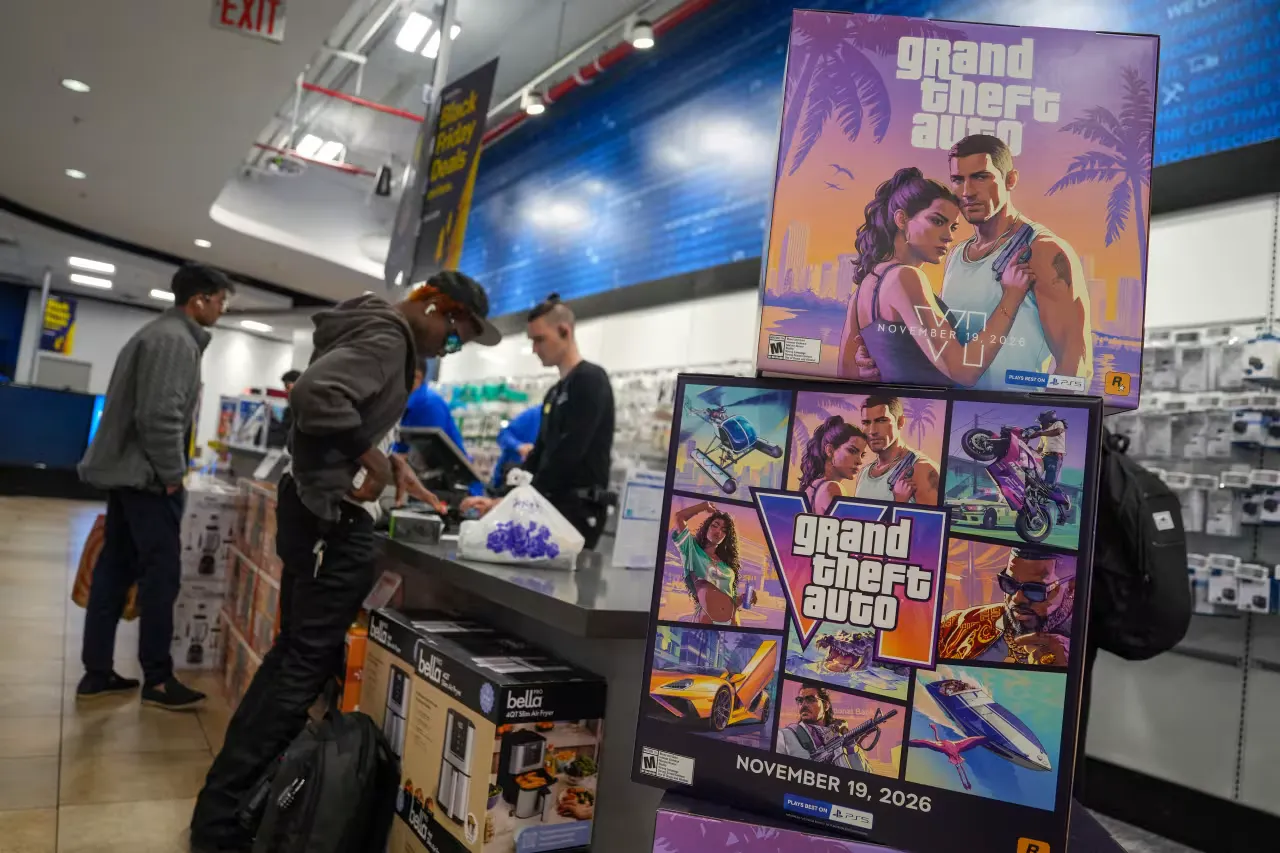
Grand Theft Auto VI is delivering a blockbuster moment that is paying off for nearly everyone in its orbit, yet investors in Take-Two Interactive, the publisher behind the franchise, are shrugging it off. For decision-makers in hit-driven businesses, the divergence is a reminder that cultural momentum and shareholder return are separate variables, and that anticipation-priced assets can stall precisely when the hype peaks.
Grand Theft Auto VI is about as close to a guaranteed blockbuster as the games business gets, and this week it is behaving like one: money is moving to nearly everyone in the game's orbit. Nearly. Take-Two Interactive, the publisher behind the franchise, is watching its investors shrug. That is the contradiction MarketWatch put its finger on, and it is worth sitting with for a minute, because it says less about Grand Theft Auto than it does about how markets price anticipation. The buzz is real. The shareholder return, at least right now, is not following it.
Start with the obvious question: how can a title this big fail to lift the company that owns it? The short answer is that markets buy surprises, not certainties. When a launch is treated as a foregone conclusion for years, the enthusiasm gets baked into the share price long before the product ships. By the time the cultural moment arrives, there is little left to discover and therefore little left to bid up. Historically, publishers' shares have tended to move on the things that change the odds, a release date slipping, a monetization model revealed, a guidance cut, far more than on the ambient noise of a hit everyone already expected.
Meanwhile, the money that does get made this week is spread across a long chain of beneficiaries who carry none of the risk. Retailers book the pre-orders. Platform holders take their cut of every digital sale. Hardware and accessory makers sell controllers, headsets and storage. Advertisers rent the attention. Creators build audiences on top of the hype. Each of them captures a slice of the moment without funding years of development or absorbing the cost of a delay. Take-Two carries both of those burdens, which is precisely why the equity is the hardest place to make a quick dollar off a launch.
The economics of a game at this scale are also lumpier than the headlines suggest. Building and marketing a title of this ambition is enormously expensive, and much of that spending lands before a single copy is sold. The revenue then arrives in waves: an initial surge at launch, followed by a long tail that depends on online modes, expansions and in-game spending. For context, the industry's most durable profits typically come from that tail rather than the opening weekend, which means the market's real question is not whether the game sells, but how well it keeps selling two and three years out.
That is the part investors cannot yet see, and it explains a lot of the shrugging. A blockbuster that meets expectations is not a catalyst. A blockbuster that beats them is. Until Take-Two puts hard numbers in front of the market, the shares are hostage to the same three variables that have always driven hit-driven media stocks: timing, cost, and the durability of the monetization layer sitting on top of the boxed product. None of those are settled by a week of good press.
There is a broader read-through here for anyone allocating capital across the entertainment and consumer tech stack. When the most obvious winner in a theme refuses to move, the returns usually sit one step out, in the picks and shovels. That is where the second-derivative trade lives: the platforms, the payment rails, the peripherals, the advertising networks, the creator tools. The catch is that most of those names have thin exposure to any single title, so the hype can inflate them well past what the underlying economics justify. Momentum in adjacent stocks is not the same as earnings.
So what would actually change the story for Take-Two's shareholders? A firm release date, detail on how the game monetizes after launch, or guidance that resets the bar. Any of those gives the market something to price. A delay would do the same, in the other direction. The lesson for boards across media and gaming is uncomfortable but useful: cultural momentum and shareholder return are two different variables, and they can diverge for a long time. A company can dominate the conversation and still leave its owners waiting.
For executives and directors running hit-dependent businesses, the practical takeaway is to separate the applause from the P&L. Ask which partners in your ecosystem capture the economics of your launch without carrying its risk, and price that asymmetry honestly. Ask whether your guidance already assumes the blockbuster. And ask what happens to the story if the thing everyone is certain about simply arrives on time and performs as expected. That is the scenario Take-Two's investors appear to be staring at right now, and it is the one most companies never bother to model.
This story's Key Insights and Take-aways are locked.
Create a free account to unlock Executive Actions for one credit.
Register to UnlockAlways free for Executives Club members. Join the Club
More in Business

S&P 500 Enters Correction, Down 10% From Its High on AI Worries
The index's slide past the 10 percent line is a symbolic verdict on investor mood, and the AI trade that powered the rally is now the thing testing it.

Dow and S&P 500 enter correction as Nasdaq logs worst week since 2020
All 11 S&P 500 sectors fell more than 1% in the same week for the first time since April 2025, a breadth signal that matters more than any single index level.

Chip stocks lose $2.3 trillion in a week, worst run in 25 years
A $2.3 trillion weekly wipeout in semiconductors is forcing every board with an AI story to ask whether it owns a thesis or just a crowded trade.