
Ex-minister: UK should start EU rejoin talks now, not later
A former minister's BBC intervention revives the question British business parked in 2020: who moves first on rejoin, and what does waiting until after the 2026 review cost?
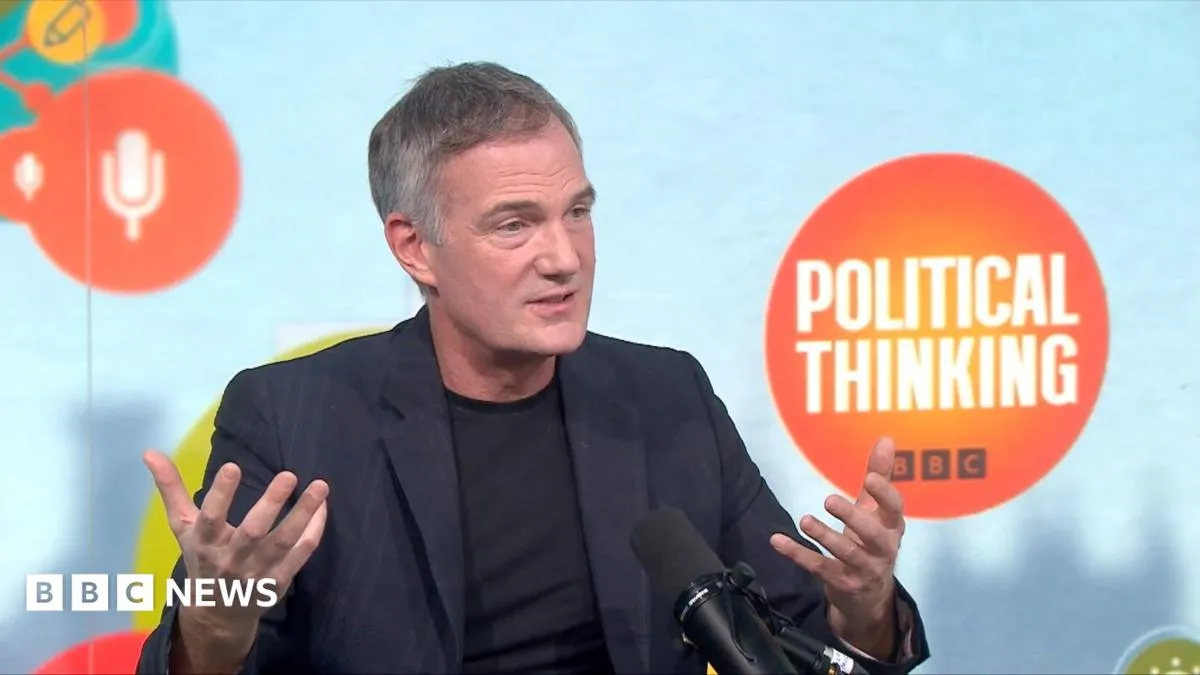
A former UK government minister used a BBC Politics interview to call for Britain to start talks to rejoin the European Union now, rather than waiting. For executives, the intervention reopens the single biggest variable in UK trade policy: the terms on which goods, services and data cross the Channel, and whether anyone holding office is prepared to negotiate them.
A former government minister has used a BBC Politics interview to say what sitting MPs have spent nearly a decade avoiding: Britain should start talks to rejoin the European Union now. The BBC's clip carries the headline "Start talks to rejoin EU now, says ex-minister," and the text around it does not name the speaker. That omission is itself informative. Rejoin remains a position that is far easier to hold from outside office, where there is no seat to defend and no manifesto to square. But the substance of the call, and specifically the word "now," is the part executives should pay attention to.
The argument for speed is arithmetic rather than sentiment. The Trade and Cooperation Agreement (TCA) that has governed UK-EU trade since the end of the transition period carries a built-in review, and the parts of the deal with hard expiry dates are already running down. The fisheries chapter, one of the few provisions with a fixed clock, expires in mid-2026. For context, negotiations that begin after a review concludes typically start from the other side's draft text rather than your own. Whether or not the former minister framed it this way, the practical case is that the UK's leverage is a depreciating asset: it is largest before a review, not after one.
Worth restating what is actually at stake, because "rejoin" and "reset" are not synonyms. The UK left the EU on 31 January 2020 and the transition period ended on 31 December 2020. The TCA that replaced membership delivers zero tariffs and zero quotas on goods that meet rules of origin, which is why the sky did not fall. What it does not deliver is the thing most exporters actually miss: no customs declarations, no regulatory checks, no separate conformity assessment, and no passporting for financial and professional services. Services sit largely outside the deal. That is why the Office for Budget Responsibility has previously modelled the change as a long-run drag on productivity rather than a single shock, and why smaller exporters, which cannot absorb fixed compliance costs the way large firms can, have been squeezed hardest.
The reason this is a clip and not a policy is that both main parties have publicly ruled out rejoining the single market or the customs union, and neither has shown appetite to revisit that before an election. For context, the electoral maths still run against it: the seats that changed hands in 2019 were largely won on delivering Brexit, not reversing it. That is precisely why the intervention lands as a signal rather than a plan. Former ministers typically have more latitude than sitting ones, and the value of what they say lies in testing whether the Overton window has moved. If it has, the language of "alignment" will quietly start replacing the language of "rejoin."
It is also worth remembering how much has already shifted. A UK-EU summit in 2025 produced a security and defence pact, an agreement to link the two emissions trading systems, and a mobility arrangement for young people, alongside a commitment to pursue a deal on food and farm standards, known as SPS. None of that is membership, and none of it removes customs paperwork. But it establishes a working relationship in which technical agreements are possible again. A rejoin negotiation would be a different order of magnitude entirely: it would reopen free movement, budget contributions, the jurisdiction of the European Court of Justice, and the Northern Ireland arrangements now governed by the Windsor Framework.
For operators, the practical question is not whether Britain rejoins, but which direction the friction is heading and how fast. Three exposures are worth mapping now. First, data: the EU's adequacy decisions for the UK have been extended in short increments rather than granted permanently, which keeps a compliance cliff edge permanently in the planning cycle. Second, rules of origin: any move toward closer alignment changes what counts as local content, which resets sourcing decisions across manufacturing. Third, people: mobility for staff remains the loudest complaint from services firms, and any thaw shows up there first. Companies that build their 2026 to 2028 plans around the assumption that nothing changes are, in effect, making a political bet.
The strategic point for boards and founders is that political risk in the UK-EU relationship is no longer binary. It is a spectrum running from today's thin deal, through SPS alignment and mutual recognition of standards, to something that looks much more like membership. The former minister's call does not move Britain along that spectrum. It does something subtler: it puts the far end of it back into polite conversation, at the exact moment the machinery for a review is being set up. Watch who in Westminster repeats the word "now," and watch whether business groups, which have stayed studiously quiet, decide they finally have cover to say it too.
This story's Key Insights and Take-aways are locked.
Create a free account to unlock Executive Actions for one credit.
Register to UnlockAlways free for Executives Club members. Join the Club
More in Politics

Fifth Circuit Kills Pregnant Workers' Law Over Pandemic Proxy Votes
A procedural ruling, not a policy one, has blocked a federal pregnancy-accommodation law and put every pandemic-era statute in the crosshairs ahead of an expected Supreme Court appeal.

Measles kills a Virginia child under 5, the state's first death of 2026
Virginia's health department confirmed the death but withheld the child's vaccination status, leaving schools, clinics and employers to plan around the one detail that would explain the most.

Former Brazilian President Bolsonaro Hospitalized with Intestinal Obstruction
The health status of the former far-right leader raises immediate questions about political stability and the trajectory of Brazil's conservative movement.