
Ex-OpenAI researcher gives up equity windfall: 'Everything else is a distraction'
Jacob Coxon says he will sell his OpenAI equity and donate the proceeds to AI safety, forgoing millions when the company goes public.
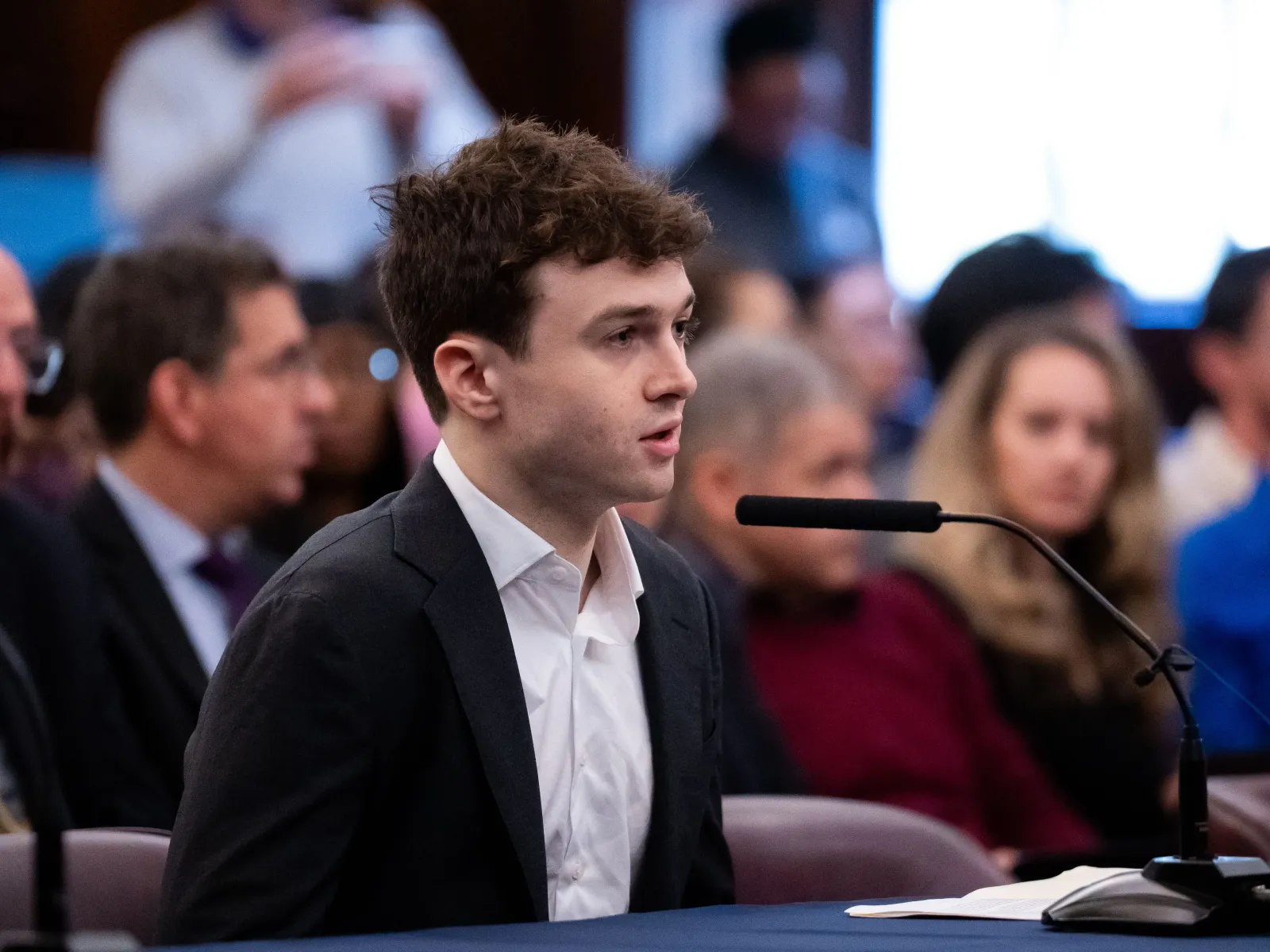
Jacob Coxon, a former OpenAI researcher who also worked at Anthropic, said he will sell his OpenAI equity and donate the proceeds to AI safety causes. The move forces AI leaders and boards to confront what happens when the people building frontier models decide the financial upside is a moral liability.
Jacob Coxon, the former OpenAI researcher who also worked at Anthropic before recently quitting, said on Wednesday that he will sell his equity in OpenAI and donate the proceeds to AI safety causes. 'We need to pause or drastically slow down the race to superintelligence,' he wrote on X. 'Everything else is a distraction.' The decision means Coxon is forgoing what could be millions of dollars in profit that would become liquid when OpenAI goes public, an event CEO Sam Altman has said is on the horizon. Coxon worked at OpenAI from 2023 until 2026 before leaving for Anthropic. For a 27-year-old from England who has spent the past year warning that leading AI labs are gambling with human lives, the move is the clearest signal yet that he intends to put his money where his mouth is.
The headline number is not a valuation or a funding round. It is the personal windfall Coxon is walking away from. OpenAI equity is among the most coveted paper in tech, and an IPO could turn it into real cash. By committing to sell and donate, Coxon is converting a private financial asset into a public moral statement. That is rare. Executives often donate after liquidity, not before. Coxon is doing it while the stake is still illiquid, which makes the commitment harder to reverse and harder to ignore.
Coxon's warnings first went viral in September. On September 8, he posted on X: 'The people building AI earnestly believe that it could kill us all by the end of the decade. This is not a marketing stunt.' The post has since racked up 175 million views. He had just left Anthropic and issued a series of dire warnings that it and OpenAI were 'gambling with our lives.' Since then, he has done the rounds with media to advocate for AI safeguards and, principally, a pause on recursive self-improvement, the process by which AI models train themselves. His argument is not that AI is useless. It is that the race to superintelligence is moving faster than the safety work meant to contain it.
The reversal is what makes the story land. In a November 9 talk at Stanford, Coxon called his stake in OpenAI 'blood money' but balked at giving it up at the time. 'I like money, bro,' he said. He also described his parents' reaction: 'My parents were like worried I was having a psychotic break. I think if I'd also given away all the money they'd be even more convinced of that.' That honesty made his September warnings feel human rather than performative. Now he has changed course. The same person who admitted he liked money has decided the money is the distraction.
For context, private-company equity is typically illiquid until an IPO or a tender offer. Employees at high-growth startups often treat it as deferred compensation, a lottery ticket that justifies years of intense work. OpenAI is not a typical startup. It sits at the center of the AI boom, and its eventual public listing could create a wave of wealth for early employees and researchers. Coxon's decision to give up that upside is a direct challenge to the assumption that everyone in the industry is waiting for the same payday. It also raises a practical question: if the people closest to the technology are worried enough to walk away from millions, what should investors and boards conclude about the risks they are underwriting?
The move lands in a broader debate that has moved from academic papers to boardrooms, media and Capitol Hill. AI safety was once a niche concern. Coxon's viral posts helped push it into the mainstream, and his donation gives the argument a tangible funding mechanism. The source does not say which specific causes will receive the money or how the equity sale will be structured. But the commitment itself matters. It creates a public benchmark. If Coxon follows through, it will be harder for critics to dismiss safety warnings as marketing or career positioning. It will also put pressure on other employees at OpenAI, Anthropic and their peers to ask whether their own equity is a reward or a conflict.
For executives and boards, the strategic stakes are clear. Talent is the scarcest resource in AI, and equity is one of the main tools used to keep it. Coxon's decision suggests that for some researchers, equity is not a lock. It can become a moral liability. That does not mean every AI employee will donate their stake. It does mean boards should stress-test their retention plans against a scenario where top talent decides the financial upside is part of the problem. The race to superintelligence is not just a technical contest. It is a contest over who is willing to slow down, who is willing to pay for safety, and who is willing to say that everything else is a distraction. Coxon has now answered that question with his own balance sheet.
This story's Key Insights and Take-aways are locked.
Create a free account to unlock Executive Actions for one credit.
Register to UnlockAlways free for Executives Club members. Join the Club
More in Business

S&P 500 Enters Correction, Down 10% From Its High on AI Worries
The index's slide past the 10 percent line is a symbolic verdict on investor mood, and the AI trade that powered the rally is now the thing testing it.

Dow and S&P 500 enter correction as Nasdaq logs worst week since 2020
All 11 S&P 500 sectors fell more than 1% in the same week for the first time since April 2025, a breadth signal that matters more than any single index level.

Chip stocks lose $2.3 trillion in a week, worst run in 25 years
A $2.3 trillion weekly wipeout in semiconductors is forcing every board with an AI story to ask whether it owns a thesis or just a crowded trade.