

Extreme weather will reshape U.S.-China competition by punishing slow climate adaptation
Why adaptation is becoming a competitive capability, and what lagging investment costs both economies in the real world.

Foreign Affairs argues extreme weather will upend U.S.-China competition, mainly through the economic cost of falling behind on climate adaptation. The consequence for decision-makers is clear: adaptation choices are turning into strategy, budgets, and supply chain risk, not just sustainability.
Extreme weather is not a side issue for U.S.-China competition. Foreign Affairs frames it as a competitive stress test, where the countries that adapt faster absorb less damage, keep more productive capacity online, and move with less disruption. The punchline is straightforward and uncomfortable: the cost of falling behind on climate adaptation can be large enough to tilt competitiveness.
That matters for executives because adaptation is not one project. It is a portfolio of decisions that show up everywhere: infrastructure reliability, industrial output, labor productivity, insurance and financing costs, and the resilience of trade and logistics. When extreme weather hits, gaps in adaptation show up as downtime, damaged assets, higher operating costs, and slower recovery. In other words, adaptation becomes a determinant of who can keep producing and exporting when conditions worsen.
To understand why this reshapes competition, it helps to look at how climate adaptation turns into economics. Extreme weather creates shocks that are hard to schedule around, and the damage is not only direct. Disruptions cascade through power grids, transportation networks, water systems, and the ability to run factories at normal rates. Even if a company has strong products, it can still lose momentum when supply chains seize up or energy and water constraints rise. Foreign Affairs is essentially saying that these cascading impacts will be a bigger part of the U.S. versus China rivalry as climate risk intensifies.
There is also a structural incentive behind this. Governments and firms do not invest in adaptation evenly, and the cost of delays tends to compound. Early adaptation can reduce exposure, while late action often arrives after damage has already occurred, forcing expensive repairs and productivity losses. For boards and C-suites, that creates a timing problem: the competitive disadvantage is not only what you do today, it is what you have prevented from happening earlier.
Regulatory framing plays into the incentives too, because climate risk increasingly interacts with compliance, disclosure, and resilience planning. Even when regulations do not directly mandate every adaptation measure, the risk that standards tighten over time changes how decision-makers think about capex and long-term liabilities. In practice, adaptation can influence everything from permitting for infrastructure upgrades to the feasibility of siting facilities in higher-risk locations. That means climate adaptation is likely to keep moving from the margins of corporate strategy into the core of how capital is allocated and how projects are justified.
Now zoom out to the U.S.-China competitive dynamic. Both countries have major industrial bases and global economic reach, so weather-driven disruptions are not confined to one region. When extreme weather reduces output in one sector or region, it can alter bargaining power, inventory dynamics, and the ability to meet demand. For the U.S., the question becomes whether adaptation keeps pace enough to maintain continuity and competitiveness in key industries. For China, the question is whether adaptation capacity and investment translate into fewer disruptions and more stable production under stress.
The second-order implications are where this gets board-level serious. Adaptation gaps can force companies to pay more for insurance, capital, and risk mitigation. They can also tilt workforce dynamics if extreme heat or water stress impacts health, attendance, and operational staffing. And they can change supplier relationships, because the most resilient suppliers gain leverage when others cannot deliver consistently. In competitive terms, resilience becomes a capability that can be monetized indirectly through service continuity and reliability.
Foreign Affairs’ core warning is about the cost of falling behind. In a world where extreme weather is increasingly a recurrent business condition, adaptation is becoming a determinant of competitiveness, not a charitable add-on. If peers treat adaptation like a compliance checkbox instead of a strategic capability, the losses can be cumulative: reduced output today becomes reduced capacity tomorrow, and the competitive edge shifts to whoever adapts faster and at scale. For executives in both countries, the decision is not whether extreme weather will matter. It is how quickly investment and planning will turn climate risk into resilience that protects growth.
This story's Key Insights and Take-aways are locked.
Create a free account to unlock Executive Actions for one credit.
Register to UnlockAlways free for Executives Club members. Join the Club
More in Politics

Hispanic-voter shift and matchup flip Texas Senate race into a real Democratic upset test
A Times/Siena poll shows Democrats edging toward a Senate upset as Hispanic voting preferences move and the matchup gets better.
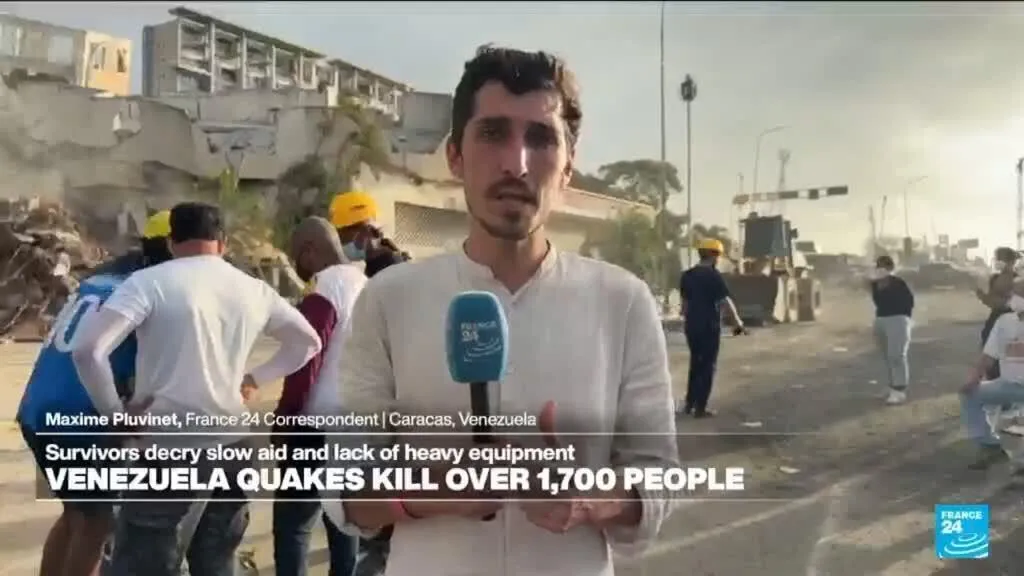
Venezuela quake survivors still waiting as La Guaira reports: “All the buildings have collapsed”
The June 24 twin earthquakes flattened La Guaira’s infrastructure, leaving families searching for loved ones under rubble.

Supreme Court weighs birthright rollback; White House also tightened legal and illegal migration
NPR maps the coordinated strategy beyond birthright, and what it means for regulators and corporate leaders watching policy risk.