
FAA Ground Stop: 'Hairiest 90 Minutes,' Then a Week With No Answer
An 'instability' in US aviation communications triggered a ground stop and hours of chaos for controllers and pilots. Nearly a week on, officials still cannot say what broke.
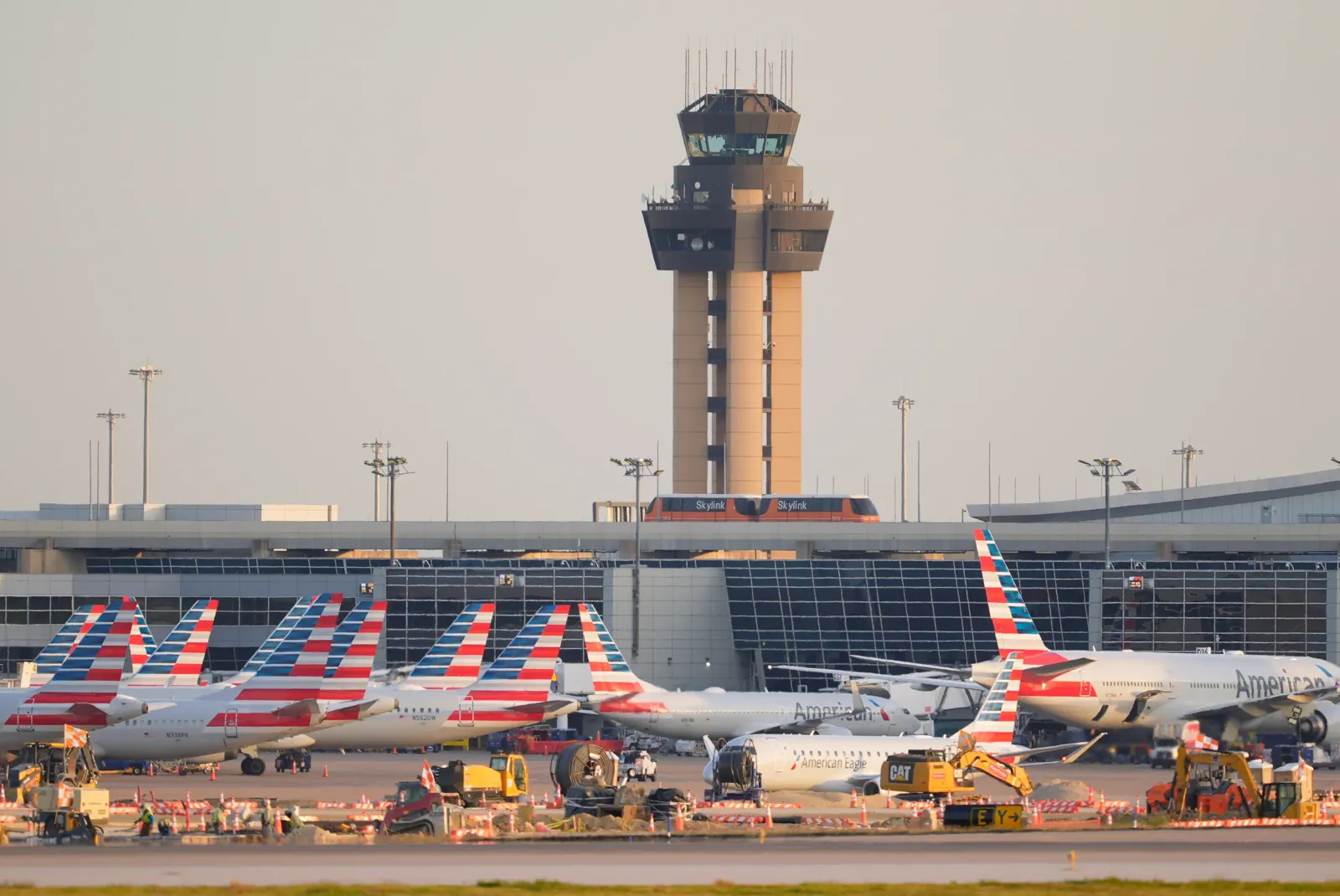
The FAA halted flights after what WIRED described as 'instability' in the complex US aviation communications system, producing a chaotic few hours for air traffic controllers and pilots. Nearly a week later officials still do not fully know what happened, which makes the unanswered root cause a bigger operational and governance risk than the delay itself.
Somewhere inside the US aviation communications system, something went unstable. The result, as WIRED reported, was an FAA ground stop and a chaotic few hours for the air traffic controllers and pilots caught inside it. The phrase WIRED attached to the episode is the one that sticks: 'the hairiest 90 minutes of my career.' Nearly a week later, officials still do not fully know what happened.
Start with what a ground stop actually is, because the term undersells the disruption. The FAA issues one when it decides the system cannot safely absorb the traffic headed its way. Rather than let aircraft launch into airspace where controllers are stretched, the agency tells operators to hold planes on the ground at their origin airports. It is a blunt, top-down brake, and it is built that way on purpose: in aviation, the default answer to uncertainty is to slow everything down rather than push through it. Controllers and pilots talk to each other over radio and digital links, and when that layer turns unreliable, the only responsible move is to reduce the number of aircraft in motion.
That is also why the unanswered question matters more than the delay. Aviation is an industry built on redundancy, checklists, and incident reviews that assume every failure can eventually be traced to a cause. A week of not knowing is unusual, and uncomfortable. Root-cause work in a system this layered is genuinely slow. It means reconstructing timelines from logs, separating what actually failed from what merely looked like it failed, and checking whether software, hardware, or the interaction between them produced the instability. Officials saying they still do not fully know is not automatically a dodge. It is often what the first week of a complex investigation honestly sounds like.
Context helps here. The US national airspace is one of the most complex pieces of operational infrastructure on earth: hundreds of facilities, thousands of controllers, a mix of decades-old hardware and newer digital systems, and traffic volumes unmatched anywhere else. Modernizing that stack has been a running project across multiple administrations and budget cycles, typically slower and costlier than anyone promises at the outset. Every modernization step also adds a new dependency, and dependencies are where instability hides. The more systems talk to each other, the more places a fault can originate, and the harder it becomes to point at just one.
The bill lands fastest on airlines. A ground stop hits carriers in several places at once: fuel burned while waiting, crews whose duty clocks keep running, aircraft and flight attendants stranded far from where the next day's schedule needs them, and passengers to rebook. Because duty limits are hard stops, a delay of a couple of hours can convert into a cancellation many hours later, which is how a short disruption becomes a two-day problem for travelers. Airports lose concession and parking revenue. Corporate travel budgets absorb the rebooking cost. None of that shows up in the same quarter as the cause, which is precisely why operational fragility is easy to underprice until it bites.
There is a governance layer too. The FAA is funded and overseen by Congress, and outages of this kind tend to produce hearings, questions about staffing and system investment, and pressure to explain what happened in plain language. If the agency cannot name a cause, that absence becomes the story. For airlines, airports, and the vendors who supply aviation technology, the reputational risk is asymmetric: the public forgives weather, and it is far less forgiving about a system that failed for reasons nobody can describe.
The broader lesson travels well beyond aviation. Almost every large operation now runs on a communications layer that few people fully own, whether that is dispatch software, payment rails, cloud dependencies, or internal messaging. The useful question is not whether your version of that layer is reliable. It is whether you would know within an hour that it had gone unstable, whether you have a documented fallback, and whether you could explain the failure to a regulator, a board, or a customer before the investigation closes. Ninety minutes of instability is survivable. A week of not knowing is what turns an incident into a credibility problem.
This story's Key Insights and Take-aways are locked.
Create a free account to unlock Executive Actions for one credit.
Register to UnlockAlways free for Executives Club members. Join the Club
More in Technology

Anthropic mathematician claims Claude helped crack the Riemann hypothesis
If the proof holds, AI has toppled math's most famous open problem; if it does not, it is a case study in announcing breakthroughs before anyone verifies them.

AI's $4 Trillion Wipeout Erases Nasdaq's Gains for the Year
A brutal week took roughly $4 trillion off the AI sector and left the Nasdaq flat for the year, and the damage ran the full length of the supply chain.

Anthropic mathematician says AI proved the Riemann hypothesis. Verification will take time.
A single unverified claim from inside Anthropic now sits against more than 160 years of open mathematics, and the gap between asserting a proof and surviving peer review is the entire story.