

FAA grounds all US flights as comms failure hits multiple control centers
A nationwide ground stop triggered by communication failures at more than one air traffic control center freezes the country's aviation system, and the crews, cargo, and cash flow riding on it.
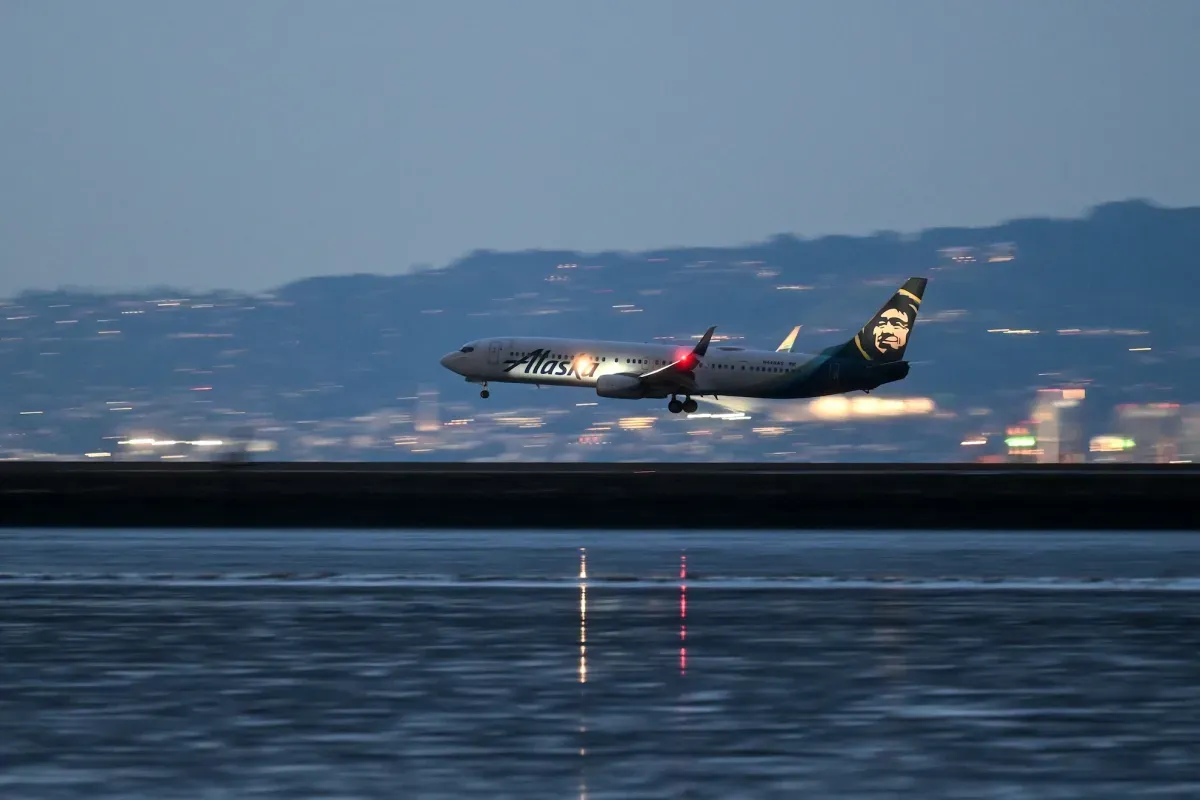
The Federal Aviation Administration has issued a ground stop halting all flights across the United States, telling TechCrunch it acted "following communication issues impacting multiple Air Route Traffic Control Centers." For decision-makers, the immediate consequences are stranded aircraft and crews, frozen air cargo, and a recovery timeline measured in days rather than hours.
The Federal Aviation Administration has grounded flights across the United States. A spokesperson for the agency told TechCrunch it issued the ground stop "following communication issues impacting multiple Air Route Traffic Control Centers," the facilities that manage the airspace over the country. That is the full extent of what has been confirmed: a nationwide halt, a communications problem, and more than one control center involved. A ground stop is the bluntest instrument in aviation. Aircraft that have not yet departed stay on the ground, and the system stops accepting new departures until controllers can safely sequence what is already airborne. It is not a delay program. It is a pause on the national airspace.
The word doing the heavy lifting is "multiple." The FAA's Air Route Traffic Control Centers, roughly two dozen of them across the country, each own a slab of sky and hand flights off to one another as they cross the map. A single center going dark is a serious but well-rehearsed problem: neighboring centers absorb traffic, routes get stretched, and delays ripple outward for hours. Multiple centers failing at once removes the redundancy that makes that playbook work. "Communication issues" is also deliberately broad. It can describe the radio links between controllers and cockpits, the data and voice lines that connect one center to the next, or the internal systems controllers use to hand off a flight from one sector to another. The FAA has not said which, and that gap is the thing to watch.
Nationwide ground stops are rare by design, which is why this one lands so hard. The first in US history came on September 11, 2001, when the FAA shut the airspace and ordered thousands of aircraft to land. The next comparable event came in January 2023, when a failure in the NOTAM system, the pipeline that pushes safety notices to pilots, forced the agency to halt departures nationwide for the first time since those attacks. Officials later attributed that outage to a corrupted data file. The lesson from both episodes is the same: the system is built to fail small, and when it fails big, the recovery is measured in days, not hours.
For airlines, the arithmetic starts immediately. A ground stop strands aircraft at the wrong airports and crews at the wrong bases, and the hub-and-spoke model that makes modern aviation efficient turns that misalignment into a cascade. Morning departure banks feed afternoon banks; miss one and the day never fully resets. Carriers cannot control the cause, but they own the consequences, including the customer-facing ones. Under federal rules finalized in 2024, airlines owe passengers cash refunds, not vouchers, when a flight is cancelled or significantly changed and the traveler chooses not to fly. A nationwide halt is exactly the scenario those rules were written for.
The disruption does not stop at passenger terminals. A large share of US air cargo moves in the bellies of passenger jets, so grounding the fleet also freezes freight that never had a seat booked. Express networks built around overnight sorting, with hubs in cities like Memphis and Louisville, depend on aircraft arriving on schedule to make the next morning's deliveries. Pharmaceuticals, semiconductors, auto parts, and e-commerce inventory all ride that same pipeline. A pause of hours is an inconvenience. A pause that stretches into a day or more starts showing up in production schedules and cold-chain commitments.
The regulatory backdrop matters too. The FAA sits inside the Department of Transportation and operates on funding and authorities that Congress renews, which means every high-profile outage becomes a hearing. Lawmakers and the agency have spent years debating how to modernize an air traffic system that relies on a mix of aging hardware and newer digital tools, and how to staff it. Nothing in the FAA's statement to TechCrunch points to a cause, and it would be wrong to assume one. But the questions that follow an event like this, about redundancy, failover, and how quickly the system can be restored, are already on the record in Washington.
For executives outside aviation, the practical exposure is travel and time. Leadership offsites, board meetings, customer visits, and conference appearances booked around flights are now at risk, and the people affected are often the ones whose calendars are hardest to rebuild. Companies with duty-of-care obligations should expect a wave of rebooking requests and stranded-employee questions. Procurement and operations teams that assumed air freight as a backup for a delayed ocean shipment should assume it is not available today. The right move is not panic; it is a fast inventory of who is in the air, what is moving by air, and which commitments depend on both.
The bigger point is what this says about concentration. Modern aviation is a marvel of coordination that depends on a small number of shared systems working at once, and the failure of any one of them is felt everywhere at the same time. That is true of air traffic control, of payment rails, of cloud regions, and of the power grid. The FAA has grounded the country to protect it. The question every operator should be asking is which single point of failure in their own business would force the same decision.
This story's Key Insights and Take-aways are locked.
Create a free account to unlock Executive Actions for one credit.
Register to UnlockAlways free for Executives Club members. Join the Club
More in Technology

Anthropic mathematician claims Claude helped crack the Riemann hypothesis
If the proof holds, AI has toppled math's most famous open problem; if it does not, it is a case study in announcing breakthroughs before anyone verifies them.

AI's $4 Trillion Wipeout Erases Nasdaq's Gains for the Year
A brutal week took roughly $4 trillion off the AI sector and left the Nasdaq flat for the year, and the damage ran the full length of the supply chain.

Anthropic mathematician says AI proved the Riemann hypothesis. Verification will take time.
A single unverified claim from inside Anthropic now sits against more than 160 years of open mathematics, and the gap between asserting a proof and surviving peer review is the entire story.