

FAA grounds every U.S. flight as air traffic control gets 'overwhelmed'
A nationwide ground stop is the rarest lever the FAA has, and pulling it freezes airline revenue, crew schedules, and cargo in a single stroke.
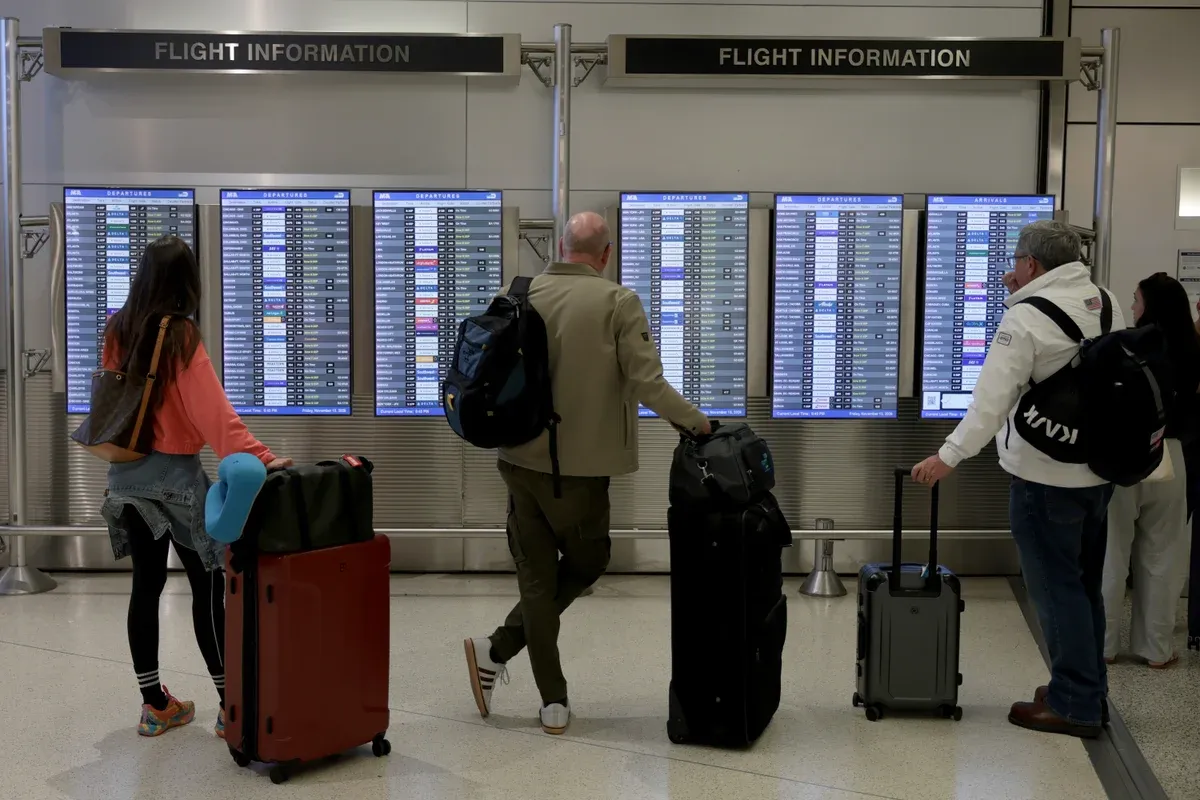
The Federal Aviation Administration grounded all U.S. flights after its air traffic control system became 'overwhelmed,' an action the agency reserves for the most extreme circumstances. For operators, boards, and investors, the consequence is immediate: a nationwide halt resets crew and aircraft schedules, strands revenue, and puts the resilience of U.S. airspace infrastructure back on the risk register.
The Federal Aviation Administration grounded all U.S. flights after its air traffic control system became 'overwhelmed,' halting departures across every carrier, airport, and region at once. The agency's own framing is the tell. This was not a hurricane, not a security threat, not a single broken airport. It was the system that sequences American air traffic failing to keep pace with the traffic itself. National ground stops of this kind are exceedingly rare, which is precisely why this one lands as a shock to an industry that builds every schedule, crew pairing, and connection bank on the assumption that the airspace stays open.
For anyone who does not live inside aviation, the phrase 'ground stop' undersells what just happened. A ground stop is a directive from air traffic control that halts departures, usually at one airport or one region, for a defined window until the constraint clears. A national one is a different animal. It is the closest thing the United States has to closing the sky, and it is the lever the FAA reaches for only when the alternative is losing control of the system entirely. The most recent comparable nationwide action came in January 2023, when a failure of the Notice to Air Missions system, the pipeline that delivers safety-critical flight information to pilots, forced the agency to pause domestic departures and set off a wave of cancellations. Before that, the reference points stretch back to September 11, 2001, and to Europe's 2010 volcanic ash closures. That is the company this event keeps.
The word doing the heavy lifting is 'overwhelmed.' Air traffic control is not a single computer that switches off. It is a layered stack: radar and surveillance feeds, flight-plan processing, voice and data links between controllers and cockpits, and, above all, human controllers working sectors with hard limits on how many aircraft they can safely handle at once. When any layer degrades, capacity drops. When capacity drops far enough, the FAA has two choices: thin out the traffic with delays and miles-in-trail restrictions, or stop adding aircraft altogether. A national ground stop is the second choice, made at scale. It is a safety decision dressed up as an operational one, and it is made in minutes, not weeks.
The cascade from there is brutal and well understood by anyone who has run an airline. Aircraft sit at gates in the wrong cities. Crews burn duty time on the ground, and once they time out, they are legally unavailable until they rest, which means the disruption outlives the ground stop itself. Hub banks, the carefully timed waves of arrivals that feed connecting traffic, collapse in sequence. Cargo moves on the same airspace and the same controllers, so freight that was supposed to be in a distribution center tomorrow is still on a ramp today. Historically, the recovery from a nationwide halt is measured in days, not hours, because the constraint is not the sky reopening. It is repositioning people and metal.
The cost lands in layers. Airlines absorb lost ticket revenue, rebooking costs, hotel and meal obligations, and the operational overtime of a manual reset. Under existing U.S. rules, passengers whose flights are cancelled are generally entitled to a refund rather than a voucher, which converts a service failure into a cash event. Airports lose parking, concession, and landing revenue. Businesses that depend on same-day business travel, from consulting to sales to field service, lose a day they cannot bill. And insurers and corporate travel desks start asking a question they have not had to ask at national scale in years: what is our exposure if the airspace simply stops?
That question points at the infrastructure underneath. The FAA runs the busiest airspace in the world on a mix of modernized and legacy systems, funded through a federal budget cycle that rewards neither long-horizon modernization nor redundancy. Controller staffing has been a long-running industry concern, because the hiring and training pipeline takes years and cannot be spun up during a crisis. Every national ground stop converts those slow-burn debates into a live political and regulatory issue, and it invites scrutiny of how much slack the system actually carries on a normal Tuesday. The answer, historically, has been less than the traveling public assumes.
For executives outside aviation, the strategic read is straightforward. Air travel is an unhedged dependency in most operating models, and it is treated as a utility until the day it is not. Companies with time-critical physical supply chains, distributed field teams, or revenue booked against in-person meetings should know what a 24-to-72-hour airspace freeze does to their numbers before it happens, not after. Boards should also note that this is a resilience story, not a demand story: the underlying appetite to fly has not changed, but the system's ability to absorb a shock has just been tested in public.
What to watch next is the explanation. Whether the FAA attributes the overload to a specific technical failure, to staffing, to demand outpacing capacity, or to some combination will determine whether this reads as a one-off event or the first data point in a longer argument about rebuilding American air traffic control. Either way, the precedent is now set and visible: the sky can close, and it can close fast.
This story's Key Insights and Take-aways are locked.
Create a free account to unlock Executive Actions for one credit.
Register to UnlockAlways free for Executives Club members. Join the Club
More in Science

Anthropic's I.P.O. Made Rank-and-File Researchers Worth Tens of Millions
Researchers who joined just a few years ago are now worth tens of millions, and the windfall resets the pay benchmark for every private A.I. lab still paying in paper.

NASA's Mars relay lost a wheel, and Perseverance lost both radios
Odyssey's backup wheel stopped spinning with only months of hydrazine left, while Perseverance's primary and backup radios are both sidelined, pausing science on the surface.

Three Hours With Elizabeth Holmes, and Not One Question About the Fraud
Nathan Fielder's 'You Can See Everything' bets that eye contact can out-truth a fraud conviction, and the Guardian's critic argues that is an insult to objective truth.