
FAA to name what grounded 1M passengers. Contractor oversight is next.
Bryan Bedford says investigators are 'very close' on the router outage behind the third-ever nationwide ground stop, and Sean Duffy could announce the cause as soon as Friday, Nov. 20.
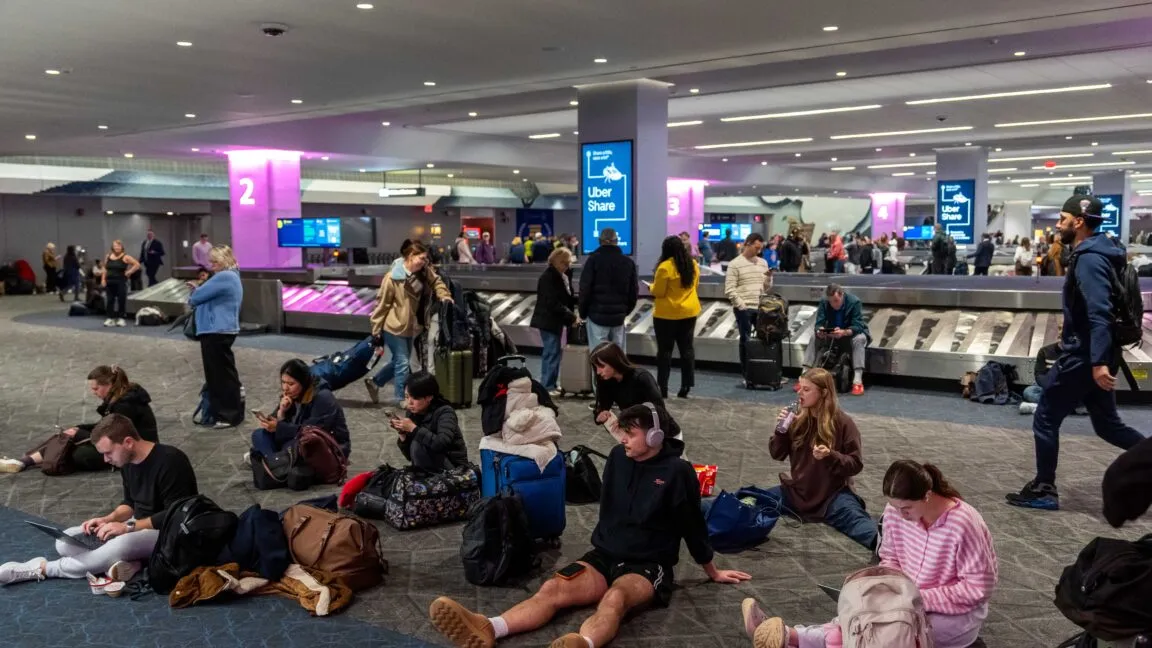
FAA Administrator Bryan Bedford says government investigators are 'very close' to identifying the root cause of the router outage that triggered the third-ever nationwide ground stop, with Transportation Secretary Sean Duffy set to announce findings as soon as Friday, Nov. 20. For anyone running aging critical infrastructure, the announcement will test whether modernization programs and contractor oversight were adequate before the failure, not after it.
The FAA is days away from naming what broke it. Administrator Bryan Bedford told reporters that government investigators are "very close" to determining the root cause of the router outage that triggered the third-ever nationwide ground stop issued by the agency, according to CNN. Transportation Secretary Sean Duffy plans to announce the findings at a news conference as soon as Friday, Nov. 20. The toll is already counted in people and planes: the stop blocked flight departures and impacted more than 1 million passengers across the United States for more than four hours on Friday, Nov. 13. More than 12,000 flights were canceled that day alone, and the number rose past 20,000 over the weekend as stranded travelers scrambled to find accommodations or alternative transportation. Some international flights were allowed to depart before air traffic resumed more broadly.
A nationwide ground stop is the aviation equivalent of pulling a handbrake on the whole country at once. It has happened three times, ever, which tells you how high the bar is for halting departures across the system. And when the trigger turns out to be something as unglamorous as a router, the story stops being about the sky and becomes about plumbing. The national airspace system runs on a web of hardware, software, and network links that passengers never see, and routers sit in the middle of it, moving the data that controllers, airlines, and dispatchers depend on to decide who flies where, and when.
The harder question is whether anyone saw it coming. The FAA has been working to modernize the national airspace system, and questions remain about whether that effort is being done with all the proper risk assessments and adequate agency oversight of the private contractors involved. That is the second headline buried under the first. Modernization means replacing pieces of a network that is decades old, and every replacement carries the risk that a new component interacts badly with something no one has touched since installation. Ars Technica pairs the news with a former FAA insider's view on reducing the risks of upgrading a decades-old network, a useful reminder that the hard part of legacy replacement is rarely the new technology. It is the old technology underneath it.
For the more than 1 million passengers caught in the stop, the cost was immediate and personal: missed connections, abandoned trips, and a weekend spent hunting hotel rooms or rental cars instead of arriving anywhere. The numbers tell the same story from the airline side. More than 12,000 cancellations in a single day is not a ripple; it is a system-wide reset, and the weekend tally climbing past 20,000 shows how long those ripples run once departures stop. Airlines, airports, and ground crews absorb the shock, and so do the businesses and families at both ends of every grounded itinerary.
Why does one router matter so much? Because critical networks are built in layers, and each layer assumes the one below it is working. A single failed component rarely causes an outage on its own; typically it takes a missing backup path, a stale failover plan, or a change that was never fully stress-tested. In a network that is decades old, any of those conditions can sit undetected for years, until the day traffic hits the wrong path. That is the uncomfortable lesson for anyone running essential infrastructure: redundancy on paper and redundancy in practice are different things, and the gap between them is where outages live.
What comes next matters as much as what happened. Duffy's news conference, expected as soon as Friday, Nov. 20, should settle the mechanical question of what failed. It will not automatically settle the accountability question of who was watching, or whether the FAA's own review processes kept pace with modernization work handed to private contractors. Watch for three things when the findings land: whether the failure is described as a single component or a systemic gap, whether contractor performance and agency oversight are addressed directly, and whether the agency commits to changes with dates attached. A root cause without a remedy is just a headline.
For executives outside aviation, the lesson is not abstract. Every industry runs on legacy systems that quietly became critical infrastructure, from payments rails to scheduling engines to the routers in a regional data center. The FAA's third-ever ground stop is a reminder that the failure mode is rarely the thing you upgraded last quarter. It is the thing you inherited, the thing nobody owns, and the thing everyone assumes someone else is monitoring. Bedford's timeline means the answer arrives within days, which is fast by government standards and uncomfortably fast for any operator who cannot yet say where their own single point of failure sits.
This story's Key Insights and Take-aways are locked.
Create a free account to unlock Executive Actions for one credit.
Register to UnlockAlways free for Executives Club members. Join the Club
More in Technology

Anthropic mathematician claims Claude helped crack the Riemann hypothesis
If the proof holds, AI has toppled math's most famous open problem; if it does not, it is a case study in announcing breakthroughs before anyone verifies them.

AI's $4 Trillion Wipeout Erases Nasdaq's Gains for the Year
A brutal week took roughly $4 trillion off the AI sector and left the Nasdaq flat for the year, and the damage ran the full length of the supply chain.

Anthropic mathematician says AI proved the Riemann hypothesis. Verification will take time.
A single unverified claim from inside Anthropic now sits against more than 160 years of open mathematics, and the gap between asserting a proof and surviving peer review is the entire story.