
Farage warns Reform rivals: no one else can lead, and he is staying
Reform UK's leader says he sees no successor and will contest the next election if 'still here and fit and healthy', a warning shot to anyone eyeing his job.
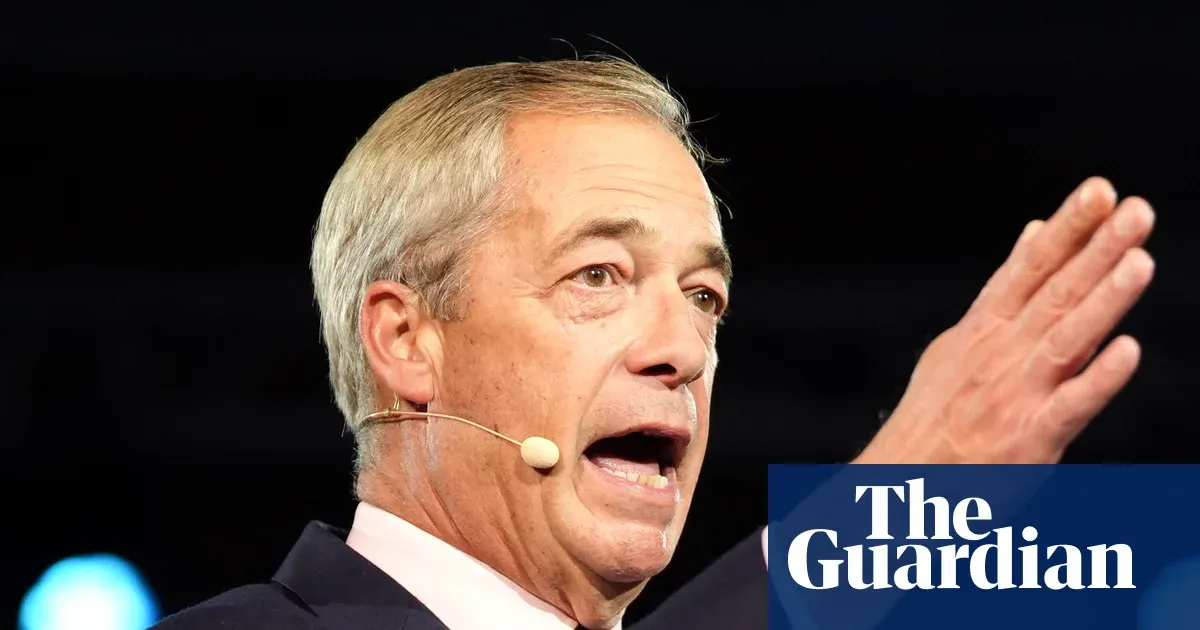
Nigel Farage, leader of Reform UK, has said no one else in the party could do his job and that he will fight the next election as leader if he is 'still here and fit and healthy', while citing worries about his personal safety after the killing of Reform politician Ann Widdecombe. For decision-makers, the message is a succession freeze: a founder-led party with no named heir, and a leadership question that stays open for as long as the founder does.
Nigel Farage, the leader of Reform UK, has said he does not see another person who could do his job, a warning shot aimed at any rival inside the party who might be eyeing his position. He also made clear he is going nowhere, despite worries about his personal safety in the wake of the killing of the Reform politician Ann Widdecombe. And he put a marker on his own future: he will fight the next election as leader if he is "still here and fit and healthy".
That is three messages delivered in a single breath, and each one lands on a different audience. The first is for the people inside his own building. The second is for a country still processing the death of a politician from his party. The third is for donors, candidates and voters who need to know whether the movement they are backing has a life beyond the man who built it. Farage answered the succession question most directly, and his answer was blunt: nobody else.
Start with the succession problem, because it is the one that shapes everything else. For a party that has spent its short life fused to a single personality, "no one else can do this job" is less a boast than a structural admission. Reform UK grew out of the Brexit Party, which itself grew out of UKIP, and in each incarnation the brand and the man have been hard to separate. Historically, insurgent parties in Britain have struggled to survive their founder's exit, because the founder is usually the product: the name on the ballot, the face on the poster, the reason the cameras turn up.
That matters more in the UK than in many democracies, because of how the country counts votes. Britain uses first-past-the-post, a system where a party can win a large share of the national vote and still end up with only a handful of seats. Under those rules, a challenger party's route to real power runs through concentrated local support and a leader who can command national attention. Farage has been that leader for more than a decade. Remove him and the arithmetic does not change, but the attention does.
Then there is the safety thread, the darker and more consequential part of the story. Farage tied his decision to stay to his worries about his own security in the wake of the killing of Ann Widdecombe, the Reform politician. That is a striking thing to say out loud, and it reframes the leadership question as something bigger than ambition. When a party leader weighs personal risk against political duty in public, the practical questions follow fast: who protects candidates, who pays for it, and what does it cost a young party to keep its most visible figure on the road? For context, the security of elected officials and candidates has become an operational issue across Western politics, not just a personal one. Parties typically have to budget for protection, vet events and manage the trade-off between accessibility and safety. For a challenger party with fewer resources and a thinner institutional cushion than the established players, that trade-off is sharper. Every rally carries a cost. Every open event is a risk calculation.
The "still here and fit and healthy" line is doing quiet work too. It is a conditional commitment, and conditionals are how leaders buy time without naming a departure date. It tells rivals the job is not open now. It tells supporters the plan is to fight on. And it leaves room for a change of mind that would not require anyone to be accused of breaking a promise.
For anyone inside Reform UK with leadership ambitions, the practical read is simple: there is no vacancy and no obvious heir. That is a warning to would-be challengers, but it is also a warning to the party itself. Movements built around one figure tend to be excellent at disruption and poor at succession. The moment the founder steps back, the coalition of grievances and hopes that held it together can split along lines nobody mapped in advance.
The strategic stakes for peers in similar roles are worth naming. If you run an organisation whose brand is inseparable from one person, succession is not a human resources document. It is a risk register item. Boards, backers and donors should be asking who the second and third most recognisable figures are, whether they can raise money under their own name, and what happens to the coalition on day one after the founder leaves. Farage has just told his party, and everyone watching it, that those questions remain unanswered.
This story's Key Insights and Take-aways are locked.
Create a free account to unlock Executive Actions for one credit.
Register to UnlockAlways free for Executives Club members. Join the Club
More in Politics

Fifth Circuit Kills Pregnant Workers' Law Over Pandemic Proxy Votes
A procedural ruling, not a policy one, has blocked a federal pregnancy-accommodation law and put every pandemic-era statute in the crosshairs ahead of an expected Supreme Court appeal.

Measles kills a Virginia child under 5, the state's first death of 2026
Virginia's health department confirmed the death but withheld the child's vaccination status, leaving schools, clinics and employers to plan around the one detail that would explain the most.

Former Brazilian President Bolsonaro Hospitalized with Intestinal Obstruction
The health status of the former far-right leader raises immediate questions about political stability and the trajectory of Brazil's conservative movement.