
FBI: Russian agent paid $15K to stalk Palo Alto defense-tech staff
An FBI affidavit says Igor D'iu was paid in cash by courier to surveil employees of a Palo Alto defense-tech firm widely reported as Palantir, and tailed one woman nearly 30 miles.
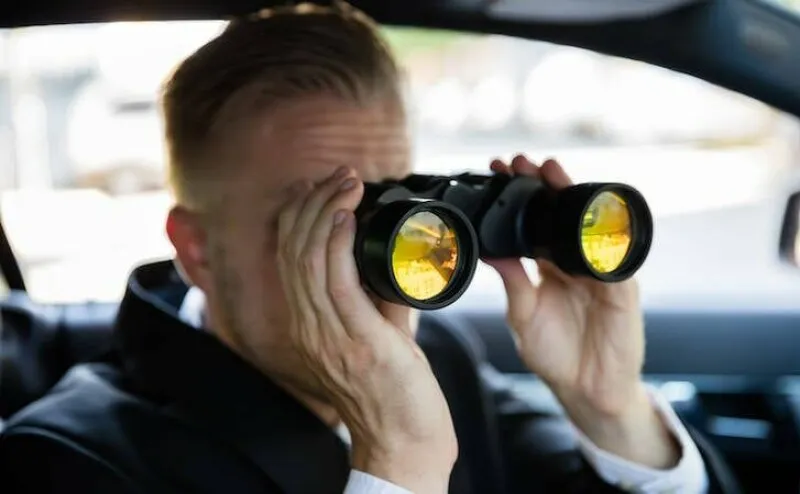
Igor D'iu, a Russian national, is in custody after an FBI affidavit alleged he was paid $15,000 across three cash drops to surveil employees of a Palo Alto defense-tech company widely reported as Palantir, including following two female staffers and leaving remote-controlled laptops near their homes. For executives at defense-tech, AI, and dual-use firms, the case is a reminder that physical and human intelligence collection remains a live threat vector that no amount of cybersecurity spend addresses.
The FBI says a Russian national was paid $15,000 in cash, delivered by courier in three separate drops between August 12 and October 6, to spy on a Palo Alto defense-tech company. Igor D'iu is being held in custody after his indictment, and the details come from an affidavit signed by FBI special agent Winston Wong that describes a four-month operation running from June through October 2026. The alleged tradecraft was not exotic: shoulder-surfing employees' laptop screens at coffee shops, following two female staffers in a rented SUV, and leaving remote-controlled laptops outside their apartment complexes so handlers could pull data from nearby company devices.
The company is not named in the court documents, which describe it only as a large technology and defense company with offices in Palo Alto and media-reported links to the Russia-Ukraine war. It has been widely reported as Palantir, which did not respond to The Register's request for confirmation. The alleged instructions arrived over Telegram from three contacts, whom D'iu only suspected were representatives of the Russian government, according to the filing. The tasks escalated from photography to remote access: he was told to let handlers control his laptop so they could capture data from employee devices in range, and in one instance to leave the machine outside an apartment complex for an hour. Another time he was told to drop it in the middle of the night and return three hours later.
The most alarming episode involved two female employees. D'iu allegedly followed them in his rented car, driving dangerously and breaking multiple road laws. One was followed briefly; the other for nearly 30 miles, through U-turns, illegal left turns, red lights, back streets, side streets, and grocery store parking lots. The chase ended only when the woman drove to the San Francisco Mission police station on the advice of a 911 call handler. Police reports cited significant emotional distress. Questioned by Palo Alto police on September 4, D'iu confirmed he was the driver but said he had followed her because he thought she was beautiful and wanted to ask her out on a date, and denied following anyone else.
Getting there took a longer route. Travel records obtained September 10 showed his last recorded journey was Istanbul to Mexico City on June 7, allegedly on a ticket provided by one of his Telegram contacts. A Facebook account registered to a Mexican +528 number and D'iu's name posted on June 30 asking for help getting "closer to New York," adding "I'll pay as much as needed." The first mobile signals tied to his devices did not ping US towers until July 31, in McAllen, Texas, suggesting he crossed around then; Telegram messages allegedly confirmed an "Uzbek contact" in Mexico helped him over the border. A Google account created in April was used to search the company's Wikipedia page on July 28, and on August 3 to ask Google's AI for a route around Texas border checkpoints. The FBI believes the spying began in mid-August, after he bought a laptop, a Wi-Fi device, a puck device, and an extra phone.
The money moved by hand. To verify each payment, D'iu was allegedly told to send a photo of a dollar bill's serial number and a description of what he was wearing; a courier would arrive, confirm the serial, and hand over cash. He used it for equipment, lodging, and travel, including a silver 2026 Lexus RX 350 rented from a private owner in Los Angeles on August 22 and driven back to San Francisco. The same Lexus appears on security footage outside the company's office on September 1, and over the next two days was implicated in both instances of employees being followed. After the police contact, he allegedly went to Reno, Nevada, to lay low and tried to reroute DHL deliveries from San Francisco to his hideout. US Customs intercepted them: fake IDs with images matching D'iu, Uzbek documents, a US passport whose number belonged to a New York woman, and a social security card registered to a "Hugo Landry Johns." He returned to the Bay Area in late September, swapping the Lexus for a white 2016 Dodge Challenger.
On October 8, FBI agents executed a search warrant and seized a cache: the forged IDs, two Russian passports, $18,035 in cash, two laptops, two iPhones, two T-Mobile SIM cards, Wi-Fi equipment, and a notebook with 10 handwritten addresses supplied by Telegram contacts plus the times he was meant to visit them. At least five were homes of company employees. Agents also found profile packages on at least three employees containing names, personal information, education and employment histories, names of relatives, narrative histories, and assessments of their leadership qualities, strengths, and weaknesses. One Telegram contact, identified as Ian Morales, allegedly sent photos of at least four employees and their addresses with instructions to dress as a food delivery worker and visit, asking whoever answered to verify they lived there.
The affidavit offers little on D'iu's background beyond the alleged offenses, but it notes Russian intelligence's history of recruiting "criminal proxies, organized crime groups, and other disposable agents" to carry out operations. That framing matters. The alleged operation did not require a hacker, a zero-day, or a compromised cloud tenant. It required a person willing to sit in a coffee shop, drive a car, and leave a laptop on a sidewalk, paid in cash with no digital trail beyond a Telegram thread. Per the filing, D'iu was said to have only become suspicious of the tasks he was being ordered to complete in October.
For executives running defense-tech, AI, and dual-use companies, the case is a physical-security problem dressed as a cyber one. Employee home addresses, commute patterns, and coffee-shop work habits are collection targets, and the profile packages described in the filing read like pre-attack reconnaissance on leadership. The second-order risk is trust: staff who learn they were followed, photographed, and catalogued may change how they work, travel, and share. Boards that treat security as a software line item may want to ask who owns physical threat assessment, how employee location data is exposed through public records and social media, and what the response plan looks like when law enforcement calls. The cost of getting that wrong is measured in people, not systems.
This story's Key Insights and Take-aways are locked.
Create a free account to unlock Executive Actions for one credit.
Register to UnlockAlways free for Executives Club members. Join the Club
More in Technology

Anthropic mathematician claims Claude helped crack the Riemann hypothesis
If the proof holds, AI has toppled math's most famous open problem; if it does not, it is a case study in announcing breakthroughs before anyone verifies them.

AI's $4 Trillion Wipeout Erases Nasdaq's Gains for the Year
A brutal week took roughly $4 trillion off the AI sector and left the Nasdaq flat for the year, and the damage ran the full length of the supply chain.

Anthropic mathematician says AI proved the Riemann hypothesis. Verification will take time.
A single unverified claim from inside Anthropic now sits against more than 160 years of open mathematics, and the gap between asserting a proof and surviving peer review is the entire story.