
Fetterman writes off Van Hollen's majority leader bid: 'I think he loses'
A Democratic senator publicly forecast the outcome of his own caucus's leadership vote, breaking the chamber's keep-it-quiet norm and handing every colleague a question they now have to answer.
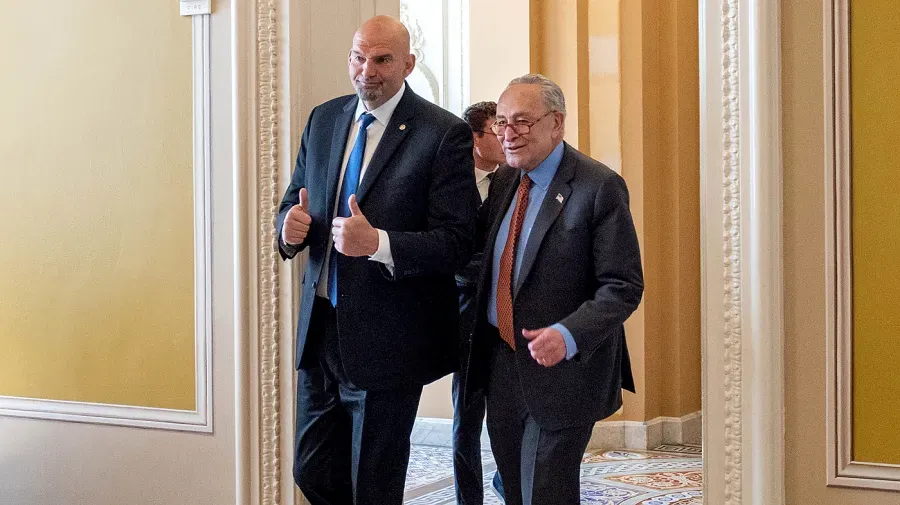
Sen. John Fetterman (D-Pa.) told reporters outside Congress on Thursday that Sen. Chris Van Hollen (D-Md.) will lose his bid for Senate majority leader, adding he was 'not sure why that's news.' For executives and government-affairs teams, the remark is an early signal that the race for control of the Senate floor schedule, committee gavels, and the next legislative calendar may already be treated as settled inside the building.
Sen. John Fetterman (D-Pa.) has already called the race. Asked outside Congress on Thursday about Sen. Chris Van Hollen (D-Md.) running for Senate majority leader, Fetterman did not hedge, did not compliment the field, and did not pretend the contest was open. "I think he loses, and... I'm not sure why that's news," Fetterman told reporters. "You'll have to see how that vote goes." In about twenty words, a sitting senator declared a colleague's bid for the top job in his own caucus dead on arrival, then wondered aloud why anyone would cover it at all.
That second part is the real story. The "news" Fetterman was shrugging off is the candidacy itself. Leadership races in the Senate are decided by the members of the caucus, and the working etiquette inside the chamber is that senators keep their whip counts, their pledges, and their preferences to themselves until the ballots are counted. Fetterman skipped the etiquette entirely, on camera, in a hallway. Note what he did not say: he did not argue Van Hollen is unqualified, wrong on policy, or bad for the party. He argued the result is already understood inside the building, which turns a formal campaign into a formality. That is a sharper and more consequential claim than either an endorsement or an insult.
For anyone who does not live inside the Capitol, here is the machinery being fought over. The party leader in the Senate controls the floor schedule, which means deciding which bills get votes and which quietly never do. The leader shapes committee assignments and chairmanships, negotiates with the House and the White House, manages the confirmation calendar for judges and agency officials, and sets the strategy for budget reconciliation, the procedural shortcut that has historically carried the biggest tax and spending packages. Members weigh all of that when they mark a ballot. Historically, those ballots have been cast in private, precisely so that senators can vote their interests without paying a public price. A senator predicting the outcome out loud changes the calculation for everyone still deciding.
That is why this matters well beyond Pennsylvania and Maryland. A Senate leadership race is a proxy fight over what a party intends to prioritize: which industries get hearings, which regulators get confirmed quickly, which tax provisions survive, how aggressively to pursue tariffs or permitting reform, and how much floor time gets spent on messaging bills versus legislation that can actually become law. Corporate government-affairs shops, trade associations, and donors build their entire Washington map around who holds the gavel and who controls the calendar. When leadership changes, committee slots change, staff changes, and the queue of legislation reshuffles. That reshuffle is where bills live or die, usually with no headline attached.
Blunt quotes also travel, and that is the second-order effect Fetterman may or may not have intended. A single hallway answer converts a slow, internal, privately negotiated race into a public one. Members who wanted to stay uncommitted now get asked to pick sides. Reporters get a frame: if one senator says the outcome is obvious, every other senator becomes a follow-up question. Staffers who spent weeks promising neutrality have to explain their boss's silence. The practical result is that a race the caucus wanted to settle quietly now runs on a public clock, and public clocks reward early commitments and punish late ones.
Zoom out and the pattern is familiar. Leadership elections function as ideological referendums. Caucuses choose leaders to signal what they intend to fight for, in messaging and in floor strategy, and the choice ripples outward to donors, advocacy groups, and the professional staff who decide which fights are worth picking. For investors and operators, the outcome is a leading indicator of the legislative calendar for the next two years: which sectors face scrutiny, which face friendlier hearings, and where the real negotiating leverage sits when a must-pass bill arrives.
What to watch from here is straightforward. The vote itself is the only thing that actually settles the question, and Fetterman said as much: "You'll have to see how that vote goes." Watch whether other candidates emerge, whether the whip count matches the public confidence, and whether Fetterman's read holds up or becomes a talking point his colleagues have to publicly reject. Watch, too, whether the caucus treats his comment as an honest read of the room or as a breach of the rules that govern how leadership races are supposed to run. Either answer tells you something about how disciplined this caucus will be when it has to hold a narrow majority or fight from the minority.
The strategic takeaway for executives is not to over-index on one senator's hallway quote. It is to recognize that leadership signals move faster than legislation. If the race really is settled, lobbying strategies built around the challenger need rewriting before the ballots drop, and relationship-building should already be aimed at whoever will control the floor schedule, the committee gavels, and the confirmation queue. If it is not settled, the public prediction itself becomes a factor, and the members who stayed quiet suddenly have leverage. Either way, the quote is a data point about where power is heading, and government-affairs teams that wait for the official announcement will be reading yesterday's news.
This story's Key Insights and Take-aways are locked.
Create a free account to unlock Executive Actions for one credit.
Register to UnlockAlways free for Executives Club members. Join the Club
More in Politics

Fifth Circuit Kills Pregnant Workers' Law Over Pandemic Proxy Votes
A procedural ruling, not a policy one, has blocked a federal pregnancy-accommodation law and put every pandemic-era statute in the crosshairs ahead of an expected Supreme Court appeal.

Measles kills a Virginia child under 5, the state's first death of 2026
Virginia's health department confirmed the death but withheld the child's vaccination status, leaving schools, clinics and employers to plan around the one detail that would explain the most.

Former Brazilian President Bolsonaro Hospitalized with Intestinal Obstruction
The health status of the former far-right leader raises immediate questions about political stability and the trajectory of Brazil's conservative movement.