
Fire kills birds at one of America's largest foie gras farms amid welfare scrutiny
Hundreds of young birds were rescued from the blaze, and the loss lands on a luxury category already fighting a welfare-driven reputational war.
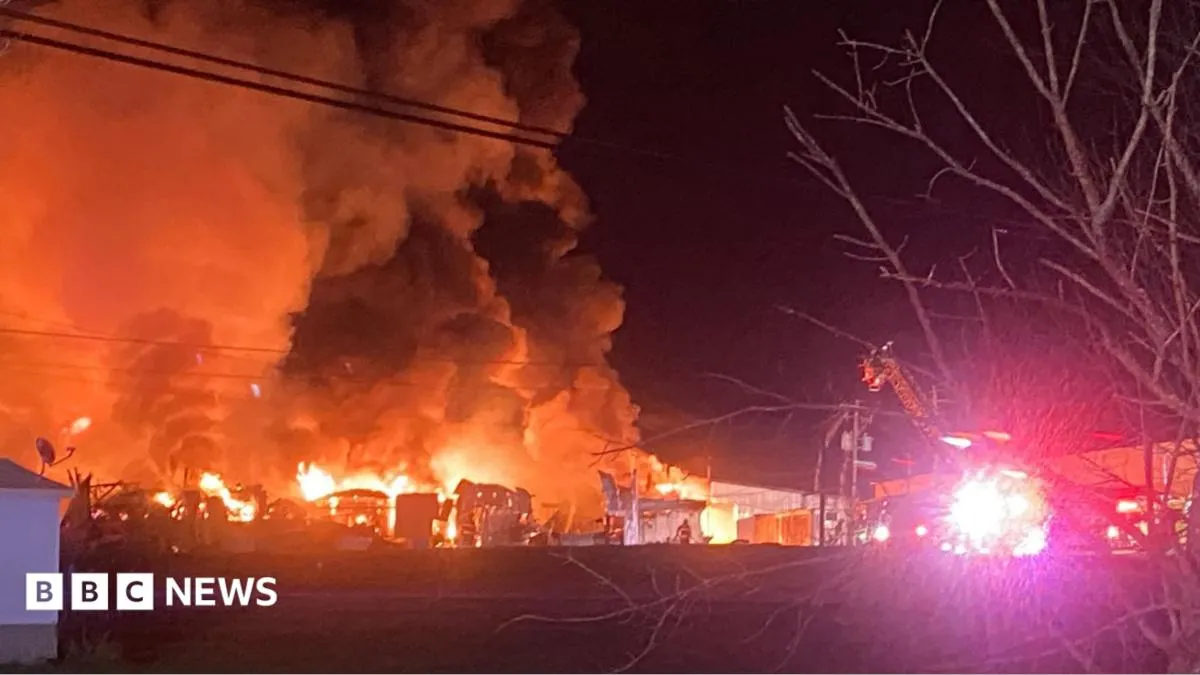
A fire at one of the largest foie gras farms in the US killed birds and forced the rescue of hundreds of young ones, arriving as the category faces renewed scrutiny over animal welfare concerns. For food, hospitality, and consumer investors, the incident concentrates two risks at once: single-site supply exposure in a premium niche, and a welfare campaign that just gained a fresh, dated talking point.
A fire at one of the largest foie gras farms in the United States killed birds and forced the rescue of hundreds of young ones, the BBC reports. The report does not name the farm or put a number on the birds lost, but the scale of the operation is the point: this is one of the biggest foie gras facilities in the country, and the presence of hundreds of young birds on site indicates the farm was in the middle of a production cycle when the blaze broke out. That combination, a large facility, an active flock, and a product with almost no slack in its supply chain, is what turns a local fire into an industry problem.
The second half of the story is timing. The fire lands as foie gras is under renewed scrutiny over animal welfare concerns, according to the same report. That scrutiny is not a fringe campaign. Foie gras is produced from the livers of ducks and geese that are force-fed, a practice known as gavage, typically during the final weeks of the birds' lives. Producers describe it as a traditional agricultural method; critics describe it as force-feeding, and they have spent years pushing that framing into retail boardrooms, restaurant groups, and, in some jurisdictions, legislatures. Some places have moved to restrict the production or sale of foie gras, and high-end chefs and specialty retailers have repeatedly found themselves on the receiving end of campaigns to drop it from menus and shelves.
For context on why a single fire matters commercially: foie gras is a small, high-margin luxury category. It shows up on fine-dining menus and in specialty food retail, and the supply base is narrow. A handful of domestic farms typically account for the bulk of US production, with imports filling the rest. That structure means a disruption at one large facility is not absorbed quietly. Chefs and distributors have few substitutes, the product does not sit in a warehouse indefinitely, and menus built around it are hard to swap at short notice. When one of the largest farms goes offline, even temporarily, the shock concentrates fast.
Then there is the reputational math. For the farm itself, a fire is an operational crisis: lost inventory, damaged facilities, and a rebuild that has to be financed. For the wider industry, it is an attention event. Animal welfare has become a standard part of how consumer-facing companies are screened by investors and rated by campaign groups, and scrutiny cycles historically accelerate after visible incidents. A fire that kills birds and requires the rescue of hundreds of young ones gives campaigners a concrete, dated moment to point at. That is uncomfortable for producers, but it is also a live risk for the restaurants, retailers, and distributors that carry the product.
Insurance and continuity are the next pressure points. Fires at agricultural facilities typically trigger investigations into cause, insurance claims, and decisions about whether and how quickly to rebuild. For a niche producer, single-site concentration is close to an existential risk: if the facility is one of the largest of its kind, there may be no easy way to shift production elsewhere while it is down. The question boards should be asking is not whether this particular farm recovers, but how many other premium categories are built on the same fragile assumption, that one big site will keep running.
The regulatory backdrop adds a slower, steadier pressure. Restrictions on foie gras have generally arrived through a mix of local ordinances, retail decisions, and litigation, rather than a single national rule. That patchwork is harder to plan around than a clear ban, because exposure varies by city, by customer, and by channel. A producer can be legal in one market and unsellable in the next, and a single incident can push a wavering retailer or restaurant group over the line.
For executives in food, hospitality, and consumer investing, the practical read is this: the fire is a tragedy with a narrow blast radius, but the scrutiny is a structural trend with a wide one. The two colliding in the same news cycle is what makes this more than a local story. Peers should be mapping supplier concentration in premium categories, checking which menu items and retail lines depend on ingredients facing active welfare campaigns, and asking procurement what the backup plan looks like when a single facility goes dark. The farm will rebuild or it will not. The pressure on the category is not going anywhere.
This story's Key Insights and Take-aways are locked.
Create a free account to unlock Executive Actions for one credit.
Register to UnlockAlways free for Executives Club members. Join the Club
More in Science

Anthropic's I.P.O. Made Rank-and-File Researchers Worth Tens of Millions
Researchers who joined just a few years ago are now worth tens of millions, and the windfall resets the pay benchmark for every private A.I. lab still paying in paper.

NASA's Mars relay lost a wheel, and Perseverance lost both radios
Odyssey's backup wheel stopped spinning with only months of hydrazine left, while Perseverance's primary and backup radios are both sidelined, pausing science on the surface.
Three Hours With Elizabeth Holmes, and Not One Question About the Fraud
Nathan Fielder's 'You Can See Everything' bets that eye contact can out-truth a fraud conviction, and the Guardian's critic argues that is an insult to objective truth.