
Gavekal: China's tax crackdown isn't ending. Hong Kong capital may flee to the US
Beijing's offshore trust campaign may have peaked, but Gavekal Dragonomics says better surveillance and wider legal powers keep the pressure on, and the US is the obvious exit.
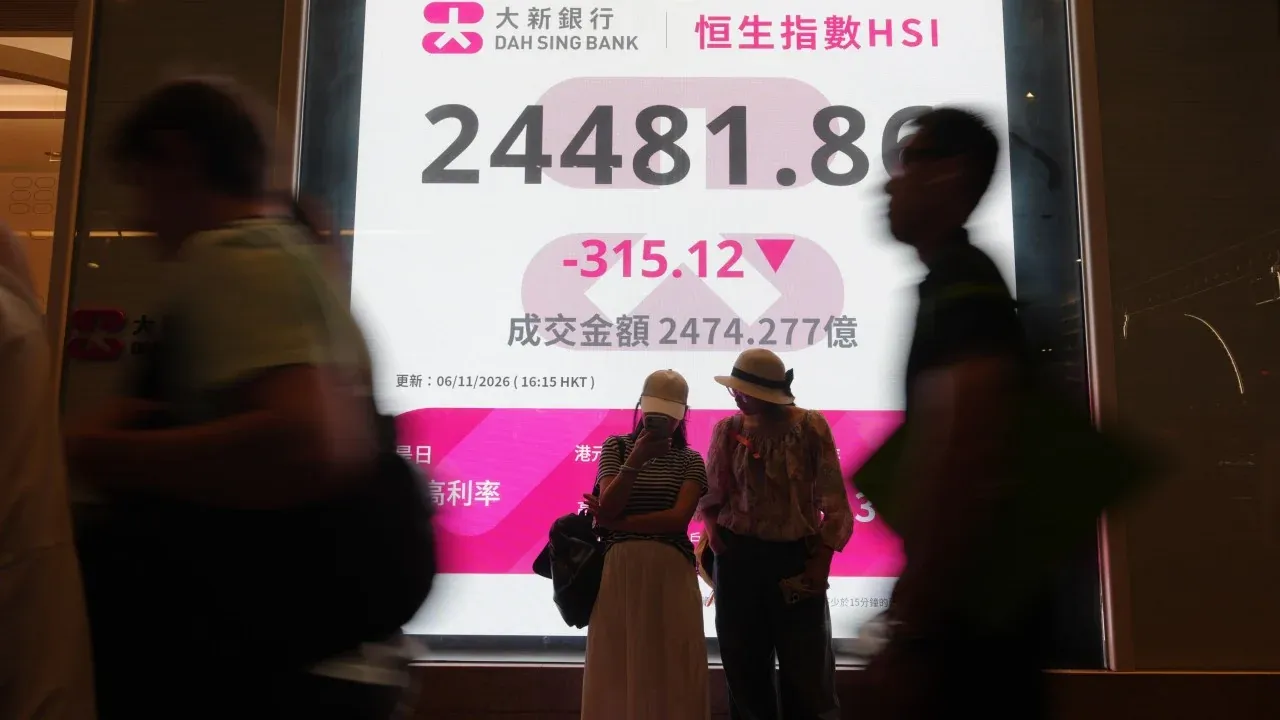
Research firm Gavekal Dragonomics says China's sweeping tax crackdown is unlikely to end and could prompt investors to shift assets away from Hong Kong to the United States, potentially weighing on the city's wealth management industry and financial markets. For executives with Hong Kong-booked capital, the firm's read is that the offshore trust campaign has probably passed its most disruptive phase, but improved tax surveillance capabilities and expanding legal powers mean the pressure broadens rather than stops.
China's tax crackdown is not winding down, and that has Gavekal Dragonomics warning that investors may start moving money out of Hong Kong and into the United States. The research firm's read is blunt: the campaign is unlikely to end, and the pressure it puts on the city's wealth management industry and financial markets is a live risk rather than a fading one. For anyone with capital booked in Hong Kong, that reframes the question from when does this stop to where does the money go if it does not. Gavekal's answer, at least as a direction of travel, is west.
The nuance matters, and Gavekal supplies it. The campaign targeting offshore trusts has probably passed its most disruptive phase. That sounds like relief. It is not. The reason the worst is behind is that the machinery is now built: improved tax surveillance capabilities and expanding legal powers give authorities the tools to pursue other sources of previously untaxed income. In other words, the crackdown is not ending, it is broadening. The first wave hit a specific structure, offshore trusts, and hit it hard. The next waves can be aimed wherever the surveillance data points. That is a materially different risk profile for anyone who assumed the storm would blow over once trusts were cleaned up.
Why Hong Kong absorbs the blow is structural. The city has historically functioned as the booking centre and gateway for mainland wealth, the place where family offices, private banks and trust structures sit between Chinese earners and global markets. That role built a wealth management industry, and a financial market whose depth depends on assets staying put. Gavekal's warning is that they may not. If investors shift assets away from Hong Kong toward the United States, the hit lands on the city's wealth management industry and, by extension, on the financial markets that feed off it. Fee pools, assets under management and the talent that services them all move with the money.
The United States is the named destination, and the logic is not hard to follow. It offers the deepest capital markets, dollar-denominated assets and a legal system that global investors already know how to navigate. For context, the US has historically sat outside the multilateral framework most major financial centres use to automatically exchange account information, relying instead on its own FATCA regime. That asymmetry has long made it a natural landing spot for capital that would rather not be reported elsewhere. Gavekal's language is conditional: investors could shift assets, not that they will en masse. But direction of travel is what moves allocation decisions over a three-to-five-year horizon.
The second-order effects are where this gets uncomfortable for executives. A wealth management hub is a network business: advisers, lawyers, trustees, auditors and bankers cluster where the assets are. Lose the assets and you lose the ecosystem, and rebuilding it is far harder than losing it. Hong Kong's private banks and family office service providers would face a slow squeeze on revenue rather than a sudden shock, which is arguably worse, because slow squeezes get under-managed. The same dynamic pressures the city's exchanges and asset managers, whose liquidity and product pipelines depend on a steady flow of mainland-linked capital.
There is a counter-argument worth holding alongside Gavekal's. Beijing has reasons to keep Hong Kong functioning as a financial centre, and a crackdown that hollows out the city's wealth industry would undercut that. The firm's own framing, that the most disruptive phase has passed, leaves room for a stabilisation in which compliance becomes routine and capital stays. But the mechanism Gavekal identifies, better surveillance plus wider legal powers, cuts the other way. Capability tends to get used. Once authorities can see previously untaxed income, the question is not whether they will pursue it but how quickly.
For decision-makers, the practical takeaway is that jurisdiction risk in Hong Kong is now a live line item rather than a background assumption. That means reviewing where entities are booked, how trusts are structured and what a shift in enforcement would cost, before the enforcement arrives. It also means watching the wealth management industry's own numbers: net new money, adviser headcount, family office registrations. Those are the early indicators of whether Gavekal's direction of travel becomes an actual flow. The firm's warning is not that the money has left. It is that the reasons to leave are getting stronger, and the reasons to stay are getting harder to explain to a client.
This story's Key Insights and Take-aways are locked.
Create a free account to unlock Executive Actions for one credit.
Register to UnlockAlways free for Executives Club members. Join the Club
More in Business

S&P 500 Enters Correction, Down 10% From Its High on AI Worries
The index's slide past the 10 percent line is a symbolic verdict on investor mood, and the AI trade that powered the rally is now the thing testing it.

Dow and S&P 500 enter correction as Nasdaq logs worst week since 2020
All 11 S&P 500 sectors fell more than 1% in the same week for the first time since April 2025, a breadth signal that matters more than any single index level.

Chip stocks lose $2.3 trillion in a week, worst run in 25 years
A $2.3 trillion weekly wipeout in semiconductors is forcing every board with an AI story to ask whether it owns a thesis or just a crowded trade.