
Geothermal startups bet super-hot rock can deliver terawatts anywhere
A new cohort says it can leapfrog today's geothermal leaders and put firm, always-on power nearly anywhere, just as data centers run short of it.
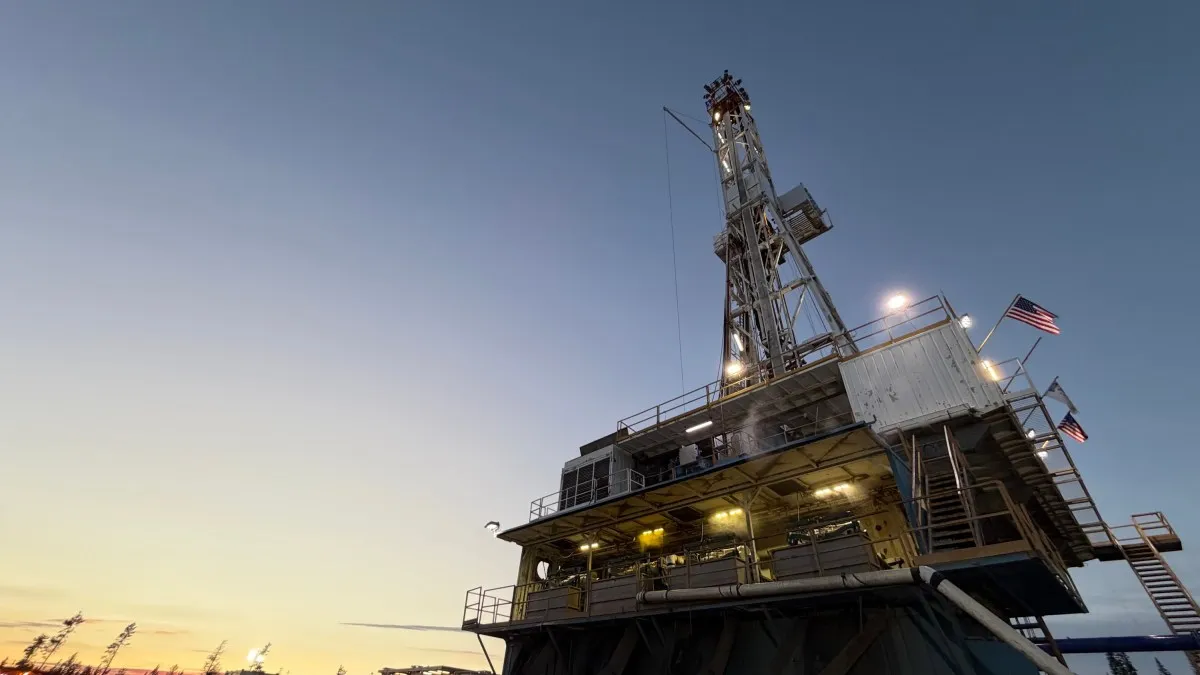
A new wave of geothermal startups is betting it can leapfrog today's industry leaders by drilling into super-hot rock and delivering terawatts of electricity nearly anywhere. For data center operators, hyperscalers, and the boards funding them, that promise targets the sector's hardest constraint: firm, always-on power that is not hostage to geography.
The pitch is audacious on its face: a new crop of geothermal startups says it can leapfrog the companies that built today's geothermal industry and deliver terawatts of electricity nearly anywhere. The bet rests on super-hot rock, reservoirs hot enough that water pumped into them behaves less like steam and more like a supercritical fluid, carrying far more energy per well than the lukewarm reservoirs conventional plants rely on. Terawatts, for scale, is not a project number. It is a grid number. One terawatt is 1,000 gigawatts, and a single large power plant typically produces around one gigawatt. These startups are not promising a plant. They are promising a category.
The timing is not accidental. Data centers, and the AI workloads filling them, have become one of the fastest-growing sources of electricity demand in the world, and the industry's problem is not price alone. It is firmness. Solar and wind are cheap but intermittent, and batteries cover hours, not seasons. Data center operators need power that runs every hour of every day, and they need it close to where they are building, which increasingly means wherever land, fiber, and permitting allow. That combination, always-on and nearly anywhere, is precisely what conventional geothermal has never been able to offer at scale.
Today's geothermal leaders built their businesses on a geological lottery. Conventional plants tap natural hydrothermal reservoirs, places where heat, water, and permeable rock happen to line up close enough to the surface to be drilled economically. Those places exist, but they are rare and they are fixed. Historically, that has confined large-scale geothermal to a short list of geographies: Iceland, Kenya's Rift Valley, Indonesia, New Zealand, and a handful of spots in the western United States. Excellent if you happen to be there. Useless if you are building a data center in Virginia, Texas, or Singapore.
The new entrants are betting they can manufacture the reservoir instead of hunting for it. The approach, broadly, is to drill deeper and hotter than the industry has traditionally gone, into rock hot enough to push water into a supercritical state, and to engineer the flow paths underground rather than relying on what nature happened to provide. Much of the tooling is borrowed from oil and gas, where directional drilling and deep well economics have improved dramatically over the past two decades. If it works, the map stops mattering. Heat is everywhere if you go deep enough. The open question is whether you can reach it at a cost that beats the alternatives.
That "if" is doing enormous work. The gap between a promising well and terawatts of delivered power is where most energy ideas die. Drilling deep, hot rock is expensive and unforgiving, and equipment that performs in oilfield conditions can fail in rock that is hotter and harder. Permitting for subsurface resources is a patchwork of state and national rules, and grid interconnection queues in many markets already stretch years. Then there is offtake: someone has to sign a long-term contract before a project can be financed. The startups are betting on all of it at once.
The incumbents have the opposite problem. They own operating assets, subsurface expertise, and utility relationships, but their resource base is geographically capped. If super-hot rock works, the advantage shifts from who holds the best reservoir to who holds the best drilling cost curve and the balance sheet to scale it. Utilities and independent power producers would face a new class of competitor that can site generation almost anywhere, which changes the economics of transmission and the politics of siting. Data center operators, meanwhile, would gain something they have not had: a firm, carbon-free power source that is not tied to a river, a coastline, or a nuclear license.
For executives and boards, the practical question is not whether super-hot rock is real. It is how to position before the answer becomes obvious. Power procurement teams that have spent the last few years signing solar and storage deals may need a geothermal option in the mix, even if it is early and unproven. Investors should expect a wave of claims that outrun the data, and should ask for the boring numbers instead: flow rates, well costs, decline curves, and interconnection status. And the incumbents should assume the startups are not bluffing about the ambition, only about the timeline. The prize on offer is not a niche. It is terawatt-scale, always-on, nearly anywhere power, which is exactly what the AI buildout is quietly starving for.
This story's Key Insights and Take-aways are locked.
Create a free account to unlock Executive Actions for one credit.
Register to UnlockAlways free for Executives Club members. Join the Club
More in Technology

Anthropic mathematician claims Claude helped crack the Riemann hypothesis
If the proof holds, AI has toppled math's most famous open problem; if it does not, it is a case study in announcing breakthroughs before anyone verifies them.

AI's $4 Trillion Wipeout Erases Nasdaq's Gains for the Year
A brutal week took roughly $4 trillion off the AI sector and left the Nasdaq flat for the year, and the damage ran the full length of the supply chain.

Anthropic mathematician says AI proved the Riemann hypothesis. Verification will take time.
A single unverified claim from inside Anthropic now sits against more than 160 years of open mathematics, and the gap between asserting a proof and surviving peer review is the entire story.