
Google Rejects UK Demand to Pull Russell Brand Video, Sources Say
The refusal puts a private company's rulebook above a national government's request, and it lands as Brand's wife shares his claim of innocence.
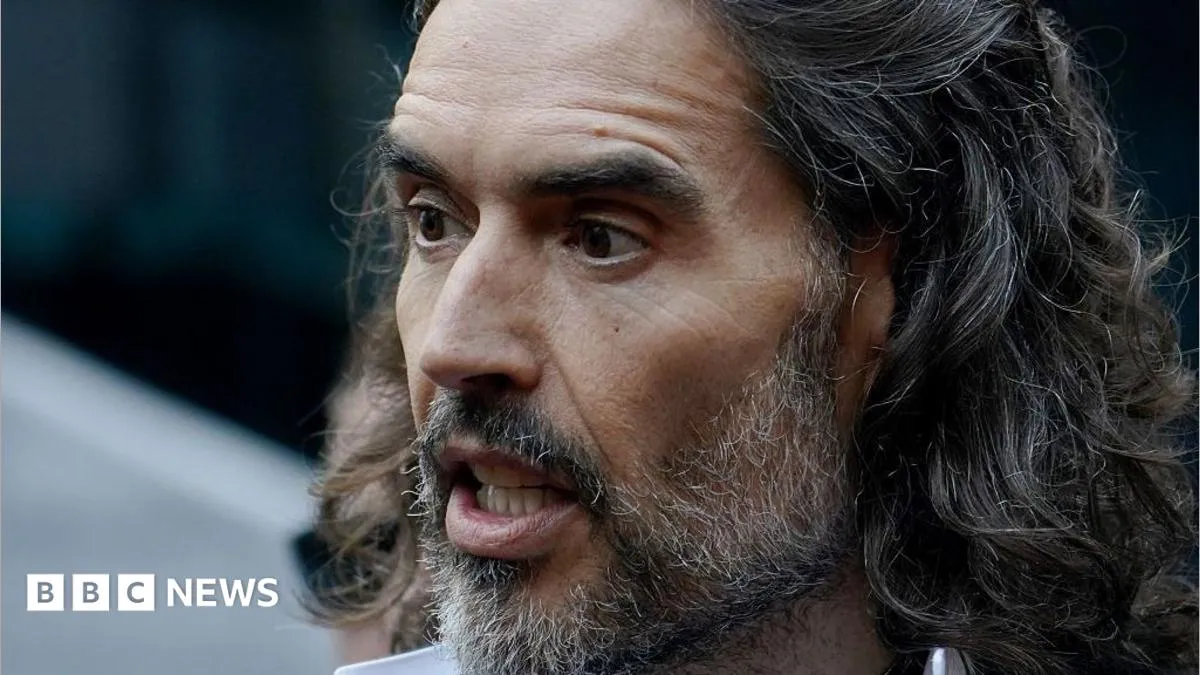
Google has rejected a UK request to remove a Russell Brand video from YouTube, according to BBC News sources, with the decision reported after Brand's wife shared a message in which he claimed his innocence. For decision-makers, the case is a live test of whether governments or platforms hold the final say over what stays online, and how much precedent a single refusal sets.
Google has refused a request from the UK to take down a Russell Brand video from YouTube, according to BBC News sources, a decision that puts a national government's request on the losing side of a platform's own rulebook. The rejection, reported by BBC Politics, means the video stays live on the world's largest video platform even after a formal approach from a national government. Google has not confirmed the decision publicly, and the reporting rests on sources rather than an on-the-record statement, so the precise scope of the request and which video was targeted remain unclear from the source material.
The timing is the sharp edge here. The request lands after Brand's wife shared a message from him in which he claimed his innocence, putting the dispute back in front of a mass audience rather than leaving it to lawyers and regulators. That is the backdrop against which Google said no: a platform weighing a government's demand against its own rulebook, at a moment when the person at the center of the story is using that same platform to make his case.
For anyone outside the trust-and-safety world, the mechanics are worth spelling out. Platforms like YouTube typically handle takedown requests through two channels: their own community guidelines, which govern what users may post, and government or law-enforcement requests, which are logged and, at Google, historically published in a transparency report. A government request is not the same thing as a legal order. In most democracies, including the UK, a minister cannot simply compel a platform to delete lawful speech; the state can flag content, escalate to a regulator, or pursue a court order, but the platform keeps the final call on whether a video breaches its rules. Google's answer is a reminder that the final call is exactly that: a call, made by a company.
The UK has spent years building out that machinery. The Online Safety Act, rolled out in stages, puts duties on platforms to protect users from illegal content and, for children, from harmful content, with Ofcom as the regulator. It is a regime built around systems and processes, not a government kill switch for individual videos. That distinction is easy to lose in a headline, and it is why a rejection like this one can be legally unremarkable and politically loud at the same time.
Google's incentives cut in several directions at once. Granting a government request is cheap in the short term and expensive in precedent: every takedown it approves becomes an argument that the next request should be approved too. Refusing invites political pressure, advertiser nervousness, and accusations that the platform is sheltering content it would rather not defend. YouTube has spent a decade convincing advertisers that brand safety is a solved problem, and every controversy that drags a creator back into the news tests that promise. The answer here suggests Google judged the cost of deleting the video, and the precedent that would set, to be higher than the cost of saying no.
There is a bigger structural story underneath. Brand is a comedian and broadcaster who rebuilt himself as a YouTube creator, and his case shows how completely the distribution of attention has shifted. A figure who once needed a broadcaster's permission to reach an audience now reaches it directly, and the only gatekeeper left is the platform. That makes companies like Google the de facto arbiters of a huge share of public speech, a role they did not ask for, were not elected to, and cannot easily hand back. When a government asks one of them to remove something, it is asking a private company to make a decision that looks a lot like a public one.
The second-order effects are where this gets interesting for anyone running a company. Expect more of these collisions, not fewer: governments increasingly treat platforms as utilities, and platforms increasingly treat their own rulebooks as the final word. Watch the transparency gap too. Because this was reported through sources rather than an official statement, the public record of who asked for what is thin, and thin records are how trust erodes on both sides. Note the asymmetry as well: a platform can absorb a political fight in a way an individual creator cannot, which is why the loudest arguments about moderation are usually proxies for a bigger question about who holds power over speech.
What happens next will be telling. Google could explain its reasoning publicly, putting its guidelines on the record and forcing the UK to respond in kind. The government could escalate through Ofcom, through the courts, or through the court of public opinion. Advertisers could decide the controversy is not worth the adjacency. And Brand's own channel remains the venue where he is making his case, which is its own verdict on how the internet works now. For executives watching, the lesson is not about one video. It is that the rules of the road are being written in real time, by companies that would rather not be the ones holding the pen.
This story's Key Insights and Take-aways are locked.
Create a free account to unlock Executive Actions for one credit.
Register to UnlockAlways free for Executives Club members. Join the Club
More in Politics

Fifth Circuit Kills Pregnant Workers' Law Over Pandemic Proxy Votes
A procedural ruling, not a policy one, has blocked a federal pregnancy-accommodation law and put every pandemic-era statute in the crosshairs ahead of an expected Supreme Court appeal.

Measles kills a Virginia child under 5, the state's first death of 2026
Virginia's health department confirmed the death but withheld the child's vaccination status, leaving schools, clinics and employers to plan around the one detail that would explain the most.

Former Brazilian President Bolsonaro Hospitalized with Intestinal Obstruction
The health status of the former far-right leader raises immediate questions about political stability and the trajectory of Brazil's conservative movement.