
Google Wallet lands on iPhone with Gemini shopping, no tap-to-pay
US iOS users get Gemini agentic shopping in Google Wallet, but the app arrives without tap-to-pay, leaving Apple's NFC-controlled checkout untouched.
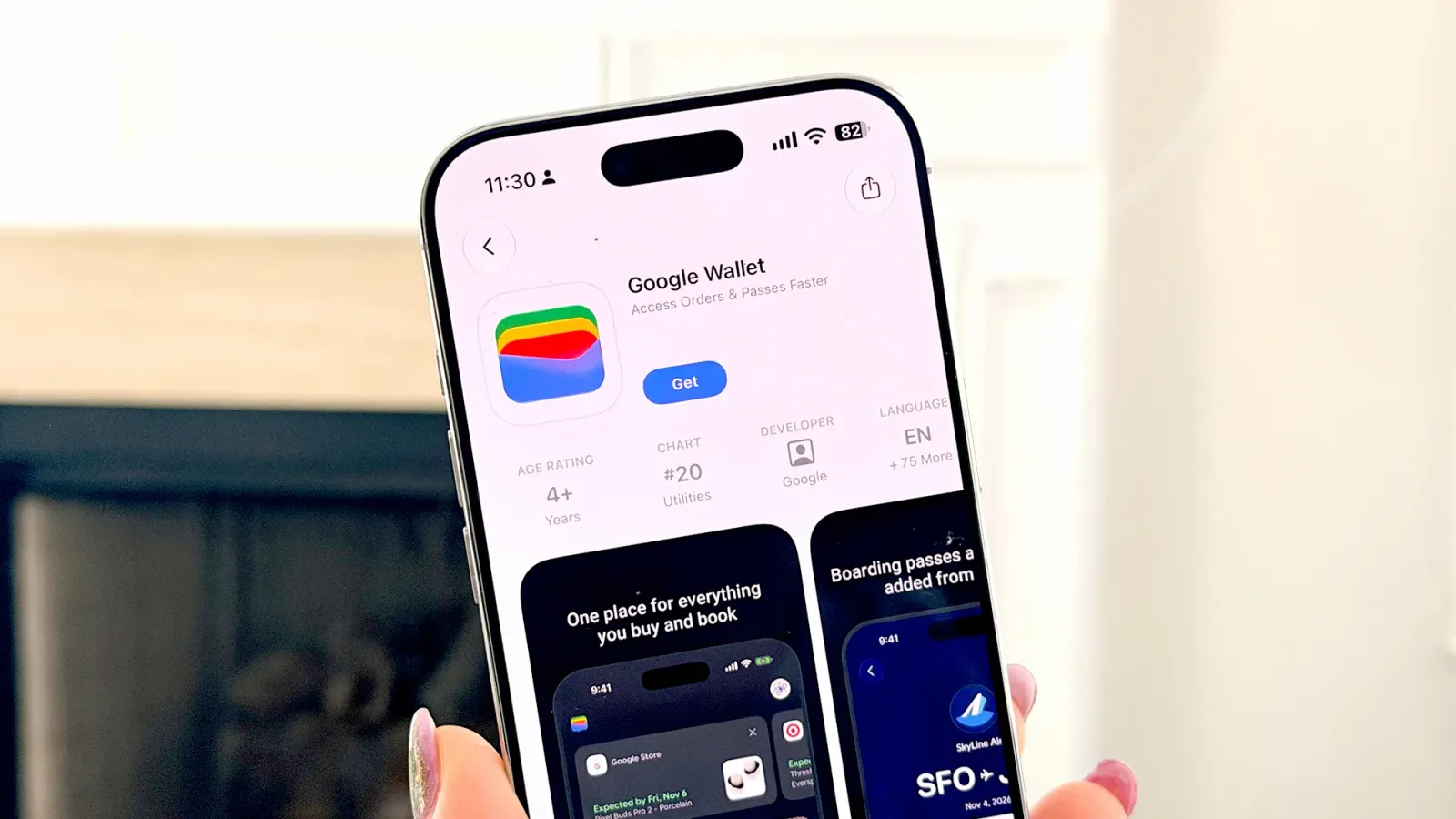
Google has launched its Wallet app on iOS for US users, bringing Gemini agentic shopping but no tap-to-pay. The move puts Google's AI agent in front of iPhone owners while leaving the payment layer firmly in Apple's hands, a signal that AI-driven commerce is the next platform battleground.
Google has brought its Wallet app to the iPhone, and the headline feature is Gemini agentic shopping. The app is available to US-based iOS users. The catch, as ZDNet put it, is simple: sorry, no tap-to-pay. That means iPhone owners can use Google Wallet for AI-powered shopping, but they cannot hold their phone near a terminal to pay with it. The omission is not a bug. It is a platform rule.
On Android, Google Wallet has historically been a full wallet, including contactless payments. On iOS, Apple controls the NFC chip, so third-party wallets typically cannot offer tap-to-pay. Google is not fighting that battle here. Instead, it is using Wallet as a delivery vehicle for Gemini, Google's AI assistant, in a shopping context. The term agentic shopping implies an AI that can take actions on your behalf, not just answer questions. Google has not detailed the full capabilities in the original report, but the direction is clear: the company wants Gemini to be the agent that helps you buy things.
Google Wallet has been through several iterations. It originally launched in 2011 as a tap-to-pay service on Android. It later merged with Android Pay and then Google Pay. In recent years, Google rebranded and repositioned Wallet as a place for passes, tickets, and cards. Bringing it to iOS is a new chapter. The app is not trying to replace Apple Wallet for payments. It is trying to become a destination for AI-powered shopping.
This is a notable distribution win for Google on Apple's platform. Apple and Google compete fiercely in mobile, but they also cooperate, most famously on search. Bringing Gemini to iPhone, even in a limited wallet app, gives Google a rare direct relationship with iOS users for AI-powered commerce. It also puts Google in the same arena as Apple's own AI efforts, including Apple Intelligence and Siri. Apple has been adding AI features to its devices, and a third-party AI shopping agent could either complement or compete with those features.
For merchants, another AI shopping channel means more complexity. They already optimize for Google Search, Amazon, social commerce, and Apple's ecosystem. An agentic shopping assistant could change how products are discovered and bought. If Gemini can act on a user's behalf, it might compare prices, fill carts, or complete purchases. But without tap-to-pay on iOS, the final transaction still happens through Apple's payment rails or another method. That means Google captures the intent, while Apple or another provider captures the payment. The split matters for monetization.
The tap-to-pay gap is not just a technical detail. Apple has faced pressure to open its NFC chip to competitors. In Europe, the Digital Markets Act has forced Apple to allow third-party access to NFC for payments. In the US, no such mandate exists. So Google Wallet on iOS reflects the current regulatory reality: Apple's platform rules shape what features rivals can offer. If the US follows Europe's lead, Google Wallet on iPhone could eventually gain tap-to-pay. Until then, the app is a shopping assistant without the wallet's most basic function.
For executives, the launch is a reminder that AI is becoming a front door to commerce. The company that controls the AI agent may control the customer relationship, even if it does not control the payment. Google is betting that Gemini can win that role. Apple is betting that its own assistant and wallet can keep users inside its garden. The outcome will shape how billions of dollars in online and offline commerce flow. It will also influence which companies get to charge fees, gather data, and build loyalty. Watch three things: whether Google adds tap-to-pay on iOS, how Apple responds with its own agentic shopping features, and whether merchants see meaningful traffic from Gemini. For now, Google Wallet on iPhone is a small app with a big implication. It shows that the AI arms race is moving into the checkout aisle, and the fight over who owns the agent is just getting started.
This story's Key Insights and Take-aways are locked.
Create a free account to unlock Executive Actions for one credit.
Register to UnlockAlways free for Executives Club members. Join the Club
More in Technology

Anthropic mathematician claims Claude helped crack the Riemann hypothesis
If the proof holds, AI has toppled math's most famous open problem; if it does not, it is a case study in announcing breakthroughs before anyone verifies them.

AI's $4 Trillion Wipeout Erases Nasdaq's Gains for the Year
A brutal week took roughly $4 trillion off the AI sector and left the Nasdaq flat for the year, and the damage ran the full length of the supply chain.

Anthropic mathematician says AI proved the Riemann hypothesis. Verification will take time.
A single unverified claim from inside Anthropic now sits against more than 160 years of open mathematics, and the gap between asserting a proof and surviving peer review is the entire story.