
Grimes to Musk: 'Be the king you used to be' over AI 'sex slave'
The Tesla and X owner amplified an AI-generated influencer; his ex-partner's public rebuke shows how fast a founder's personal feed becomes unpriced brand risk.
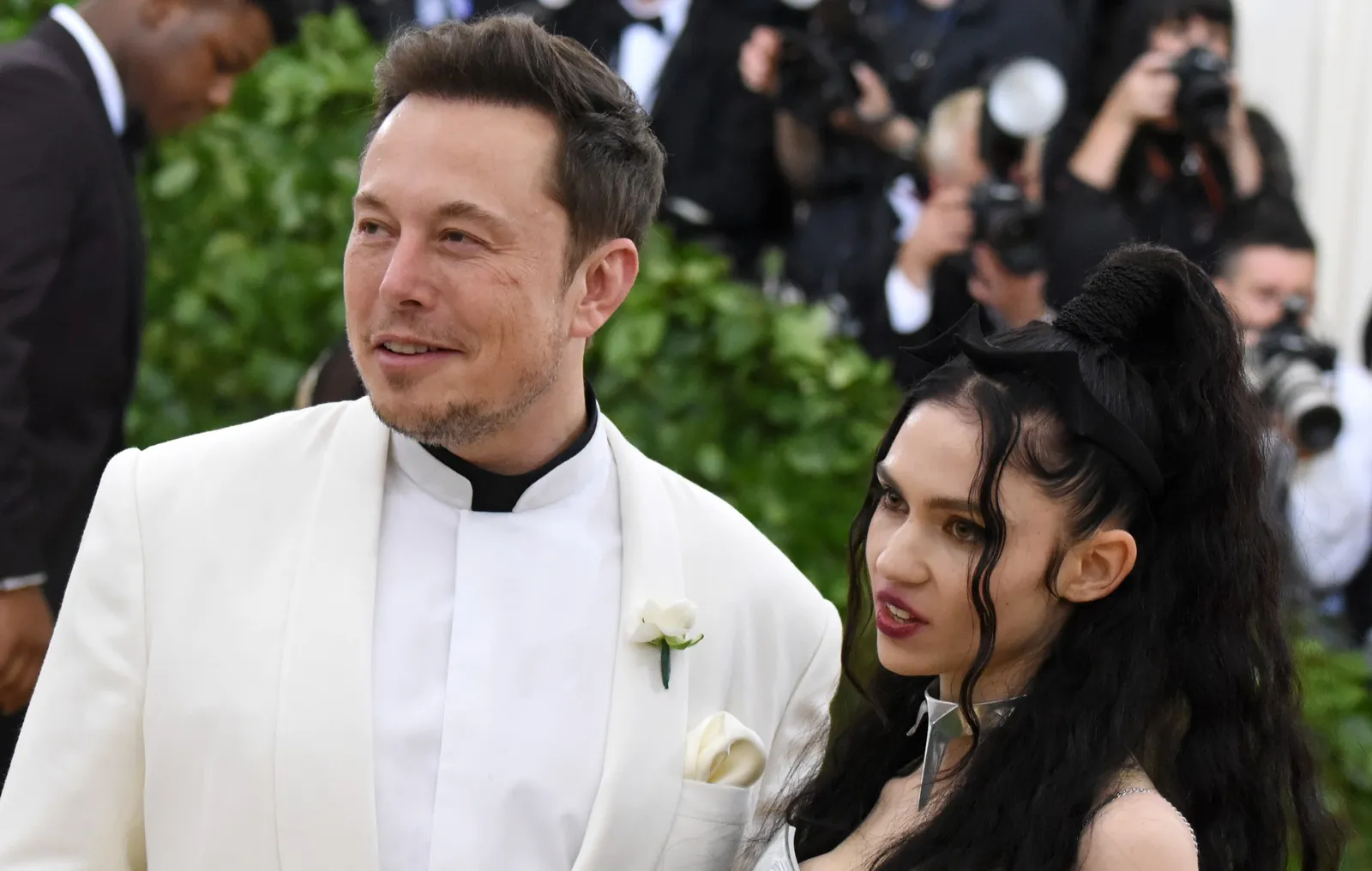
Grimes, the artist born Claire Boucher, publicly told Elon Musk to "step up" and "do better" after the Tesla CEO and X owner promoted Claudia, an influencer generated entirely by artificial intelligence. The exchange matters to any founder whose personal account doubles as corporate distribution: the same feed that moves markets can move reputational risk onto the balance sheet in an afternoon.
Grimes, the Canadian artist born Claire Boucher, publicly told Elon Musk to "step up," "do better" and be "the king he used to be" on Wednesday, November 18, after the Tesla CEO and X owner promoted Claudia, an influencer generated entirely by artificial intelligence. Musk's post read: "Super intelligence will hack your limbic system." Boucher, who shares three children with Musk, answered in the replies: "The fixation on fake women feels like cope. I'm a fan of Claudia, but she doesn't have a birkin deal, and she isn't a she; she's an alien creature who's both blessed and haunted by the entirety of ancestral memory." She added that "secularising a species that cannot have sex is the ultimate definition of Nietzsche's last man, and we can do better than reducing 'it' to a sex slave."
Musk's reply was two words and a video: "Take the White Pill," attached to a clip of Claudia singing "End of the world? You're absolutely right / End of the 9-5 tonight." The exchange escalated when Boucher argued that "our leaders should read Nietzsche and Elon has read Nietzsche. It is not causal. He's an unelected king. He could and should step into the role and confront his responsibility to society, if he wanted to." She then wrote: "He can do better. He [should] rise above it. He [should] be the king we all wish he was. The king he used to be. Ima stop saying this in private and say it online. If he [would] step up and be magnanimous, he could earn the Mandate of Heaven - which currently he has lost." Musk's answer was blunt: "I don't want to be king, and Starship has the Mandate of Heaven."
Strip out the soap opera and the structural story is sharper. Musk has owned X since 2022, and X is where Claudia was promoted. The single most powerful distribution channel for synthetic personas is owned by the man amplifying one. That is not a tabloid detail; it is a market fact. AI-generated influencers are moving from novelty to inventory, and whoever controls the feed controls the pricing power. For founders building in the creator economy, the question is no longer whether synthetic talent gets brand deals, but who captures the margin when it does.
Boucher's own position is more commercially complicated than the fight suggests. She is set to make her film debut as futuristic aristocrat Zayinth Alda in the AI-generated movie Gods Don't Give Gifts, and she is due to release the AI-themed album "Psyopera" in January. She promised fans it was not made with any generative AI, but said it would explore the effects of the growing technology. She also said she "didn't want any of this [project] to be about Elon." Previously she shared AI music software that mimicked her voice and made more than 200 AI records available for content creators to use for free. In 2024 she claimed the use of artificial intelligence in music would "probably shape all minds going forward for the rest of time." She is, in other words, both a critic of how AI is deployed and an operator betting on it.
The personal history explains the temperature. Boucher and Musk announced they had "semi-separated" in 2021. The year prior, she told him she could not "support hate" after he tweeted that "pronouns suck," writing: "Please stop this. I know this isn't your heart." More recently she branded his X "a poison, a prison of utterly short-form deep-sounding nonsense," denounced Nazism and distanced herself from him following his controversial Nazi-like gestures at Donald Trump's Presidential inauguration. She has spoken about being embroiled in a custody battle with Musk and criticised him for "ignoring" their child's "medical crisis." She once shared her mother's plea for Musk to let the pair's children see their elderly great-grandmother, and later "begged" him to keep their kids out of the public eye. On another occasion she appeared to take a swipe at her ex by agreeing with Olivia Rodrigo's comments about men who want to go into space. In this latest round she wrote: "If Elon respected women in public the whole world [could] change," and that "a man who worries so publicly [about] the birth rate should not publicly advocate for its demise." She also insisted her "value is not threatened or denigrated by Claudia," and that "Elon is a king whether he likes it or not. He could be great if he listened to the people."
For context, the rules governing AI-generated personas, likeness rights and disclosure are still being written in most major markets, which means the commercial exposure sits with the platforms and the brands long before it sits with regulators. Musk's own AI track record is mixed: last month he followed through on his promise to create a historically accurate version of The Odyssey using AI, and the reaction was not good. Meanwhile his operating companies, Tesla and SpaceX, carry valuations that depend on investor confidence in his judgment, not just his engineering. Every public post is a small, unpriced draw on that account.
The strategic lesson for peers is uncomfortable. Founder-led communications are the cheapest distribution a company can buy, and the hardest to govern. Boards typically treat a CEO's personal account as outside their remit until the day it is not. Boucher's framing, that Musk is "an unelected king" who "could and should step into the role and confront his responsibility to society," is a governance argument dressed as a breakup post. The companies most exposed are the ones where one person is simultaneously the largest shareholder, the chief spokesperson and the platform owner. That concentration is an asset in a bull market and a single point of failure in every other one.
This story's Key Insights and Take-aways are locked.
Create a free account to unlock Executive Actions for one credit.
Register to UnlockAlways free for Executives Club members. Join the Club
More in Technology

Anthropic mathematician claims Claude helped crack the Riemann hypothesis
If the proof holds, AI has toppled math's most famous open problem; if it does not, it is a case study in announcing breakthroughs before anyone verifies them.

AI's $4 Trillion Wipeout Erases Nasdaq's Gains for the Year
A brutal week took roughly $4 trillion off the AI sector and left the Nasdaq flat for the year, and the damage ran the full length of the supply chain.

Anthropic mathematician says AI proved the Riemann hypothesis. Verification will take time.
A single unverified claim from inside Anthropic now sits against more than 160 years of open mathematics, and the gap between asserting a proof and surviving peer review is the entire story.