
Grok Was Used to Strip Her Hijab. Now She Is Suing xAI.
Amani Al-Khatahtbeh is suing xAI with lawyer Hillary Nappi, testing whether litigation can force Big Tech to answer for AI tools used to erase a woman's hijab.
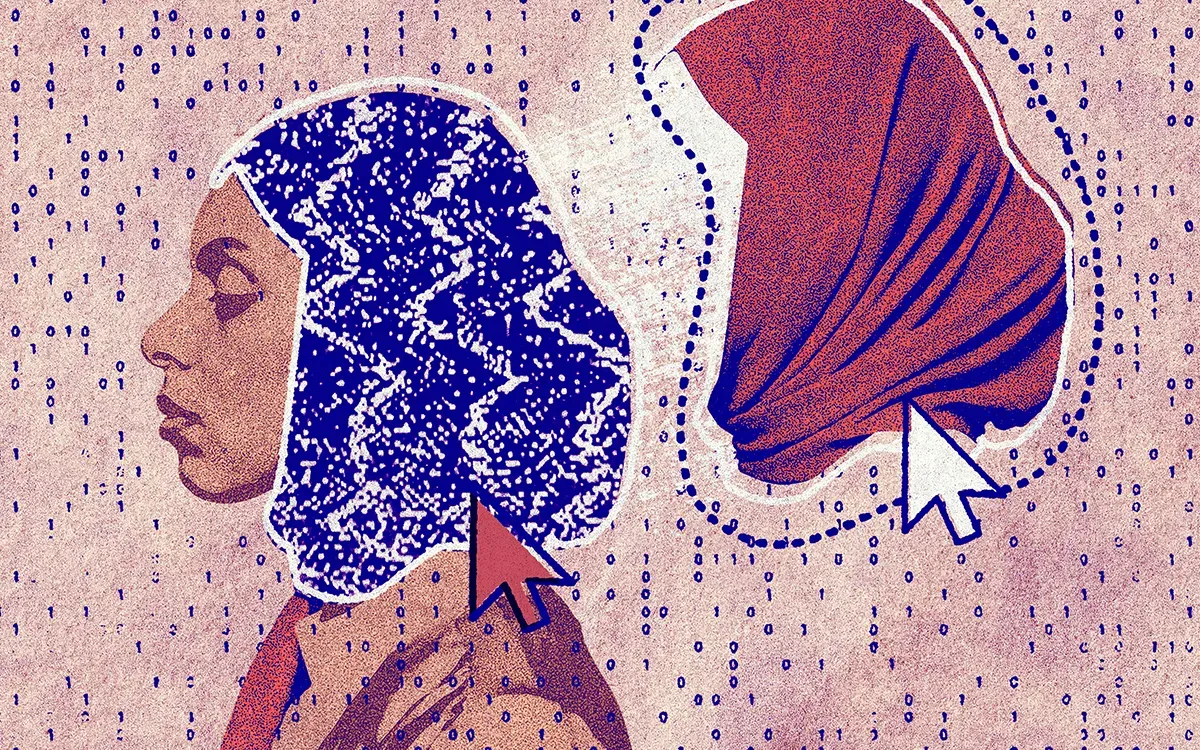
Muslim author Amani Al-Khatahtbeh is suing xAI after people used its Grok tool to strip her hijab, with lawyer Hillary Nappi representing her. For executives, the case turns AI image abuse from a policy headache into a live legal and reputational risk that boards must govern before the next viral misuse.
Amani Al-Khatahtbeh, a Muslim author, is suing xAI after people used Grok, the company's AI tool, to strip her hijab. The case is not a vague complaint about bad outputs. It names a specific woman, a specific product, and a specific act of identity erasure that she says crossed a line. "The only way you get some change against Big Tech is to sue them," says Hillary Nappi, the lawyer representing Al-Khatahtbeh in the lawsuit. That quote is the spine of the story: the legal system is being used as the enforcement mechanism for a harm that platform policies and product guardrails have not stopped.
The hijab is not a costume filter. For many Muslim women it is a daily religious practice and a public marker of identity. An AI tool that can remove it with a prompt does more than edit a photo; it lets strangers rewrite how a woman is seen, and it does so at scale. The lawsuit puts that distinction in front of a court. It asks whether a company that builds a generative model can be held responsible when users turn the model into a weapon aimed at a person's faith and appearance. The answer will matter far beyond this single case.
For context, generative AI has moved fast from text to images, and the guardrails around image editing have not kept pace. Tools that can create realistic scenes can also be prompted to alter real people in ways that are humiliating, sexualized, or identity-based. Companies typically publish acceptable-use policies and rely on moderation, user reporting, and account bans. Those measures can be slow, inconsistent, and hard to enforce across a global user base. Litigation changes the clock. A lawsuit can force a company to preserve documents, explain product decisions, and answer for the gap between its public promises and what its model actually does.
The target here is xAI, the company behind Grok. The available account does not detail the complaint's legal theories, damages, or jurisdiction, so the strategic signal is not a verdict on those details. The signal is that a creator with a public identity is willing to take on an AI company directly, and she has counsel framing litigation as the only realistic path to change. That framing is a warning for every executive building consumer-facing AI. If users can generate harmful content about a named person, the company is no longer just shipping a model. It is operating a trust-and-safety system, a content moderation system, and a reputational firewall at the same time.
The business stakes are easy to underestimate because the harm starts as an image. But image abuse travels. It can spread through social platforms, group chats, and search results before a takedown request is reviewed. For a company like xAI, the downside is not only legal fees. It is enterprise buyer scrutiny, app store pressure, advertiser caution, and investor questions about governance. Boards increasingly want to know who owns AI risk, how abuse reports are escalated, and whether safety teams have authority to slow a product launch. A lawsuit can turn those questions into formal discovery.
Regulators are moving, but not at the speed of a viral prompt. Legislators and agencies around the world have been debating rules for synthetic media, nonconsensual imagery, and platform liability. Those debates are important, but they can take years to become enforceable rules. A private lawsuit can move faster and create a public record. It can also shape the market's expectations before any new statute arrives. Companies that treat trust and safety as a compliance afterthought may find that their real regulator is a plaintiff's lawyer with a client and a deadline.
For peers in similar roles, the lesson is not that every AI feature will end in court. The lesson is that image-generation products need a clear answer for the worst-case prompt. Who reviews abuse reports? How fast? What logs exist? Can the system detect repeated attempts to alter a specific person? And does the company have a communications plan for the day a high-profile user says the tool was used against them? Those are operational questions, not abstract ethics. They belong in product reviews, risk committees, and board materials.
Al-Khatahtbeh's case is a test of whether litigation can do what moderation has not. Nappi's quote is blunt because the problem is blunt: Big Tech builds systems that shape public life, and users often have little recourse when those systems are turned against them. The outcome will be watched by AI founders, investors, and creators alike. For executives, the takeaway is to treat AI image abuse as a live risk today, not a future policy debate. The next headline may name a different company and a different user, but the legal question will be the same.
This story's Key Insights and Take-aways are locked.
Create a free account to unlock Executive Actions for one credit.
Register to UnlockAlways free for Executives Club members. Join the Club
More in Technology

Anthropic mathematician claims Claude helped crack the Riemann hypothesis
If the proof holds, AI has toppled math's most famous open problem; if it does not, it is a case study in announcing breakthroughs before anyone verifies them.

AI's $4 Trillion Wipeout Erases Nasdaq's Gains for the Year
A brutal week took roughly $4 trillion off the AI sector and left the Nasdaq flat for the year, and the damage ran the full length of the supply chain.

Anthropic mathematician says AI proved the Riemann hypothesis. Verification will take time.
A single unverified claim from inside Anthropic now sits against more than 160 years of open mathematics, and the gap between asserting a proof and surviving peer review is the entire story.