
Grynspan leads 7 of 8 UN straw polls. Friday's ballot tests the P5 veto
Rebeca Grynspan, the Costa Rican economist who has topped seven of eight Security Council straw polls since 30 July, faces a Friday vote that will show whether the permanent five block her and reopen the fight over who really picks the UN's next chief.
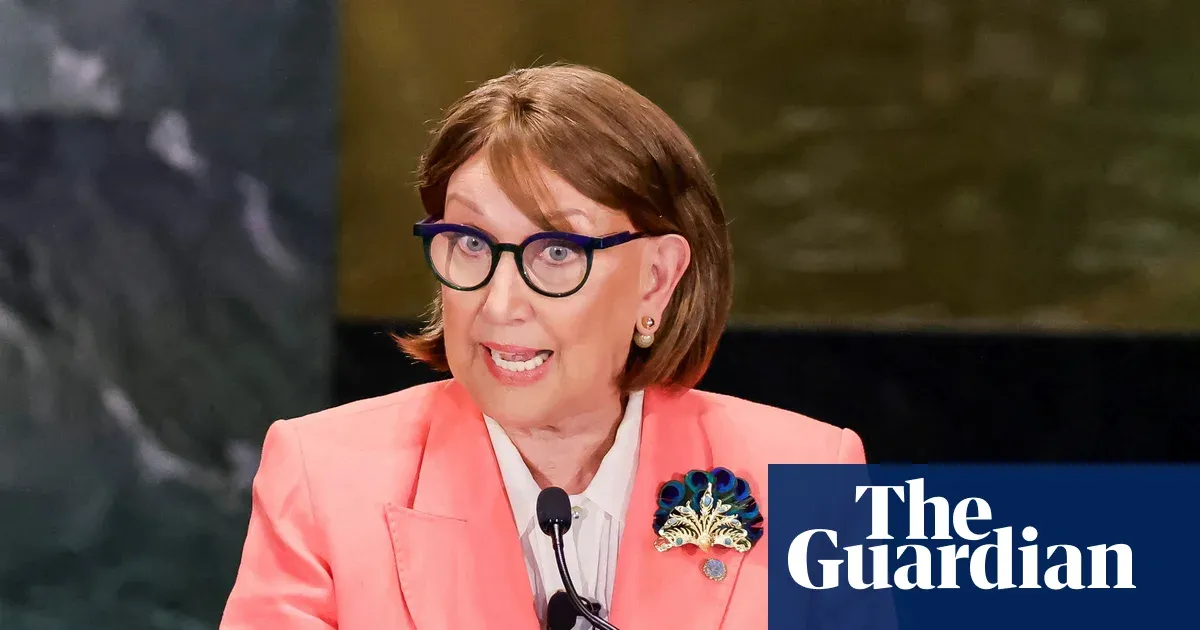
Rebeca Grynspan, the Costa Rican economist and UN insider, has led all but one of eight Security Council straw polls since 30 July, and a Friday vote will reveal whether the P5 blocks her candidacy for UN secretary general. A block would reignite the fight over permanent-five dominance and hand the eventual winner a weaker mandate over peacekeeping, sanctions, and humanitarian coordination.
Rebeca Grynspan has led the room in seven of the eight straw polls held by the 15-member UN Security Council since the first secret ballot on 30 July. The Costa Rican economist and longtime UN insider is the frontrunner to become the next UN secretary general, and on Friday a Security Council vote is likely to reveal whether the big powers are prepared to let her through, or whether one of them quietly blocks her first.
The mechanics explain how a frontrunner can be stopped without anyone admitting they stopped her. In each straw poll, every council member works down the list of candidates and casts one of three votes per name: "encourage", "discourage", or "no opinion". The ballots are secret, and the secrecy is the point. A "discourage" from any of the five permanent members, the US, UK, France, Russia and China, functions as a veto, and it can be delivered without a speech, a press conference, or a public explanation. Historically, the council recommends a single name to the 193-member General Assembly, which then appoints. The P5's grip on that recommendation is the quiet lever that shapes the entire race.
Grynspan's biography explains part of her appeal. She is an economist by training and a UN insider by career, and she comes from a family of Polish-Jewish wartime refugees who rebuilt their lives in Costa Rica. That combination, technical credibility, a small-country passport, and decades inside the system, is the profile of a secretary general who can be confirmed without alarming anyone. Historically, it is also the profile the permanent five have been most comfortable with: a manager rather than a crusader.
The pattern is not new. The race has typically been shaped less by global popularity than by the quiet arithmetic of the P5, and candidates who looked unstoppable in early rounds have stalled when a single permanent member decided the cost of saying yes was too high. The straw poll system exists to surface that resistance early, in private, so no candidate is publicly humiliated by a veto in the formal vote. That is why the eight ballots matter so much: they are the closest thing to a real-time readout of where the vetoes sit.
If Friday's vote shows a major power discouraging her, the setback will not be personal. It will reignite a long-running argument about the permanent five's dominance at the United Nations. The complaint, aired repeatedly over the years, is that five countries with veto power effectively choose the person who runs an institution serving 193 member states. Every time a strong frontrunner is blocked, that argument gets louder, and the eventual winner inherits a weaker mandate.
The debate has teeth because the UN's legitimacy rests on the perception that it is not a five-country club with a global mailing address. Smaller member states have long argued that a secretary general chosen by the P5 owes the P5, and that the institution's ability to mediate, to call out abuses, and to coordinate sanctions depends on the officeholder's room to maneuver. Blocking a frontrunner does not settle that argument. It confirms it.
The secretary general is not a ceremonial post. The office sets the tone for peacekeeping missions, humanitarian appeals, sanctions coordination, and the mediation tracks that determine whether conflicts stay contained or spill into markets. For companies with supply chains in fragile regions, for investors pricing political risk, and for anyone tracking how sanctions regimes actually get implemented, the identity and perceived independence of the next secretary general is a live variable, not a trivia question.
There is a second-order effect that matters more than the name on the door. A contested, veto-driven selection tends to produce a secretary general who governs cautiously, because the mandate was negotiated rather than granted. That caution shows up in how aggressively the office pushes on human rights, how quickly it criticizes a permanent member's actions, and how much political capital it spends on reform. A frontrunner blocked on Friday would enter the job, if she enters it at all, with a smaller mandate than her poll numbers suggest.
Watch three things after Friday. First, whether any discouraging votes come from a P5 member or from the ten elected members, a distinction that changes the story entirely. Second, whether the race stays open or a new name consolidates quickly, which is how the P5 typically resolves a deadlock. Third, whether the losing side takes the fight public, because the transparency argument is the one lever smaller member states actually hold.
For now, the scoreboard is simple: eight straw polls, one leader, one exception. Grynspan has been the most acceptable candidate in the room for most of the summer. Friday will show whether most acceptable is enough when five members hold the pen.
This story's Key Insights and Take-aways are locked.
Create a free account to unlock Executive Actions for one credit.
Register to UnlockAlways free for Executives Club members. Join the Club
More in Politics

Fifth Circuit Kills Pregnant Workers' Law Over Pandemic Proxy Votes
A procedural ruling, not a policy one, has blocked a federal pregnancy-accommodation law and put every pandemic-era statute in the crosshairs ahead of an expected Supreme Court appeal.

Measles kills a Virginia child under 5, the state's first death of 2026
Virginia's health department confirmed the death but withheld the child's vaccination status, leaving schools, clinics and employers to plan around the one detail that would explain the most.

Former Brazilian President Bolsonaro Hospitalized with Intestinal Obstruction
The health status of the former far-right leader raises immediate questions about political stability and the trajectory of Brazil's conservative movement.