
GTA 6 is a masterpiece, critics say, clearing gaming's biggest hype test
The most anticipated game ever made has passed its first public test, and the verdict now sets the bar for every publisher, platform and studio banking on the same bet.
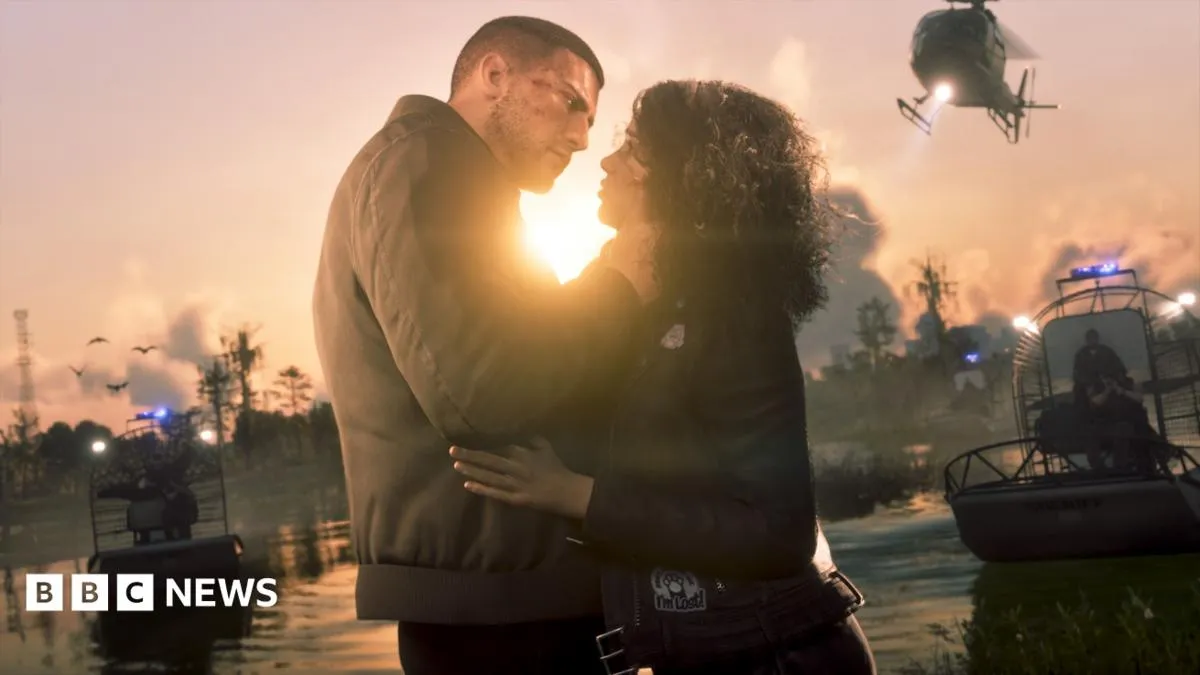
Critics have declared Grand Theft Auto 6, the most anticipated video game of all time, a masterpiece, per BBC News, resolving the central question of whether the title lives up to its hype. For publishers, platform holders and investors, the verdict removes critical rejection as a risk and shifts attention to the launch window, the release calendar around it, and the recurring-revenue second act that decides the decade.
The verdict is in, and it is a yes. Critics have now had their say on Grand Theft Auto 6, and they have concluded that the most anticipated video game of all time is a masterpiece, according to BBC News. That answers the only question the industry has been asking since the title was first announced: does the reality survive the hype? For a game that has spent years as the default reference point for everything the medium can be, the answer arriving as a flat affirmative is the outcome the people who paid for it needed.
Understand what the "most anticipated" label actually is: a liability dressed as an asset. Anticipation at this scale is a marketing engine that runs for free, and it is also a trap, because expectations compound faster than any production schedule. Historically, the biggest releases in gaming have failed not by being bad but by being merely good, arriving into an audience that had already imagined something better. Critics are the first gate that tests that gap, and they are the gate that sets the tone for the launch window. A masterpiece verdict means the gap closed.
The commercial machinery behind a game like this is worth understanding, because it does not behave like a normal product launch. Rockstar Games, the studio behind the series, and its parent company Take-Two Interactive, for context, are not shipping a box. They are resetting a platform. The industry's largest titles typically earn twice: once in the launch window, when the install base pays full price, and then again for years afterward through an online mode that converts players into recurring spenders. The second act is where the margins live, and it is the reason a single release can carry a publisher's financial narrative for a decade.
The critics' verdict does not, on its own, sell a copy. Reviews shape the first 72 hours: pre-orders, retail placement, storefront promotion, and the willingness of platform partners to put marketing weight behind a title. But the audience for a game of this size is not primarily deciding on reviews. It is deciding on whether the people it plays with are playing. That is why the masterpiece verdict matters most as risk removal. Critical rejection is the one failure mode a publisher cannot market its way out of. That risk is now off the table.
The second-order effects land on everyone else's calendar. Historically, publishers steer clear of launching anywhere near a title with this gravitational pull, and platform holders build their own messaging around it, because a game this size does not just compete for money, it competes for time. If critics are right that it delivers, that pull gets stronger, not weaker. Watch the release calendar around it, the hardware and subscription bundles that form up beside it, and the question every subscription service eventually faces: whether a title of this scale ever shows up on day one, or stays behind a full-price paywall.
None of this insulates the game from scrutiny. The series has historically attracted political and media attention for its content, and a critical rave does not change that. Ratings boards still assign age classifications, retailers and platform storefronts still enforce them, and elected officials still find it useful to gesture at. The industry's labour debate is the other backdrop: the crunch practices that have historically accompanied enormous productions, and the unionization efforts that have followed. A masterpiece review is a creative verdict. It is not a verdict on how the thing was made, or on who it provokes.
What to watch now is not the review score but the compounding signals: sell-through in the first weeks, engagement after the credits, and whether the online component repeats the franchise's historical pattern of turning a launch into an annuity. Player sentiment is the only review that keeps updating, and it is the one that determines whether this becomes a decade-long asset or a very expensive opening weekend.
The strategic lesson for peers is about asymmetry. Only a handful of companies on earth can make a bet this large, and the ones that can are now watching how the market prices a decade of anticipation. For boards and operators in adjacent businesses, from hardware to advertising to streaming, the takeaway is simpler: the single biggest scheduled event in interactive entertainment has just passed its first test, and the demand it releases will show up in someone's numbers, whether or not that someone is the publisher.
This story's Key Insights and Take-aways are locked.
Create a free account to unlock Executive Actions for one credit.
Register to UnlockAlways free for Executives Club members. Join the Club
More in Technology

Anthropic mathematician claims Claude helped crack the Riemann hypothesis
If the proof holds, AI has toppled math's most famous open problem; if it does not, it is a case study in announcing breakthroughs before anyone verifies them.

AI's $4 Trillion Wipeout Erases Nasdaq's Gains for the Year
A brutal week took roughly $4 trillion off the AI sector and left the Nasdaq flat for the year, and the damage ran the full length of the supply chain.

Anthropic mathematician says AI proved the Riemann hypothesis. Verification will take time.
A single unverified claim from inside Anthropic now sits against more than 160 years of open mathematics, and the gap between asserting a proof and surviving peer review is the entire story.