
GTA 6 Ships a Fake Uber Called RydeMe, and Silicon Valley Is the Joke
Rockstar's new game turns Uber, Amazon, WhatsApp, Cash App and Carvana into running jokes, and the fake names say more about brand ubiquity than any marketing survey ever could.
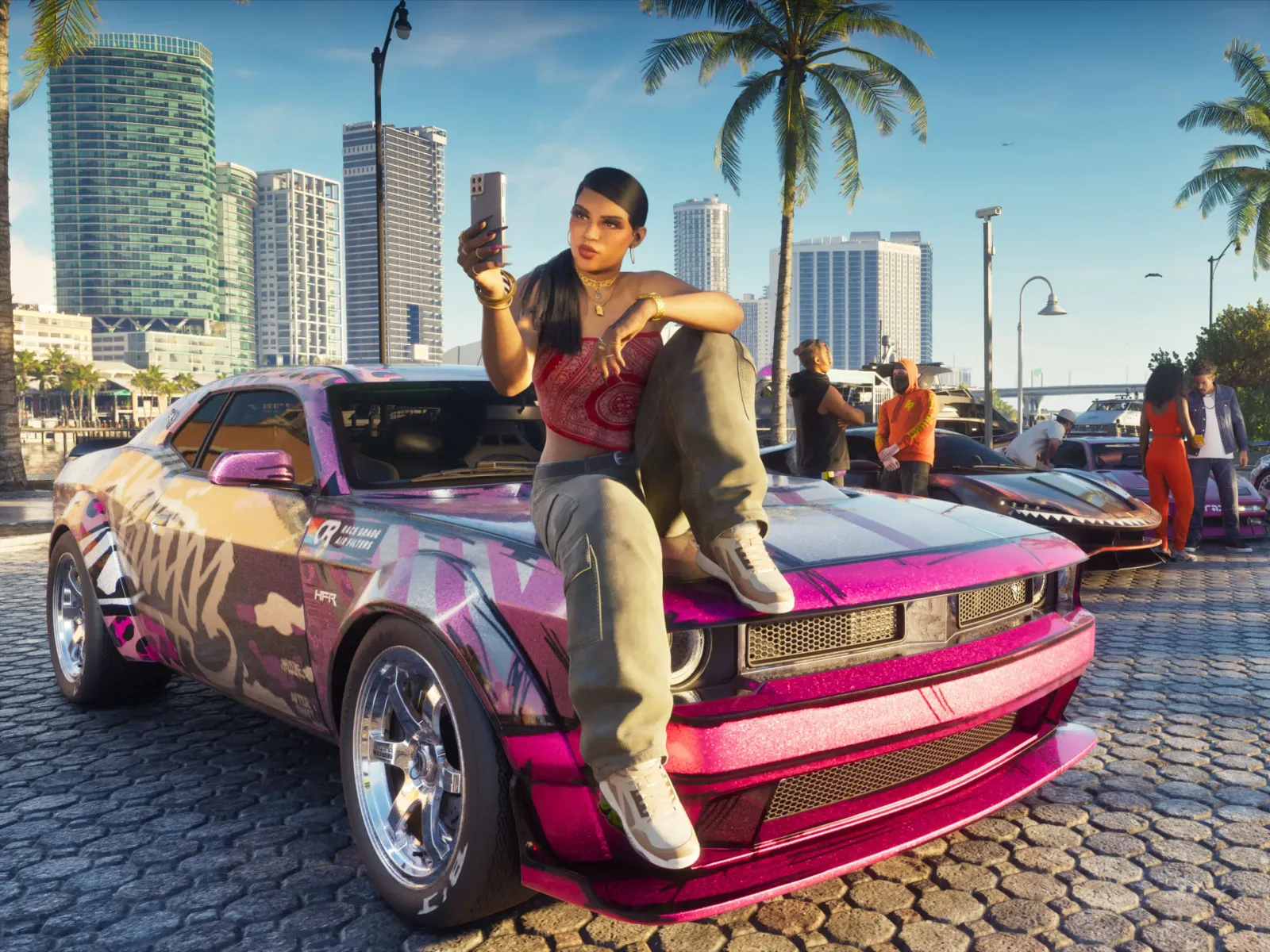
Rockstar Games launched Grand Theft Auto 6 on Thursday with a full in-game app ecosystem that parodies Silicon Valley, recasting Uber and Lyft as RydeMe, Amazon as Sahara, WhatsApp as WhatUp, Cash App as BuckMe, Instagram as SnapMatic and Apple's iPhone as iFruit. For consumer brands and their boards, the gag is a free read on who owns cultural mindshare, and a reminder that ubiquity makes you a target long before it makes you safe.
Rockstar Games launched Grand Theft Auto 6 on Thursday, and the most consequential app store in the world this week does not belong to Apple or Google. It belongs to Leonida, the game's fictional stand-in for Florida, where the phone in your pocket is an iFruit and the apps on it are companies you already know by other names. Uber and Lyft become RydeMe. Amazon becomes Sahara. WhatsApp becomes WhatUp. Cash App becomes BuckMe. Instagram is SnapMatic and a vehicle-scanning service that reads like a Carvana cousin is called WAiNK. The names are overtly sexual by design, and Business Insider's read on the whole thing is blunt: GTA 6 is stuffed with Silicon Valley's evil twins.
The joke is not random vandalism of trademarks, and it is not aimed at Los Angeles this time. In GTA 5, Rockstar built Los Santos as a dystopian LA look-alike where upscale Westwood Boulevard became Morningwood Boulevard, and players strolling past luxury retailers could overhear NPCs bragging about their wealth and their cosmetic procedures. Same double-entendre machinery in GTA 6, new target. This cycle the butt of the joke is the app economy, the thin layer of software that sits between you and every ride, purchase, money transfer and message you make in a day. Sex jokes are the delivery mechanism. Recognition is the payload.
Walk the roster and the strategy becomes obvious. RydeMe is the rideshare app of choice in Leonida, and per GameSpot, you do not always have to be behind the wheel in GTA 6, because you can call a car with it. SnapMatic is the Instagram-style social platform, carried over from GTA 5, and players have already been posting in-game sightings of a dog-wif-hat Easter egg. Sahara plays the Amazon role. WhatUp handles messaging, and players flagged the WhatsApp parallel within hours of launch. BuckMe covers Cash App-ish money transfers. WAiNK is a vaguely Carvana-ish vehicle scanner, and one player noted that the AI assistant on the in-game phone is called WANK. iFruit, the iPhone stand-in, is back from GTA 5, now in its newest form.
Why is the app layer the sharpest satirical target available to Rockstar right now? Because apps are the only consumer brands people touch dozens of times a day, and because we have stopped describing errands with nouns and started describing them with brands. Nobody says they will hail a car and send a message and buy a book; they say the names. That makes the parody structurally efficient. A single flipped letter does more comedic work than a 30-second spot, and the teams built these as working systems inside the game rather than as scenery, so the joke operates at the level of behavior, not decoration. Players are not laughing at a billboard. They are using the fake Uber while the real one runs on the phone in their hand.
On the legal side, the ground here is well worn. United States trademark doctrine has long carved room for parody, and the analysis typically turns on whether ordinary consumers are likely to be confused about who made the thing. An obvious joke inside a video game is a very different animal from a competitor trading on someone else's logo, and the GTA franchise has run this exact play across multiple titles and many years without the sky falling. The residual risk usually sits with dilution or tarnishment claims from owners who believe the joke crosses a line, and there is no indication in the reporting of any brand pushing back on GTA 6. Historically, most of them calculate that a lawsuit against a hit game is worse publicity than the punchline.
For operators, the more interesting question is strategic, not legal. Being parodied by Rockstar is a status signal. If the writers bothered to invent a version of you, you have crossed from challenger to infrastructure, and the fake name will be repeated by millions of people who will never read your positioning deck. That cuts both ways. It confirms reach, and it hands a piece of your brand story to somebody else's writing room. The pattern from prior GTA titles suggests these inventions have unusual staying power: Morningwood Boulevard is still shorthand for a specific kind of LA wealth display years later. Marketing and legal teams at consumer-facing companies typically weigh two options when this happens, lean in with a wink or ignore it entirely, and the wrong answer is a cease-and-desist that turns a joke into a story.
The bigger read for founders and boards is what the target selection says about the cultural hierarchy right now. Rockstar spent a decade mocking old money, real estate and Hollywood vanity. It now spends its best material on delivery apps, ride-hailing, social feeds and money transfer. That is a promotion for the industry, and a warning. Watch three things from here: whether the fictional apps escape the game as memes, whether any real brand answers back, and how quickly the internet starts crowdsourcing more doubles, which Business Insider has already invited readers to do by sending in screenshots. When the Easter egg hunt becomes part of the launch itself, the parody has stopped being commentary and started being the product.
This story's Key Insights and Take-aways are locked.
Create a free account to unlock Executive Actions for one credit.
Register to UnlockAlways free for Executives Club members. Join the Club
More in Technology

Anthropic mathematician claims Claude helped crack the Riemann hypothesis
If the proof holds, AI has toppled math's most famous open problem; if it does not, it is a case study in announcing breakthroughs before anyone verifies them.

AI's $4 Trillion Wipeout Erases Nasdaq's Gains for the Year
A brutal week took roughly $4 trillion off the AI sector and left the Nasdaq flat for the year, and the damage ran the full length of the supply chain.

Anthropic mathematician says AI proved the Riemann hypothesis. Verification will take time.
A single unverified claim from inside Anthropic now sits against more than 160 years of open mathematics, and the gap between asserting a proof and surviving peer review is the entire story.