
GTA 6 tops $2bn, per industry estimate, ending Rockstar's 13-year wait
The launch is being billed as the biggest entertainment debut ever, but the $2bn is an estimate rather than a confirmed number, and that gap is what rivals and investors should watch.
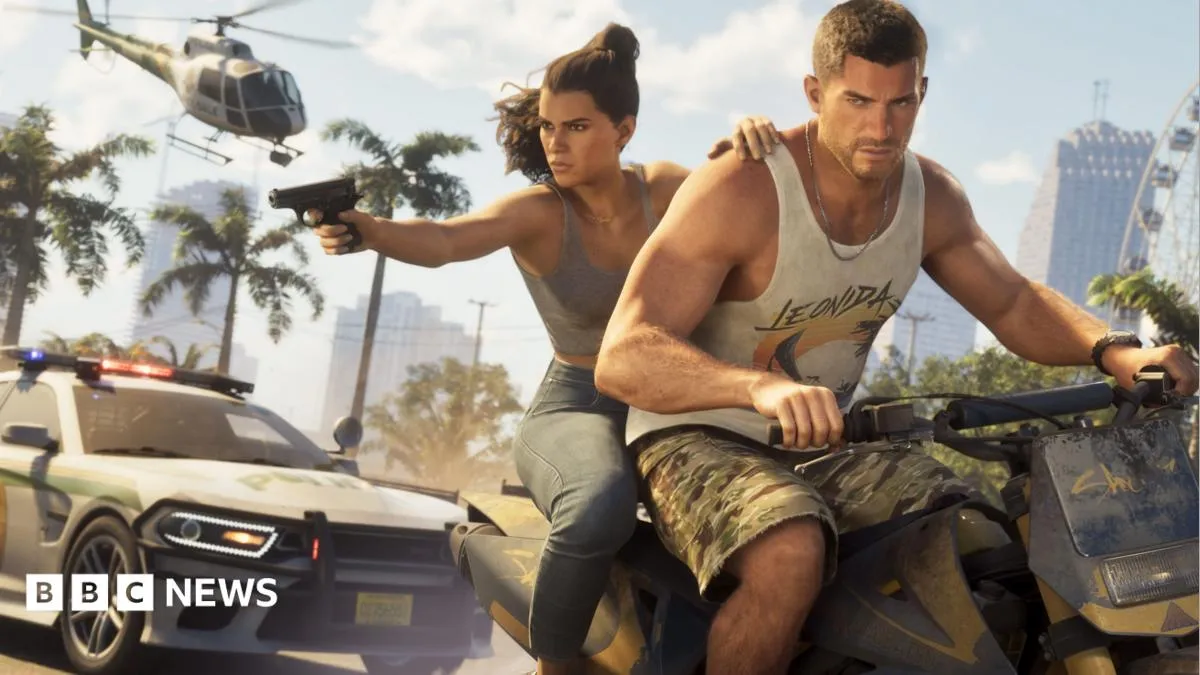
Rockstar Games has ended a 13-year wait with Grand Theft Auto 6, with sales topping $2bn on an industry estimate and the launch expected to be the biggest in entertainment history. The figure is unconfirmed by the publisher, so leaders should treat the velocity as real and the total as provisional when they read demand signals, release calendars or marketing spend.
Rockstar Games has ended a 13-year wait, and the first number attached to Grand Theft Auto 6 is the kind that resets an industry's sense of scale. Sales have topped $2bn, according to an industry estimate, a figure that would make the launch the biggest in entertainment history. Read the qualifier twice: this is an estimate, not a number Rockstar has confirmed in a filing or an earnings release. The distinction is not pedantry. The $2bn is already the headline that rivals, retailers and investors will quote at each other for the next quarter, and estimates move.
Start with what the number actually is. Launch-window sales figures in gaming typically reach the public through trade estimates and retail trackers long before a publisher reports revenue, and they are usually revised once returns, bundles and regional pricing are accounted for. That does not make the estimate wrong; it makes it provisional. What it does establish is velocity. If $2bn is even roughly right, Grand Theft Auto 6 has cleared in its opening stretch what most blockbuster games need years to accumulate. For comparison, even the largest Hollywood openings are historically measured in the hundreds of millions across a single weekend.
The 13-year gap is the other half of the story, and arguably the more revealing one. The previous entry in the series, Grand Theft Auto V, arrived in 2013 and went on to become one of the best-selling entertainment products ever made. A wait that long between entries is not unusual for a franchise of this cost and complexity; it is the pattern. Big-budget games now take five to seven years at the top end, and studios that miss windows absorb the cost of idle teams, marketing resets and shifting hardware cycles. Rockstar spent 13 years between entries and still arrived with the biggest launch on record, which tells you what the industry's ceiling now looks like.
Then there is the money underneath the headline. Games of this scale are typically built on budgets in the hundreds of millions, with marketing that can approach the production spend itself. On a rough back-of-envelope basis, $2bn at a premium retail price implies a unit count in the tens of millions, before any discounting, bundles or regional pricing. The opening week, however loud, is only the front edge. The industry's real model is the long tail: post-launch content, expansions and in-game spending that historically sustain a hit for years after the initial sale.
The second-order effects are where this gets interesting for anyone outside gaming. A launch this large typically pulls console hardware, drains attention from rival releases and pushes publishers to reshuffle their own calendars rather than compete for the same wallets. That is a window problem for competitors and an attention windfall for everyone adjacent: retailers, accessories makers, streamers and the creator economy that builds programming around a single enormous release. When one title becomes an event, the calendar around it gets quieter.
Now the caveats, because a $2bn estimate carries them. Launch figures get revised, sometimes downward, once the accounting settles. Expectations set at "biggest ever" are hard to beat on the next release, and the 13-year gap that produced this moment is also evidence of how brutally hard these products are to ship. Delays at this scale are the norm rather than the exception, and the cost of that waiting sits on the balance sheet in salaries and deferred revenue.
For leaders reading the number as a demand signal, three things are worth separating. The estimate is not the same as confirmed revenue, so any board deck citing $2bn should stamp it as provisional. The velocity is real either way, and it reprices what a single entertainment property can generate in a week. And the 13-year cadence is the part rivals should study hardest: franchises this valuable are getting slower and more expensive to make, not faster, which means the winners are the ones who can fund patience.
This story's Key Insights and Take-aways are locked.
Create a free account to unlock Executive Actions for one credit.
Register to UnlockAlways free for Executives Club members. Join the Club
More in Business

S&P 500 Enters Correction, Down 10% From Its High on AI Worries
The index's slide past the 10 percent line is a symbolic verdict on investor mood, and the AI trade that powered the rally is now the thing testing it.

Dow and S&P 500 enter correction as Nasdaq logs worst week since 2020
All 11 S&P 500 sectors fell more than 1% in the same week for the first time since April 2025, a breadth signal that matters more than any single index level.

Chip stocks lose $2.3 trillion in a week, worst run in 25 years
A $2.3 trillion weekly wipeout in semiconductors is forcing every board with an AI story to ask whether it owns a thesis or just a crowded trade.