
GTA VI arrives at midnight after 13 years, and fans skip work
A 13-year wait ends at midnight, and the fallout is measurable: skipped shifts, skipped classes, and a launch window competitors cannot ignore.
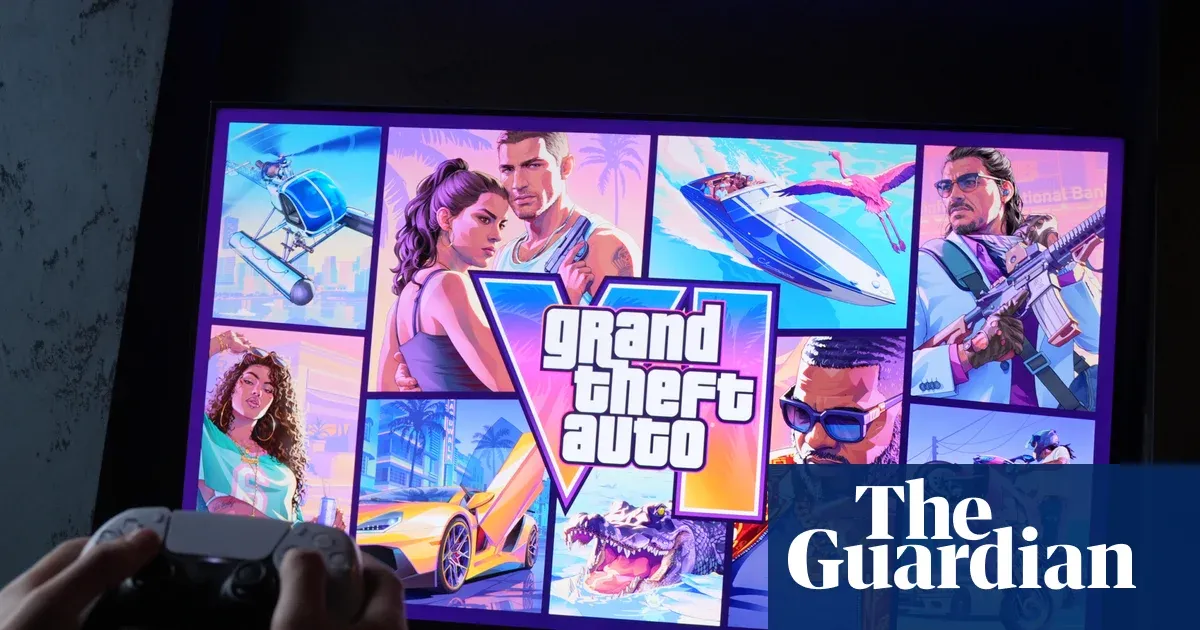
Grand Theft Auto VI, the Bonnie and Clyde-inspired crime adventure set in the fictional US state of Leonida, launched at midnight on Wednesday after a 13-year wait, with fans pulling all-nighters, skipping work and school, and attending overnight launch parties. The consequence for decision-makers is a live case study in attention economics: one entertainment release can pull staff out of the workplace and reset the competitive calendar for everyone else.
GTA VI launched at midnight on Wednesday, ending a 13-year wait and pulling fans around the world out of their ordinary routines and into the fictional US state of Leonida. The Bonnie and Clyde-inspired crime adventure is the first new mainline Grand Theft Auto in 13 years, and it was greeted the way few entertainment products are greeted anymore: with all-nighters, overnight launch parties, and people who simply did not show up to work or school. That last detail is the real headline. A video game release emptied offices and classrooms on a weekday, and it did so as much by design as by hype.
The source of that devotion is not complicated. Fans spent the small hours vicariously embarking on police chases and coordinating robberies, the two activities the game is built around. That is the appeal of the series in a single line: consequence-free risk, delivered at scale, with the social layer of doing it alongside other people. Launch parties turned a product drop into a synchronized event, which is why the absence the next morning was not scattered but concentrated. When a release is shared, skipping work is not a private indulgence; it is a group plan with a fixed start time.
Context matters here. Grand Theft Auto is published by Rockstar Games, a studio owned by Take-Two Interactive, and the franchise has historically ranked among the highest-grossing properties in all of entertainment, not just in gaming. A 13-year gap between mainline instalments is unusual for a series of that scale, and it does something specific to the audience: it resets it. Players who were children when the previous entry arrived are now adults with disposable income and jobs they can skip. Players who arrived during the long silence never experienced a launch at all. Both groups showed up on the same night, which is a rare thing to manufacture deliberately.
For employers, the practical takeaway is smaller and sharper than the cultural one. Absenteeism around major entertainment launches is real, brief, and forecastable. It is not a crisis, and treating it as one is a mistake. But it is a scheduling variable, in the same category as a major sporting event or a holiday weekend, and it lands on a weekday. The fans who pulled all-nighters were not only consumers; they were employees, students, and, in many cases, the people a business relies on to open the doors. A launch window is a calendar risk like any other, and it is announced months in advance.
For the industry, the midnight launch is a reminder of how lopsided the attention economy has become. Historically, rival publishers have avoided dropping major titles in the same window as a Grand Theft Auto release, because the audience's hours are finite and a game this large absorbs them. That dynamic does not disappear because the market has shifted toward subscription and live-service models. If anything it intensifies, because a title of this scale does not end at launch. It becomes a place people spend their evenings for months, and every hour spent there is an hour not spent somewhere else.
There is also a scrutiny layer that never fully goes away. A crime-themed series built around robbery and police chases has historically drawn attention from regulators, ratings boards, and parent groups concerned about violence and youth access. The detail that fans skipped school to play does not create that debate, but it feeds it, and it is the kind of line that gets repeated in policy hearings. For any company operating in consumer entertainment, the lesson is that cultural scale and regulatory exposure tend to arrive together.
The strategic stakes for peers are straightforward. Attention is the scarce asset, and a release like this one proves it can still be captured in a single night, at a scale that advertising budgets struggle to buy. Boards should be asking three questions: what sits on our calendar when the next blockbuster lands, what does our own launch actually ask of the audience, and are we building a shared moment or just buying impressions? GTA VI answered all three for its publisher without saying a word. Everyone else has to answer them out loud.
This story's Key Insights and Take-aways are locked.
Create a free account to unlock Executive Actions for one credit.
Register to UnlockAlways free for Executives Club members. Join the Club
More in Technology

Anthropic mathematician claims Claude helped crack the Riemann hypothesis
If the proof holds, AI has toppled math's most famous open problem; if it does not, it is a case study in announcing breakthroughs before anyone verifies them.

AI's $4 Trillion Wipeout Erases Nasdaq's Gains for the Year
A brutal week took roughly $4 trillion off the AI sector and left the Nasdaq flat for the year, and the damage ran the full length of the supply chain.

Anthropic mathematician says AI proved the Riemann hypothesis. Verification will take time.
A single unverified claim from inside Anthropic now sits against more than 160 years of open mathematics, and the gap between asserting a proof and surviving peer review is the entire story.