
Guilty: California man convicted of sparking Palisades Fire that killed 12
One guilty finding ties a single ignition point to 12 deaths and leveled neighborhoods in Los Angeles and Malibu, and it reshapes how the next fire gets investigated, insured, and litigated.
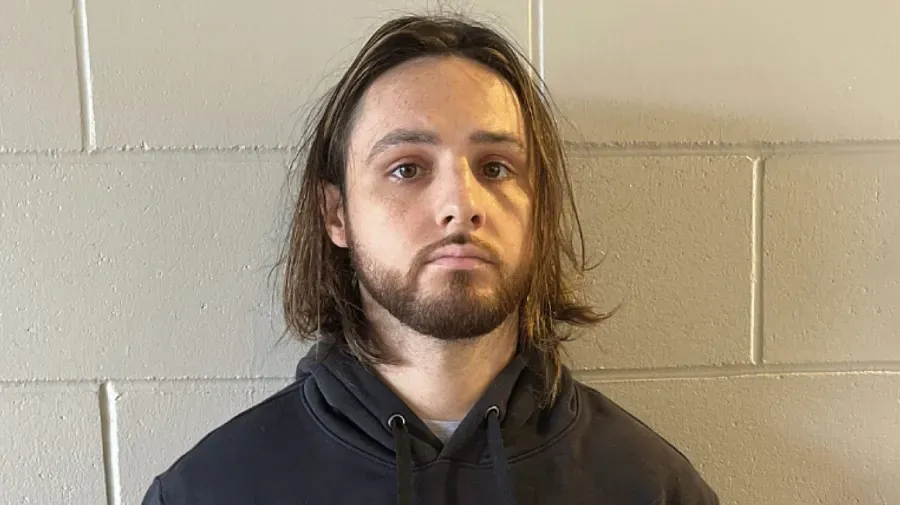
A California man has been found guilty of sparking the blaze that became the Palisades Fire, which killed 12 people and incinerated entire neighborhoods in Los Angeles and Malibu. The verdict moves wildfire accountability from balance sheets to individuals, sharpening criminal and civil exposure for anyone operating in fire-prone terrain.
A California man has been found guilty of sparking the blaze that became the Palisades Fire, the inferno that killed 12 people and incinerated entire neighborhoods across Los Angeles and Malibu. That is the whole of what the initial report establishes: a guilty finding, a death toll of 12, and a fire that erased blocks, not just homes. The report did not name the man, did not specify the charges, and did not indicate what sentence he now faces. Those gaps matter, because they are where the next phase of this story lives.
Strip away the legal language and the verdict does something rare. It takes a disaster that has mostly been discussed as a climate story, a land-management story, or an insurance story and assigns it, at least in part, to one person's actions. Wildfires are usually narrated as forces: wind events, drought cycles, utility equipment failures, decades of development pushed into fire-prone terrain. A guilty finding on ignition reframes the question from what happened to us to who did this. For the families of the 12 dead, that reframing is the entire point. For everyone else, it is a signal about how the state intends to pursue accountability.
In California, wildfire cause determinations typically start with investigators who trace a fire back to its point of origin, then work outward to establish what ignited it and whether that ignition was accidental, negligent, or intentional. Criminal cases are harder than civil ones because they require proof beyond a reasonable doubt, and because fire scenes are chaotic by definition: heat, wind, and suppression efforts destroy evidence that would survive in a warehouse fire or a car crash. A guilty finding therefore represents something prosecutors do not secure often. It also raises the stakes for every other open investigation in the state, because it demonstrates that the chain from a single ignition point to a body count can be built and sold to a jury.
For context, California's wildfire liability regime has historically been unusually aggressive. Utilities in the state can be held liable for damages from fires linked to their equipment even without a finding of negligence, under a doctrine known as inverse condemnation. That framework has pushed major investor-owned utilities into bankruptcy and forced them to spend billions on grid hardening, vegetation management, and settlement funds. Criminal exposure is a different animal entirely, and it lands on individuals rather than balance sheets. The practical effect is that the risk of a fire is no longer distributed only across shareholders and ratepayers. It can now be concentrated in a single person, which changes how every actor in the chain, from contractors doing vegetation work to homeowners running generators, thinks about a spark.
The financial aftermath of the Palisades Fire is still working through the system. Insurers have been retreating from California's home market for years, citing catastrophic fire risk, and the state's insurer of last resort has absorbed a growing share of policies that private carriers will not write. A criminal verdict does not change the physics of fire risk or the actuarial math behind a non-renewal notice. What it can change is the litigation posture. Civil suits against utilities, municipalities, and equipment makers typically hinge on causation, and a criminal finding that a specific human act started the fire gives plaintiffs a cleaner narrative than the tangle of speculative equipment failure claims that usually dominates these cases.
The second-order effects are where this gets interesting for anyone with exposure to California real estate, infrastructure, or energy. First, expect prosecutors to look harder at ignition sources they might previously have written off as undetermined. Second, expect defense attorneys to argue that a single guilty finding in one fire says nothing about the next one, and that the state is criminalizing ordinary life in a fire zone. Third, expect the insurance and reinsurance markets to keep pricing wildfire risk on their own timeline, largely indifferent to courtroom outcomes. The verdict is a legal event. It is not a fix.
Watch three things from here. The sentence, which will tell you how the state weighs 12 deaths against whatever the man is convicted of. Any appeal, which will test the evidentiary chain that connected an ignition point to a neighborhood-scale catastrophe. And the civil docket, where the same facts will be re-litigated with a lower burden of proof and much larger sums at stake. None of that brings back the neighborhoods in Los Angeles and Malibu, or the 12 people who died in them. But it will shape how the next fire is investigated, insured, and argued about.
For executives and boards, the lesson is not about fire. It is about concentration of risk. Companies that operate in high-consequence environments, whether that is a utility corridor, a chemical plant, a data center in a drought zone, or a supply chain that runs through one, have spent a decade building climate adaptation plans around probabilities. A verdict like this one is a reminder that the tail risk is not only financial. It is personal, criminal, and increasingly likely to be pursued. The organizations that handle that shift well will be the ones that treat ignition prevention, documentation, and contractor oversight as governance issues rather than line items.
This story's Key Insights and Take-aways are locked.
Create a free account to unlock Executive Actions for one credit.
Register to UnlockAlways free for Executives Club members. Join the Club
More in Politics

Fifth Circuit Kills Pregnant Workers' Law Over Pandemic Proxy Votes
A procedural ruling, not a policy one, has blocked a federal pregnancy-accommodation law and put every pandemic-era statute in the crosshairs ahead of an expected Supreme Court appeal.

Measles kills a Virginia child under 5, the state's first death of 2026
Virginia's health department confirmed the death but withheld the child's vaccination status, leaving schools, clinics and employers to plan around the one detail that would explain the most.

Former Brazilian President Bolsonaro Hospitalized with Intestinal Obstruction
The health status of the former far-right leader raises immediate questions about political stability and the trajectory of Brazil's conservative movement.