
Harden Passes Kobe for Third All-Time, Only Two Names Left
James Harden just moved past Kobe Bryant into third on the NBA's all-time 50-point games list, a milestone built on durability rather than one hot night, while the Cavaliers' 128-119 NBA Cup win over Indiana shows where the league is staking its next product bet.
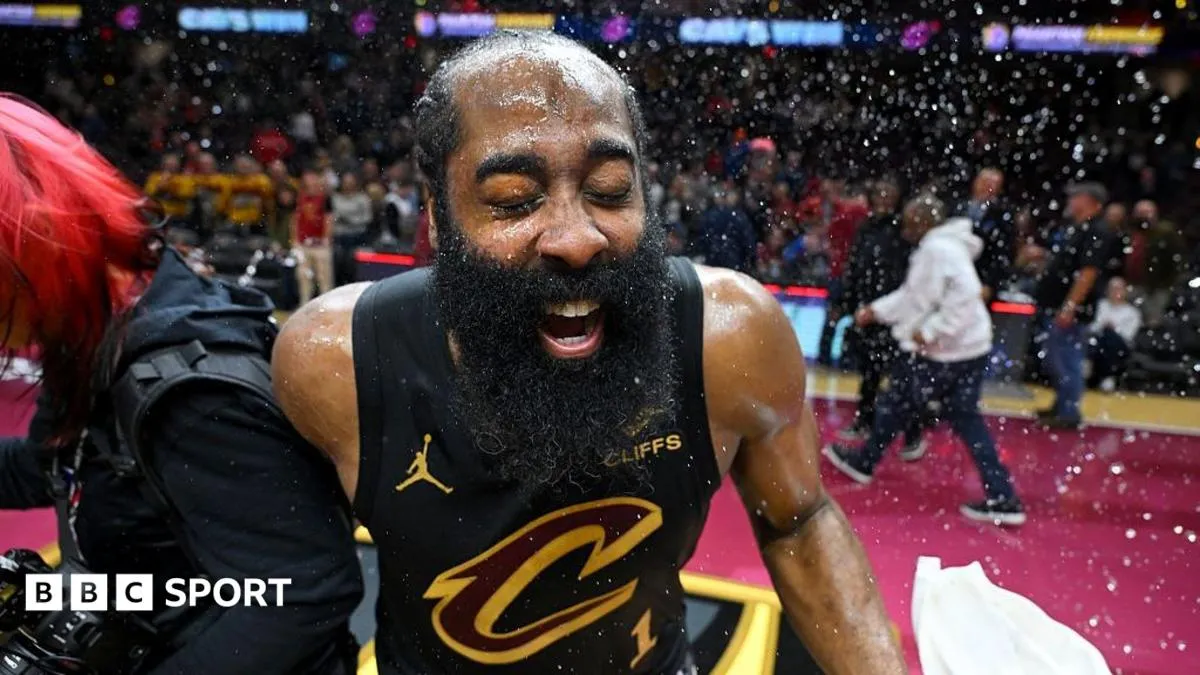
James Harden passed Kobe Bryant for third on the NBA's all-time list for 50-point games, while the Cleveland Cavaliers beat the Indiana Pacers 128-119 in the NBA Cup. For operators and investors, the twin storylines show how legacy milestones and manufactured tournament stakes have become the league's two cheapest engines for holding attention.
James Harden is now third on the NBA's all-time list for 50-point games, moving past Kobe Bryant. Read that again slowly. The list he just climbed is the shortest and most unforgiving in the sport, and Harden now sits above every player in league history except the two names still ahead of him. Bryant, the benchmark for volume scoring across two decades in Los Angeles, drops to fourth. The milestone landed in the same report as a second result: the Cleveland Cavaliers beating the Indiana Pacers 128-119 in the NBA Cup.
Why this list is harder than it looks. A 50-point game is not a hot streak, it is a stress test of three things at once: shot volume, efficiency, and the durability to stay on the floor long enough, season after season, to keep getting the chances. Most rotation players never record one. Harden's route has historically been isolation scoring, the step-back three and a genius-level understanding of how to draw contact, a style that ages well because it does not depend on outrunning anybody. Passing Bryant is not a one-night explosion. It is the compound interest of a decade spent as the primary option.
One caveat worth flagging: era. Scoring totals have historically inflated and deflated with rule changes, pace of play and spacing, which is why every league's record book is a permanent negotiation between generations. Comparing Harden to Bryant is not an apples-to-apples exercise, and nobody inside the sport pretends otherwise. What survives the comparison is the difficulty of the feat itself. Fifty points requires a player to be the offense, to be defended as such, and to still find enough clean looks to get there. That part does not change with the era.
The milestone is also an asset. For a player in the back half of a career, record-book position is real currency: it keeps a name inside broadcast packages, arena marketing and the highlight economy that underwrites endorsements. Teams pay for that attention, and the league sells it. Every time a graphic flashes "third all-time" on a national broadcast, a career gets repriced in the public imagination. That is why milestones matter more in basketball than in almost any other sport: the history is legible in a single number, and fans will argue about it for free, forever.
Meanwhile, the second half of the report is a window into where the league is putting its new money. The Cavaliers' 128-119 win over the Pacers came in the NBA Cup, the in-season tournament the league built to give regular-season games knockout stakes. The format typically runs group play into a single-elimination bracket, with per-player prize money and a neutral-site finish designed to make November and December games feel like something other than filler. It is a product experiment as much as a competition: can the NBA manufacture consequence in the stretch of the calendar when fans historically tune out?
That question matters well beyond basketball operations. The Cup is a live test of whether the league can create new inventory that media partners will pay for, and whether players will treat it as worth the effort. A 128-119 scoreline suggests the games have been played at pace and without restraint, which is exactly what the tournament needs. For Cleveland, a win in this format is a useful data point on how the roster handles compressed, high-leverage minutes. For Indiana, it is a reminder that the tournament rewards teams that defend when the schedule gets strange.
The two stories share a common thread: attention. Harden's climb is a legacy story that travels, cheap to produce and endlessly debatable. The Cup is an attempt to manufacture the same kind of stakes on demand. Both are responses to the same problem, which is that a league with 1,230 regular-season games has to fight for every eyeball against an entertainment market that never sleeps. Expect more of this: more milestone packaging, more tournament formats, more attempts to convert the regular season into events. The risk is dilution. The reward is a calendar that stays relevant in months that used to be dead.
For executives outside sports, the read-across is straightforward. Longevity compounds in ways a single peak performance cannot, and the people who end up on the shortest lists are usually the ones who kept showing up as the primary option. Harden did not pass Bryant with one spectacular night. He passed him with the accumulated weight of years of being the guy the defense was built to stop. The next question is whether anyone currently playing is on pace to join that conversation, and whether the league's newest tournament can produce a night that gets remembered the same way.
This story's Key Insights and Take-aways are locked.
Create a free account to unlock Executive Actions for one credit.
Register to UnlockAlways free for Executives Club members. Join the Club
More in Entertainment

GTA 6 banks $3.8bn in one day, torching every launch record
One game just out-earned every video game launch and every single-day film box office haul in history, and the fallout lands on every media CEO's forecast.

GTA VI Racked Up $3.79 Billion in a Single Day, Topping Every Film Ever
A 13-year wait produced a $3.79 billion day, more than any movie has made in its entire run, and it resets the launch math for every studio, streamer, and brand chasing the same attention.

GTA 6 sells 32.5M pre-sales and $3.79B day one, torches 13-year record
Rockstar's sequel didn't just beat Grand Theft Auto V's 13-year-old benchmark; it reset what a launch can be, with 32.5 million pre-sale copies and $3.79 billion in a single day.