
Hollywood's War Movies Are Fundamentally Misreading Modern Drone Warfare
The media industry is failing to capture the radical shift toward remote, asymmetric conflict, creating a dangerous gap in public and strategic understanding.
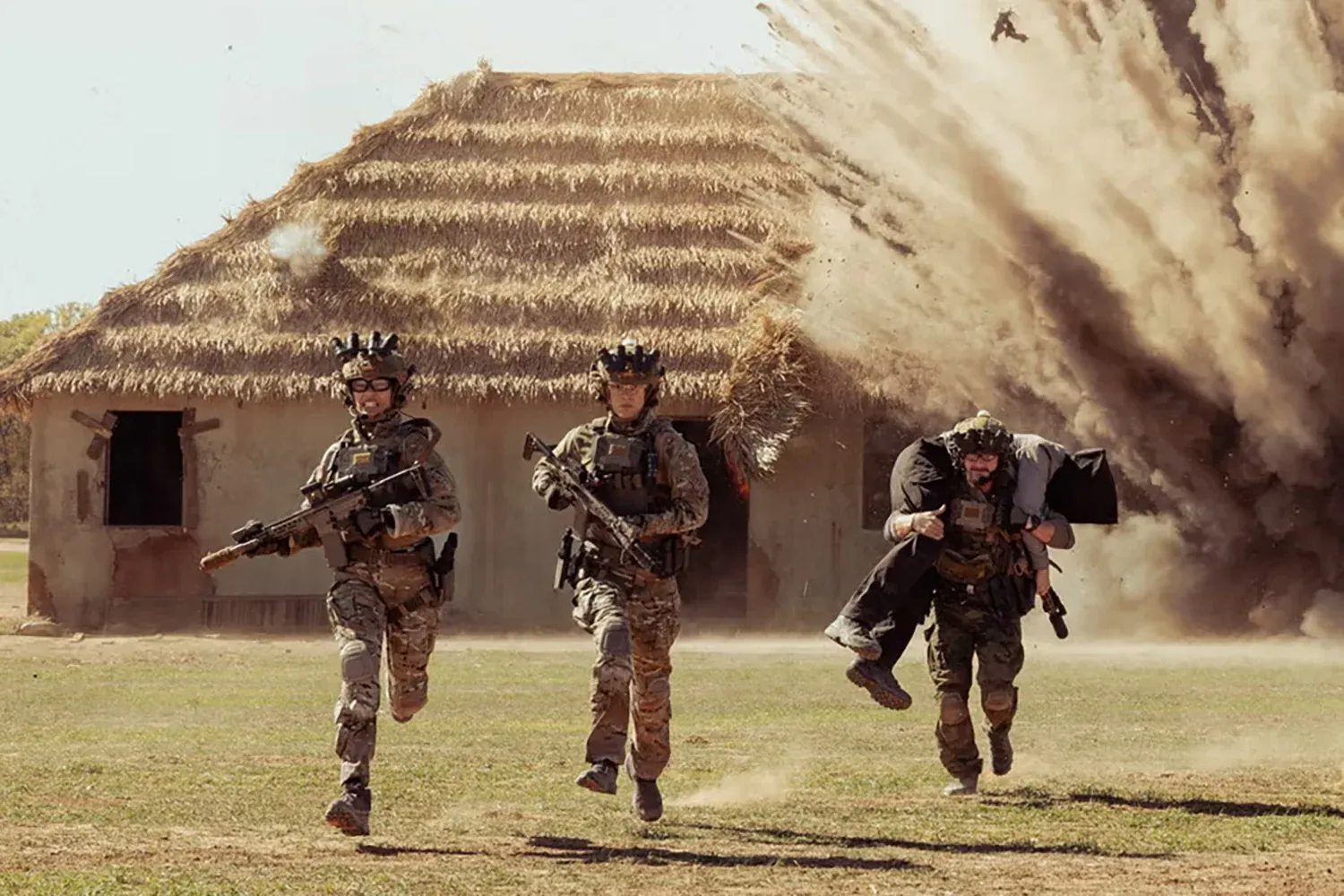
The media industry, specifically Hollywood, is currently unable to accurately depict the operational realities of modern drone warfare. This disconnect risks misinforming public discourse and strategic planning regarding the future of global conflict.
The prevailing narrative in global cinema regarding warfare is fundamentally obsolete. Hollywood continues to rely on tropes of massive, ground-based, kinetic conflict, complete with heroic infantry charges and dramatic, large-scale battles. However, this cinematic perspective is dangerously divorced from the reality of modern military operations, which are increasingly defined by the quiet, persistent, and remote capabilities of unmanned aerial vehicles and sophisticated sensor networks. The core issue is not a lack of technology, but a profound lack of narrative imagination regarding how conflict is now waged.
Drone warfare represents a paradigm shift in military doctrine. It moves the locus of conflict away from the front line and into the realm of data, remote surveillance, and precision targeting. Instead of the dramatic, high-stakes confrontation depicted in blockbuster films, modern conflict often involves low-signature, persistent monitoring, and highly localized strikes executed from vast distances. This shift changes the calculus of risk, logistics, and political engagement entirely. For the executive audience, this is not merely a creative failure in film; it is a failure of public comprehension regarding the nature of modern geopolitical risk.
To understand why this matters, one must look at the operational mechanics. Drones allow for a level of persistence and situational awareness that was impossible even a decade ago. They are not just remote cameras; they are mobile, networked, and data-gathering platforms that feed real-time intelligence into a centralized command structure. The decision to engage, the assessment of threat, and the execution of force are often separated by thousands of miles. This decentralization of decision-making and the reliance on data streams-rather than the immediate, visceral experience of combat-is the defining characteristic of the new battlefield. Hollywood, by contrast, focuses on the immediate, visceral experience of the soldier, a narrative structure that simply does not apply to the modern, networked drone operator.
This disconnect has significant second-order implications for policy and investment. If the public and political stakeholders are only familiar with the high-octane, large-scale warfare of the past, they are ill-equipped to grasp the complexities of autonomous systems, the ethical quandaries of remote killing, or the economic models supporting these highly specialized, often smaller, military units. Investment in defense technology, regulatory frameworks for AI in warfare, and international treaties governing drone usage all rely on a shared understanding of what these systems actually are and what they are capable of. When the media fails to educate the public on these realities, it creates a vacuum of informed consent and strategic foresight.
Furthermore, the narrative failure of Hollywood is a failure of strategic communication. For defense contractors, tech innovators, and government strategists, the challenge is not just building the technology, but communicating its true nature. The media often reduces complex, multi-layered technological advantages to a single, dramatic shot of a drone flying over a city. This oversimplification obscures the true strategic value: the ability to project power with minimal risk to personnel, maintain operational secrecy, and achieve surgical precision. The strategic value lies in the system-the data fusion, the network, the remote command-not just the flying machine itself.
We are witnessing a transition from the age of the massive, visible military apparatus to the age of the invisible, data-driven force. The strategic imperative for leaders across all sectors is to bridge this gap. Whether you are a defense contractor pitching a new sensor array, a government official drafting a new international agreement, or a media executive trying to capture a relevant audience, the goal must be to translate the technical and strategic reality of drone warfare into a narrative that is both accurate and compelling. The future of conflict is quiet, precise, and digital. The future of media must reflect that reality, or risk becoming a relic of a bygone era of warfare.
This story's Key Insights and Take-aways are locked.
Create a free account to unlock Executive Actions for one credit.
Register to UnlockAlways free for Executives Club members. Join the Club
More in Politics

Fifth Circuit Kills Pregnant Workers' Law Over Pandemic Proxy Votes
A procedural ruling, not a policy one, has blocked a federal pregnancy-accommodation law and put every pandemic-era statute in the crosshairs ahead of an expected Supreme Court appeal.

Measles kills a Virginia child under 5, the state's first death of 2026
Virginia's health department confirmed the death but withheld the child's vaccination status, leaving schools, clinics and employers to plan around the one detail that would explain the most.

Former Brazilian President Bolsonaro Hospitalized with Intestinal Obstruction
The health status of the former far-right leader raises immediate questions about political stability and the trajectory of Brazil's conservative movement.