
Hong Kong new-home prices jump up to 36% as developers regain pricing power
Analysts say first-sold units this year in select districts are priced 7% to 36% higher than prior years.
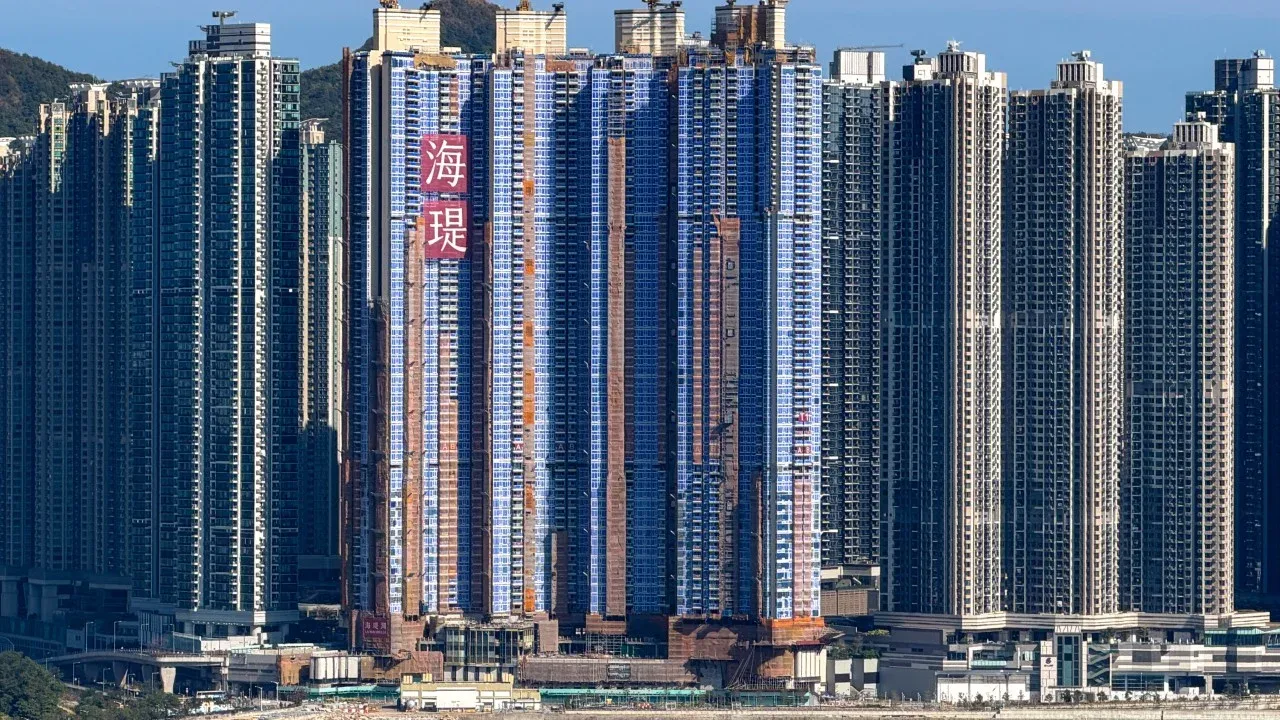
Hong Kong developers have priced new units this year in Tseung Kwan O, Wong Chuk Hang, and Tai Wai at 7% to 36% higher than in the same projects or districts in previous years, according to JLL data. For decision-makers, this signals renewed pricing power amid firmer demand, reshaping expectations for launches and margins.
Hong Kong developers are charging more for new homes this year, and the upside is big enough to change how the market thinks about “value.” According to analysts using data tracked by JLL, prices for the first sales in new developments this year have rebounded by as much as a third from the housing market’s lowest level a few years ago, driven by robust demand.
Drilling into the numbers, developers pricing new units in Tseung Kwan O, Wong Chuk Hang, and Tai Wai have set prices between 7% and 36% higher than those sold in the same projects or in the same districts in previous years. Put differently: it is not just a general rebound. It is a measurable re-rating within specific districts and, in some cases, the same projects. That is the kind of evidence boards watch for, because it suggests demand is strong enough that developers do not need to discount as aggressively to move units.
To understand why this matters, you have to remember how Hong Kong’s housing market often behaves. When demand softens, developers typically respond with pricing pressure. That can show up as promotions, more aggressive pricing tactics, or simply acceptance of thinner margins to protect sales velocity. So when analysts point to a rebound from “the housing market’s lowest level a few years ago” and then add that the current pricing is materially higher in both districts and projects, the underlying message is that the market is no longer punishing pricing experiments the way it used to.
The districts named in the JLL-tracked data are also telling. Tseung Kwan O, Wong Chuk Hang, and Tai Wai are not presented as random samples. They are the specific places where analysts observed developers pricing new units this year at premiums ranging from 7% to 36% versus prior-year comps in the same projects or districts. That implies the pricing power is localized in pockets where buyers are showing up and willing to pay more for new inventory.
There is a second-order issue here that tends to get overlooked in headlines: when developers can price up, they can plan up. Higher expected pricing affects more than the sales desk. It changes how a development team structures its release strategy, what unit mix it pushes to market first, and how it manages the cashflow timeline from launch to absorption. Even without any new policy changes explicitly described in the source, pricing power itself can improve project economics because it reduces the need for “buydown” behavior that erodes margin.
At the same time, a rebound from the market lows does not automatically mean a smooth ride. If robust demand is real, the move makes sense. If it is only temporary, developers can overreach and create the conditions for future discounting. That is why the specific range matters. The source does not say every unit is up uniformly. It says developers priced between 7% and 36% higher. That spread suggests differentiation by project, product positioning, or micro-demand within those districts. For executives, that means pricing power is not a blanket permission. It is a window that may vary by location and unit characteristics.
From a governance perspective, this is the kind of signal that shifts boardroom questions. Instead of “Will sales move?” leadership may shift to “How do we protect the pricing we are seeing?” and “What assumptions are we embedding into budgets, land economics, and build schedules?” JLL-tracked pricing premiums in specific districts can become a benchmark for internal investment committees deciding whether new launches are priced for volume, priced for profit, or priced for optionality.
Finally, there are broader implications for other market participants, from competing developers to capital providers. When analysts observe developers rediscovering pricing power amid firmer demand, it can tighten the feedback loop between new supply and buyer behavior. If buyers accept higher first-sale prices, it can influence how quickly other developers adjust their expectations for what the next batch of units should cost. That can affect how quickly the market “normalizes” after a prior low. In other words, the headline is about pricing, but the deeper stake is how confidence returns, unit by unit, district by district, until it becomes the new reference point.
This story's Key Insights and Take-aways are locked.
Create a free account to unlock Executive Actions for one credit.
Register to UnlockAlways free for Executives Club members. Join the Club
More in Business

SpaceX raises $75bn in public sale, setting up Elon Musk’s record stock-market debut
A $75 billion public raise before a record listing turns SpaceX’s next chapter into a trillionaire test for markets.

SpaceX sets IPO at $135, selling 555M+ shares and launching trading Friday
Elon Musk's rocket company prices its world-scale IPO at $135 per share, moving into public markets immediately.

SpaceX prices IPO at $135 per share, starting the biggest listing ever
SpaceX moves from rumor to price point: $135 per share signals a new bar for private-market exits and public-market gravity.