
House Democrats Target Lutnick and Nvidia Rules in Sweeping Trump Probe
A wide-net oversight push aimed at the president, his family and top officials puts Commerce, chip export policy and a Wall Street veteran's agency squarely in the frame.
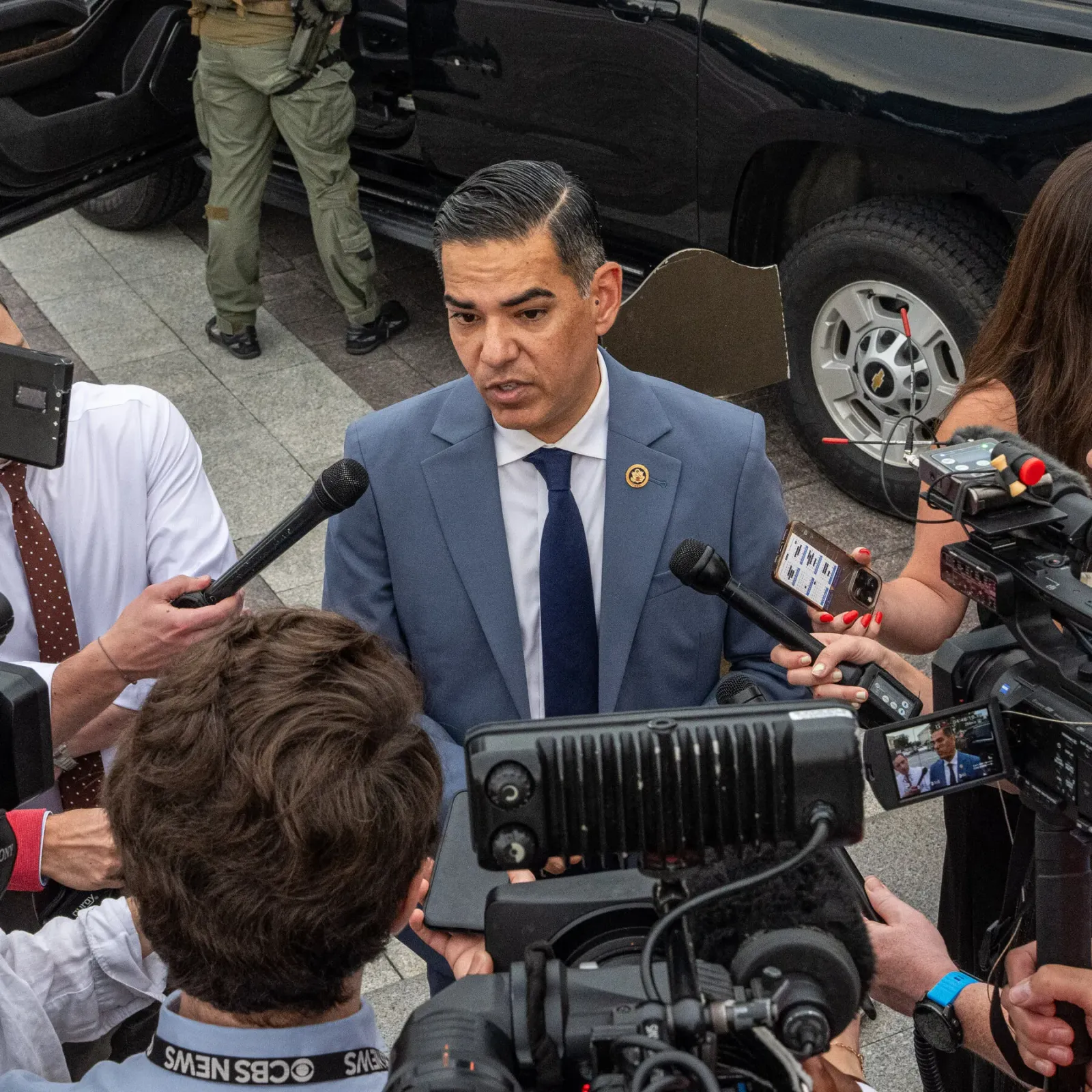
House Democrats are preparing a broad set of investigations centered on President Trump, his family and senior administration officials, and the sweep includes Commerce Secretary Howard Lutnick and policies related to Nvidia. For anyone with exposure to semiconductor export controls, federal trade policy or Washington-facing compliance risk, this is the opening move of a fight that could reshape the rules governing where AI chips can be sold.
House Democrats are assembling a wide-net investigation of President Trump, his family and senior officials across his administration, and the sweep reaches two places that matter well beyond Washington: Commerce Secretary Howard Lutnick and US policy related to Nvidia. That pairing is the tell. Commerce is the department that writes and enforces the export controls governing which advanced semiconductors can be sold abroad, and Nvidia is the company whose products sit closest to every one of those thresholds. Put a cabinet secretary and the dominant AI chip designer into the same oversight frame, and you are not really investigating paperwork. You are investigating how America decides which AI hardware leaves the country, and who gets to influence that call.
The two threads have different mechanics. On the Nvidia side, the question is policy: how export controls are drafted, where the performance thresholds fall, and how quickly the rules move. Commerce, through its Bureau of Industry and Security, is the agency that administers those controls, which means the department's licensing decisions can shift revenue lines for chipmakers and their customers overnight. On the Lutnick side, the question is the man. Lutnick ran Cantor Fitzgerald, a major Wall Street firm, before taking the Commerce post, and his tenure has been shaped by defending Trump's tariff and trade agenda. A secretary who came out of financial markets is, structurally, someone whose decisions markets can read and whose statements traders act on. For a curious reader, the important part is this: Commerce is not a backwater. It touches tariffs, export controls, telecom, the Census and the data that businesses rely on to plan.
The procedural reality matters as much as the subject matter. Democrats are the minority in the House, and minority-party investigations typically run on document requests, public letters, voluntary testimony and hearings rather than on the subpoena power that generally sits with the majority. That does not make them toothless; it makes them different. The immediate output is disclosure, headlines and a public record. The leverage is in what that record sets up later, whether that is a legislative fight, a floor vote that forces members to take a position, or a foundation for a future majority to build on with real enforcement power.
Breadth is a deliberate choice, and it carries real trade-offs. Covering the president, his family and top administration officials maximizes the number of pressure points, keeps the administration answering on several fronts at once, and guarantees a steady drumbeat of news. It also invites the standard counterargument that a fishing expedition proves nothing. Historically, oversight waves of this size are judged less by how many threads they open than by whether one or two of them produce a finding that is crisp, legible and hard to dismiss. A single well-documented decision memo can outlast a dozen broad requests.
For investors and operators, the Nvidia thread is the one to watch most closely, because it is the one that can change behavior even if no subpoena ever lands. US export controls have repeatedly forced chipmakers to redesign or re-price products to fit within performance limits, and every revision to those limits reshapes demand forecasts for hyperscalers, data center builders and anyone modeling Chinese revenue. This is policy risk in its purest form: a rule written by an agency, enforced by licensing, and priced by the market within hours. Companies that sell into the AI supply chain, and the boards that approve their capital plans, should treat Commerce decisions as a first-order input rather than a compliance footnote.
Probes of cabinet secretaries typically seek a paper trail: calendars, communications, and the reasoning behind specific decisions. That is why the Lutnick element deserves attention beyond the political noise. Departments do not only make policy; they leave records of why a particular call went one way and not another. Once those records are requested, the operative internal questions become who signed off, what alternatives were considered, and whether the process followed the department's own standards. Those are questions that outlast news cycles and often outlast the officials who answer them.
The practical implication for peers in regulated, cross-border businesses is straightforward. Any company whose products, licenses or trade exposure runs through a federal agency should assume that its correspondence, licensing history and even product roadmaps could become exhibit material. Document retention, lobbying disclosure and political-spend records stop being housekeeping and start being strategy. Boards should also note the calendar: oversight agendas historically accelerate as elections approach, and an investigation announced early tends to be an investigation built to run long.
Strip away the theater and there is a clean through line. The investigations are the frame; the substance is discretion. How much latitude a Commerce secretary has over chip exports, tariffs and trade enforcement is the question that actually moves money, and it is the question this batch of inquiries is designed to make visible. Whatever survives the noise, that is the thread worth following.
This story's Key Insights and Take-aways are locked.
Create a free account to unlock Executive Actions for one credit.
Register to UnlockAlways free for Executives Club members. Join the Club
More in Politics

Fifth Circuit Kills Pregnant Workers' Law Over Pandemic Proxy Votes
A procedural ruling, not a policy one, has blocked a federal pregnancy-accommodation law and put every pandemic-era statute in the crosshairs ahead of an expected Supreme Court appeal.

Measles kills a Virginia child under 5, the state's first death of 2026
Virginia's health department confirmed the death but withheld the child's vaccination status, leaving schools, clinics and employers to plan around the one detail that would explain the most.

Former Brazilian President Bolsonaro Hospitalized with Intestinal Obstruction
The health status of the former far-right leader raises immediate questions about political stability and the trajectory of Brazil's conservative movement.