
ICJ upholds genocide case against Myanmar, orders reparations and refugee return
The Hague's ruling hands the Rohingya their strongest legal footing yet, but the reparations and the safe return depend on enforcement the court cannot deliver alone.
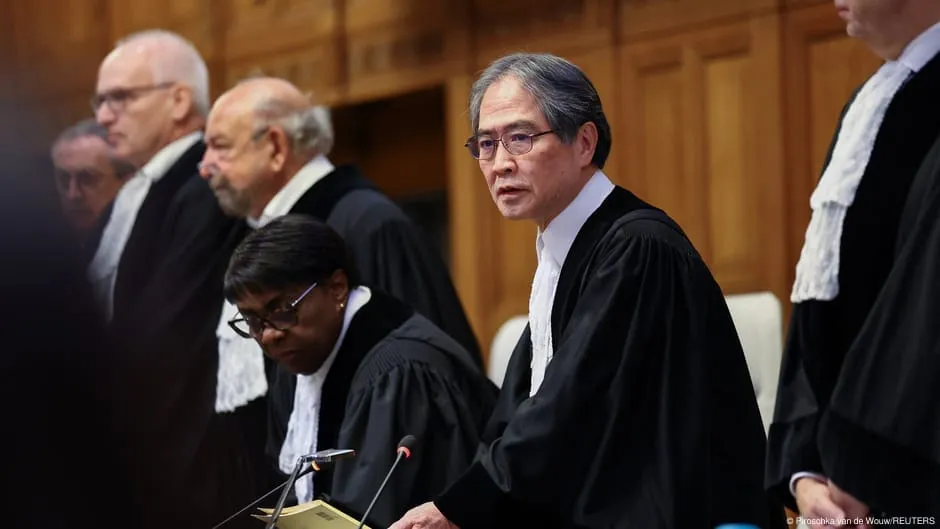
The International Court of Justice has upheld large parts of a genocide case against Myanmar over the 2017 conflict with its Rohingya minority, ordering reparations and calling for refugees to return safely. For decision-makers, the ruling converts a long-running human rights dispute into a documented legal finding that reshapes sanctions design, supply chain due diligence, and country risk on Myanmar.
The International Court of Justice has upheld large parts of a genocide case against Myanmar over the 2017 conflict with its Rohingya minority, ordering the state to pay reparations and to let refugees return safely. That is the ruling out of The Hague, and it is the most consequential legal finding yet against a military that has spent years insisting the world had no business judging it. The court did not just let the case proceed. It backed the substance.
For the Rohingya, a mostly Muslim minority that has been denied citizenship and basic rights in Myanmar for decades, the practical effect is a legal claim on the state itself. Reparations, in the ICJ's framing, are not a fine paid to a court. They are compensation owed by a government to a people it is accused of trying to destroy. The call for safe refugee return adds a second obligation: not just money, but a pathway home for the hundreds of thousands who fled.
It is worth being precise about which court did what, because the acronyms blur together. The ICJ settles disputes between states and issues rulings that are, on paper, binding and unappealable. The International Criminal Court pursues individuals for crimes like genocide and war crimes. This ruling sits in the first category. It is a judgment about Myanmar as a country, not about a general or a minister by name. That distinction matters for how the decision gets enforced, and for who ends up paying.
The underlying events are not in dispute in any serious sense. In 2017, Myanmar's military launched what it called a clearance operation in Rakhine State after attacks on security posts. What followed drove hundreds of thousands of Rohingya across the border into Bangladesh, in an exodus so large and so fast that refugee camps became permanent settlements. UN investigators have documented the campaign for years, and the term genocide has been used by international bodies before. What is new here is that the ICJ has now upheld large parts of the legal case built on that record.
The hard part starts now. ICJ judgments are binding, but the court has no police force, no bailiffs, no ability to seize assets. Enforcement runs through the UN Security Council, where Myanmar's diplomatic backers have historically shielded it from binding action. Historically, states have ignored ICJ orders when the political cost of compliance was lower than the cost of obeying. So the realistic near-term value of this ruling is not a wire transfer to a reparations fund. It is legal and political leverage: a documented finding that other courts, other governments, and other institutions can cite.
That leverage compounds in ways that are easy to miss. A genocide finding gives sanction designers a firmer legal footing. It gives banks, insurers, and logistics firms a harder question to answer when they assess Myanmar exposure. It gives Bangladesh, which has carried the burden of hosting refugees for years, a stronger hand in demanding that return happen safely rather than forcibly. And it gives the Rohingya themselves a piece of paper that says the thing they have been saying since 2017.
The context has also shifted under the case. Myanmar has been under military rule since the 2021 coup, and the security situation in Rakhine State has deteriorated since, which makes the court's call for safe return considerably harder to execute than it sounds. You cannot return people to a place where the fighting has not stopped. That gap between the legal obligation and the physical reality is where this ruling will live or die.
For executives and boards, the practical read is about exposure, not sentiment. Companies that source from Myanmar's garment sector, hold interests in its energy assets, insure its shipping, or bank its trade now operate against a backdrop in which the world's top court has upheld a genocide case against the state. That does not automatically trigger legal liability for a private firm. It does change the due diligence conversation, the reputational math, and the questions investors and lenders will ask in the next reporting cycle. Supply chain rules in the US and Europe have been tightening for years, and a ruling like this tends to accelerate the direction of travel rather than reverse it.
The bigger precedent is about impunity. International courts move slowly, and their judgments often land years after the politics have moved on. But each finding makes the next case easier to bring and harder to dismiss. For a generation of leaders watching from boardrooms, foreign ministries, and conflict zones, the message is that the paper trail does not expire. The Rohingya waited years for this. Myanmar's government now has to decide what it does with it.
This story's Key Insights and Take-aways are locked.
Create a free account to unlock Executive Actions for one credit.
Register to UnlockAlways free for Executives Club members. Join the Club
More in Politics

Fifth Circuit Kills Pregnant Workers' Law Over Pandemic Proxy Votes
A procedural ruling, not a policy one, has blocked a federal pregnancy-accommodation law and put every pandemic-era statute in the crosshairs ahead of an expected Supreme Court appeal.

Measles kills a Virginia child under 5, the state's first death of 2026
Virginia's health department confirmed the death but withheld the child's vaccination status, leaving schools, clinics and employers to plan around the one detail that would explain the most.

Former Brazilian President Bolsonaro Hospitalized with Intestinal Obstruction
The health status of the former far-right leader raises immediate questions about political stability and the trajectory of Brazil's conservative movement.