
IEA: AI boom could double data center electricity use by 2030
The IEA says global data center power demand could double by 2030, turning electricity, not chips, into the binding constraint on the AI buildout.
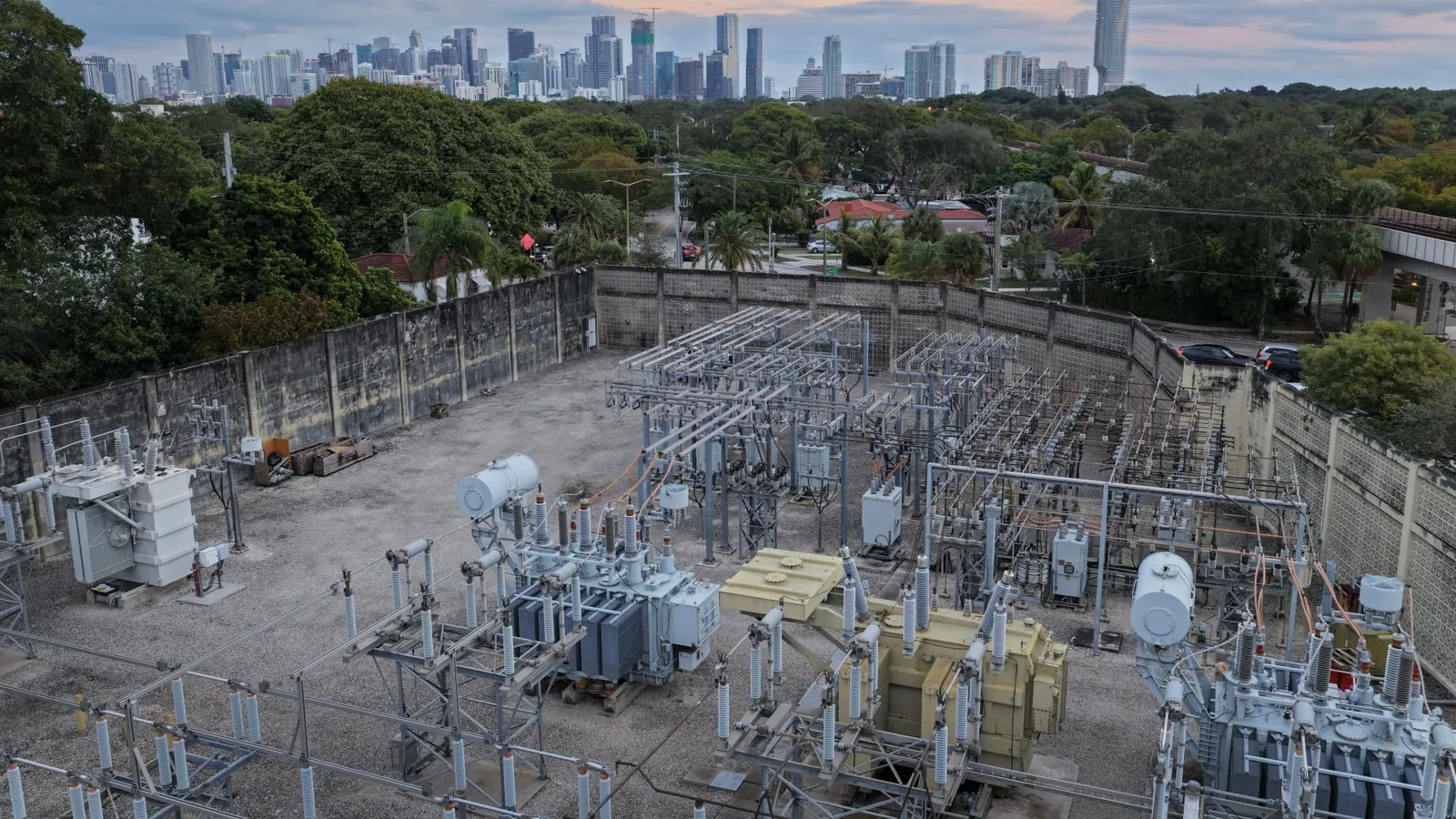
The International Energy Agency says global electricity use by data centers could double by 2030 as the AI boom adds pressure to power grids worldwide. For operators, utilities, and investors, that turns power procurement and grid interconnection into first-order strategic risks rather than back-office line items.
The International Energy Agency says global electricity use by data centers could double by 2030, with the AI boom adding pressure to power grids around the world. That is the whole claim, and it is a big one. The IEA is the Paris-based intergovernmental body whose outlooks function as the reference case for governments, utilities, and investors. When it says a single category of demand might double inside roughly half a decade, planners do not treat it as a curiosity. They treat it as a line item.
The number is easy to misread. A doubling of global data center electricity use does not mean the world runs out of power. It means twice as much demand shows up in specific places, at specific times, on grids that were not built for it. Electricity is not fungible the way capital is. A campus needs firm capacity at a particular substation, delivered on a schedule, with backup that survives a heat wave. So the IEA forecast lands as a siting problem, an interconnection problem, and a permitting problem long before it lands as a global supply problem.
The bottleneck has moved. For the past two years the scarce input in AI was chips. The constraint now increasingly looks like electrons: transformers, turbines, switchgear, high-voltage cable, and the skilled crews who install them. Those items historically carry long lead times, and the queue to connect a large new load to a transmission network can run for years in many markets. That reframes the AI roadmap. A model training plan is only as fast as the power contract behind it.
Who carries the exposure? The largest cloud and hyperscale operators, the colocation providers that lease space to them, the chipmakers whose accelerators only matter if they can be powered, and every enterprise that has budgeted for AI capacity it has not yet secured. The risk is not that AI stops working. The risk is that the physical layer, meaning power and cooling, sets a ceiling that software roadmaps did not plan for.
Utilities are the other side of this trade. Many spent the last decade managing flat or falling demand, and their planning processes, rate structures, and capital budgets reflect that world. A demand curve that doubles in five years is a different business. It also creates a political question that regulators cannot dodge: who pays for the new generation and transmission, and whether existing residential and small-business ratepayers should carry part of the cost of serving very large industrial loads. Large-load tariffs and cost-allocation fights are the predictable next chapter.
The IEA does not regulate anything. Its power is that its numbers become everyone else's assumptions. National energy plans, utility integrated resource plans, and investor presentations typically anchor to IEA scenarios, which means a doubling forecast can turn into steel, concrete, and gas turbines years before the demand actually arrives. That is the mechanism to watch: the forecast is not just a description of the future, it is an input that helps build it.
Then come the second-order effects. If power is the binding constraint, the energy mix debate gets louder, with gas, nuclear, and renewables all competing for the same role in serving firm, round-the-clock load. Water use for cooling becomes a local political issue in water-stressed regions. Behind-the-meter generation and on-site power move from novelty to strategy. And some planned AI capacity simply does not get built where it was originally intended, because the electrons were never available there.
For executives and boards, the practical implication is that electricity has graduated from a facilities line item to a strategic input. Companies with heavy compute ambitions now need power procurement expertise in the room when capital allocation happens, not after. Contracts, siting decisions, and disclosure about energy exposure start to look like the supply chain risk conversations of the last decade. The companies that locked in capacity early will have options. The ones that assumed the grid would keep up will be negotiating from behind.
None of this is destiny. The IEA says data center electricity use could double by 2030. Could is doing real work in that sentence. The outcome depends on how fast grids, regulators, and capital respond, and on whether the AI boom keeps its current shape. But the direction of travel is clear enough to plan against. Treat power as a first-class constraint on AI, and the forecast stops being a headline and starts being a competitive advantage.
This story's Key Insights and Take-aways are locked.
Create a free account to unlock Executive Actions for one credit.
Register to UnlockAlways free for Executives Club members. Join the Club
More in Technology

Anthropic mathematician claims Claude helped crack the Riemann hypothesis
If the proof holds, AI has toppled math's most famous open problem; if it does not, it is a case study in announcing breakthroughs before anyone verifies them.

AI's $4 Trillion Wipeout Erases Nasdaq's Gains for the Year
A brutal week took roughly $4 trillion off the AI sector and left the Nasdaq flat for the year, and the damage ran the full length of the supply chain.

Anthropic mathematician says AI proved the Riemann hypothesis. Verification will take time.
A single unverified claim from inside Anthropic now sits against more than 160 years of open mathematics, and the gap between asserting a proof and surviving peer review is the entire story.