
Indonesia Signs $71.8B in China Deals, Nearly $20B More Than a Year of FDI
Four APEC partnerships, anchored by a $50 billion plan for 10 smart cities, together exceed an entire year of Indonesia's foreign direct investment.
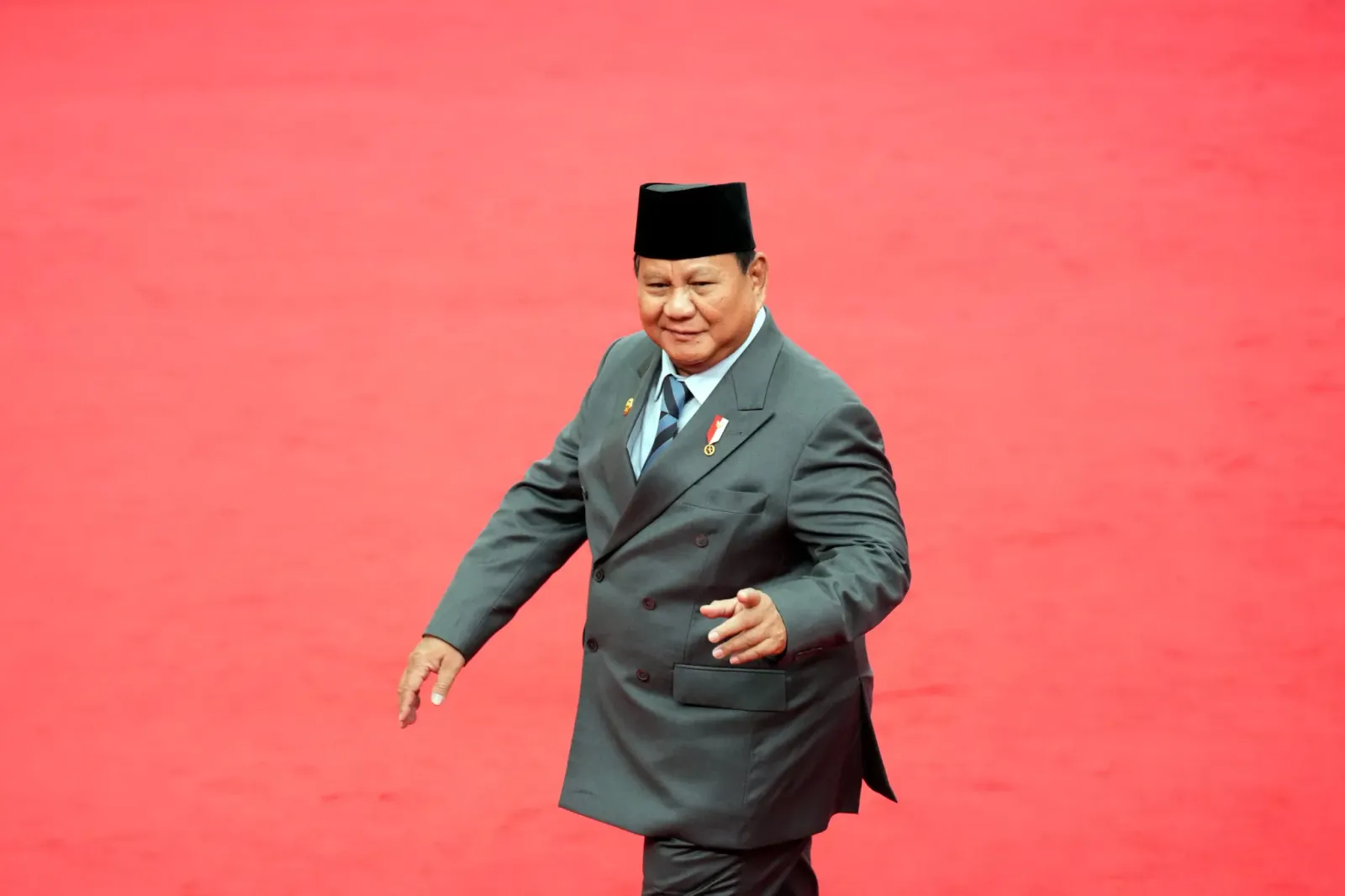
Indonesia and China signed four strategic investment partnerships worth an estimated $71.8 billion at the APEC summit in Shenzhen, led by a roughly $50 billion smart-city plan between sovereign wealth fund Danantara and a consortium headed by Shaanxi Construction Engineering Group. For executives, the package positions sovereign wealth funds as the new first stop for industrial policy deals and signals a coming wave of Chinese-backed manufacturing and infrastructure capacity inside Southeast Asia's largest economy.
Indonesia and China signed four strategic investment partnerships worth an estimated $71.8 billion on Wednesday, a one-day total that lands nearly $20 billion above the entire $53.4 billion in foreign direct investment Indonesia pulled in last year, excluding finance and oil-and-gas. The agreements were signed during the Asia-Pacific Economic Cooperation summit in Shenzhen, China. Sit with that number for a second: a single round of signatures, if the pledges convert, is worth more than a full calendar year of the FDI that normally flows into the region's largest economy.
The largest of the four is valued at approximately $50 billion and envisages 10 "future smart cities." The agreement links an arm of Danantara, Indonesia's sovereign wealth fund, with a consortium led by China's Shaanxi Construction Engineering Group. "That will become a historic project to be implemented next year," said Rosan Roeslani, Indonesia's minister of investment and downstream industry and Danantara's chief executive officer. He added that the investments will "have a positive impact on job creation and will also facilitate technology transfer." Note the dual hat Roeslani wears: he runs the ministry and the fund at the same time, which tells you how tightly Jakarta has fused state policy with state capital.
For context on what a "smart city" actually means here, Danantara said earlier this month that it plans to develop a dozen smart cities, envisioned as integrated urban areas combining residential communities, universities, hospitals, shopping centers, and infrastructure. The China partnership covers 10 of them, which suggests the fund is treating the plan as a pipeline rather than a one-off trophy. It also tells you the ambition is not a factory or a mine. It is the built environment itself, the whole stack of housing, education, healthcare, and retail poured in one pour.
The remaining three agreements spread across appliances, infrastructure finance, and energy. A second pairs Danantara with Hisense, the Chinese appliance maker, on a $10 billion investment in technology and manufacturing, including new research labs and manufacturing facilities for household appliances. A third is a $10 billion proposal to strengthen the "infrastructure financing partnership" between Danantara and a consortium led by China's State Development and Investment Corporation. The fourth is a $1.8 billion partnership between Indonesia's Ministry of Education, Science, and Technology, state energy company Pertamina, and Beijing Petrochemical Engineering Co on coal-to-ethanol technology. Add them up and the smallest deal is still nine figures.
Danantara is the throughline. President Prabowo Subianto launched the fund in February 2025 to consolidate the country's state-owned enterprises under a single organization, with an estimated $1 trillion in state assets under its umbrella. It is increasingly chasing deals that bring technology to Indonesia rather than just capital. In October, the fund invested $250 million into HighPeak Energy, a Texas-based oil and gas producer. Pandu Sjahrir, the fund's chief investment officer, described that deal to Fortune last month as an opportunity to learn more about shale oil extraction. Read the China package through that lens and the ask becomes clear: hardware, labs, and know-how, not just checks.
China is Indonesia's largest trading partner, with bilateral trade totaling $135 billion in 2024, so the commercial relationship already runs deep. Investment commitments are a different animal from trade flows, though, and they have been scaling fast. During Prabowo's state visit to China in November 2024, the two countries announced investment commitments totaling about $10 billion, spanning food security, energy, and technology. Wednesday's $71.8 billion is roughly seven times that total, compressed into a single ceremony. That is the kind of jump that gets noticed in boardrooms from Jakarta to Singapore to Riyadh.
Two caveats deserve to travel with the headline. First, these are signed partnerships and pledges, not disbursed capital, and the gap between an announcement and a groundbreaking is where mega-deals historically go to die. Second, the FDI comparison is a baseline, not an apples-to-apples match, since Indonesia's $53.4 billion figure excludes finance and oil-and-gas. Even with those asterisks, the direction is unmistakable. Indonesia is using a sovereign fund to buy its way up the value chain, a strategy its investment ministry calls downstreaming, and it is doing it with Chinese partners willing to build the entire city, not just the plant.
The stakes for anyone watching are structural. Sovereign wealth funds are becoming the dealmakers of record for industrial policy, which means capital allocation calls that once ran through ministries and multilateral lenders now run through a handful of fund executives. For multinationals weighing Indonesia, a $50 billion urban build-out plus a $10 billion appliance manufacturing push from Hisense signals domestic capacity is about to get more competitive and more capable. For investors in Chinese construction and industrial names, Shaanxi Construction Engineering and SDIC just got a very large, very public pipeline. And for every other emerging market with a commodity-heavy economy, the template now on the table is blunt: trade market access for technology transfer, and sign it at the summit.
This story's Key Insights and Take-aways are locked.
Create a free account to unlock Executive Actions for one credit.
Register to UnlockAlways free for Executives Club members. Join the Club
More in Business

S&P 500 Enters Correction, Down 10% From Its High on AI Worries
The index's slide past the 10 percent line is a symbolic verdict on investor mood, and the AI trade that powered the rally is now the thing testing it.

Dow and S&P 500 enter correction as Nasdaq logs worst week since 2020
All 11 S&P 500 sectors fell more than 1% in the same week for the first time since April 2025, a breadth signal that matters more than any single index level.

Chip stocks lose $2.3 trillion in a week, worst run in 25 years
A $2.3 trillion weekly wipeout in semiconductors is forcing every board with an AI story to ask whether it owns a thesis or just a crowded trade.