
Intel CEO Lip-Bu Tan Signs First Outside Customer for 18A Chips
The first external commitment to Intel's most advanced process is a critical test of whether its foundry business can win trust beyond its own factories.
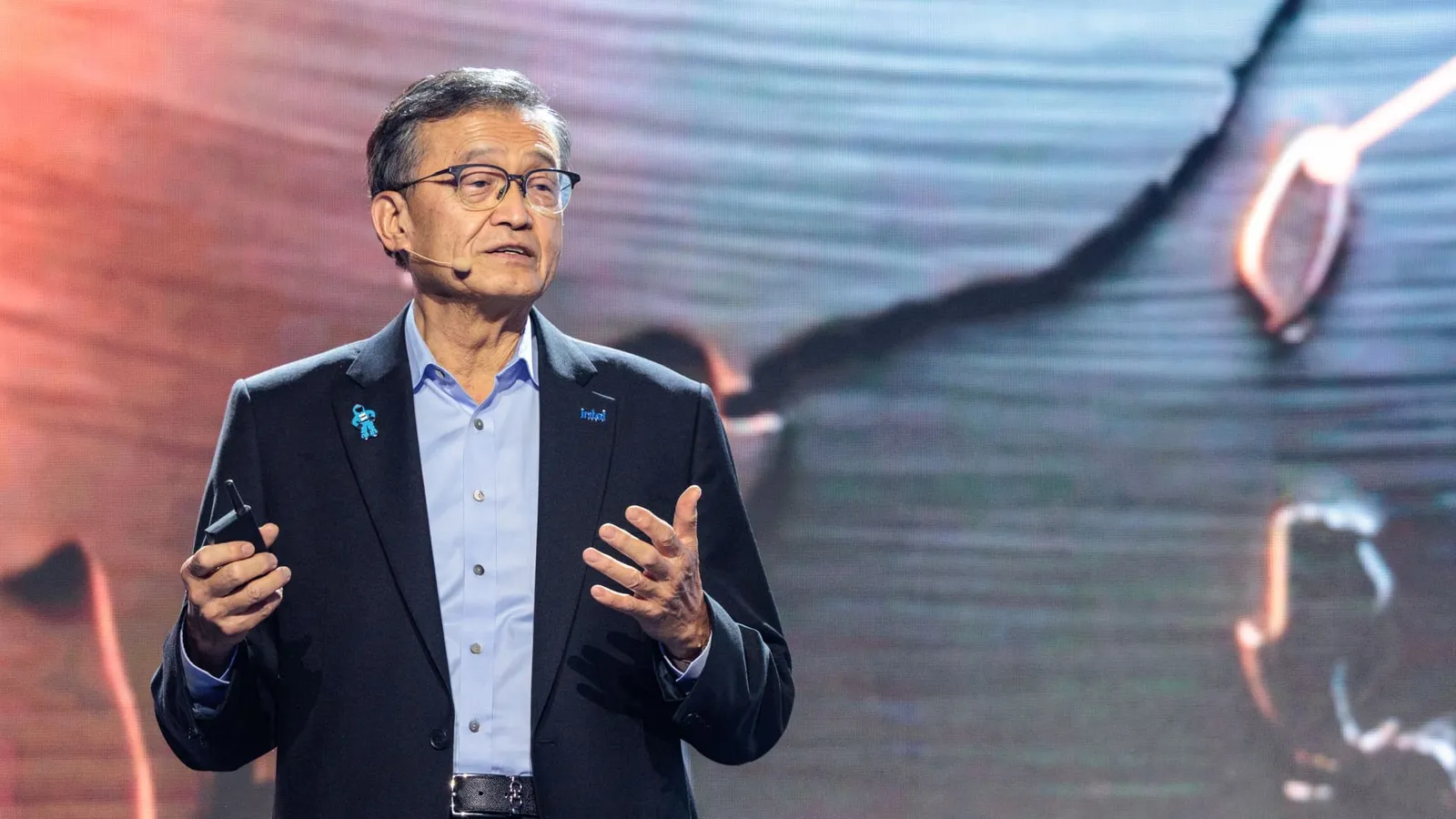
Intel CEO Lip-Bu Tan said Wednesday that the company signed its first outside customer for its 18A chips. The disclosure is a key proof point for Intel's contract manufacturing ambitions, because external demand, not internal volume, will determine whether 18A becomes a durable foundry franchise.
Intel CEO Lip-Bu Tan said Wednesday that Intel has signed its first outside customer for its 18A chips. That is the headline fact, and it is a big one for a company that has spent years trying to convince the semiconductor world that it can manufacture leading-edge chips for other companies, not just for itself. The customer was not named in the disclosure. Even so, the mere existence of an external buyer for 18A changes the conversation around Intel's foundry effort from aspiration to evidence.
Why does one customer matter so much? Because 18A is not a side project. It is the advanced manufacturing process Intel has positioned as its answer to the leading-edge nodes from TSMC and Samsung. For decades, Intel's chipmaking advantage was built on designing and producing its own processors. Contract manufacturing, or foundry work, is a different business. It requires Intel to treat outside chip designers as customers, protect their intellectual property, hit their schedules, and deliver yields that make their products commercially viable. A first outside customer is the market's first real vote on whether Intel can do that at the frontier.
The identity of the customer remains unknown, and that matters. In foundry, logos are proof. When a major fabless chip company signs up for a node, rivals notice. When a hyperscaler or AI chip startup commits, suppliers notice. When an established semiconductor firm commits, investors notice. Intel has not yet given the market a name to anchor its credibility. That leaves the announcement as a signal rather than a fully bankable endorsement. The next question is whether this first customer is a small design win, a strategic partner, or the start of a queue.
Context matters here. The foundry market is dominated by TSMC. For years, the industry has operated with a near-monopoly at the leading edge. That concentration has become a strategic concern for governments and customers. The United States, Europe, and Japan have pushed to rebuild domestic semiconductor capacity. Intel's 18A is central to that policy ambition because it is the most advanced node Intel plans to offer to external customers. If Intel can make 18A work commercially, it gives chip designers a second source at the frontier. If it cannot, the industry remains dependent on a handful of fabs in East Asia.
For Intel, the stakes are financial and strategic. Leading-edge fabs cost tens of billions of dollars to build and equip. To justify that spending, Intel needs volume. Internal products can fill some capacity, but external customers are what turn a cost center into a foundry business. Every outside customer helps spread fixed costs, improve learning curves, and build the ecosystem of design tools, intellectual property, and packaging that surrounds a successful node. That is why the first external customer is not just a sales win. It is a validation of the entire operating model.
For executives outside semiconductors, the lesson is about second sources. The AI boom has made advanced chips a board-level issue. Companies that depend on AI compute are learning that supply concentration is a risk. A credible Intel foundry would give the market another option. That could ease shortages, create pricing pressure, and give governments a domestic alternative. But credibility is earned one customer at a time. Tan's announcement is the first step, not the finish line.
What to watch next? The market will want three things: the customer's name, the product it plans to build on 18A, and the volume. A marquee name would be a stronger signal than an unnamed design win. A high-volume product would prove that 18A can support commercial scale. And repeat customers would show that Intel can not only win a logo but keep it. Until then, the announcement stands as a real but incomplete proof point.
The bottom line: Intel's CEO says the company has crossed a threshold that foundries must cross. It has an outside customer for its most advanced chip technology. That does not guarantee success. It does mean the foundry story now has a data point that cannot be dismissed as internal optimism. For Intel, for its rivals, and for every company that buys leading-edge chips, the next few quarters will reveal whether this first customer is a one-off or the beginning of a real alternative.
This story's Key Insights and Take-aways are locked.
Create a free account to unlock Executive Actions for one credit.
Register to UnlockAlways free for Executives Club members. Join the Club
More in Business

S&P 500 Enters Correction, Down 10% From Its High on AI Worries
The index's slide past the 10 percent line is a symbolic verdict on investor mood, and the AI trade that powered the rally is now the thing testing it.

Dow and S&P 500 enter correction as Nasdaq logs worst week since 2020
All 11 S&P 500 sectors fell more than 1% in the same week for the first time since April 2025, a breadth signal that matters more than any single index level.

Chip stocks lose $2.3 trillion in a week, worst run in 25 years
A $2.3 trillion weekly wipeout in semiconductors is forcing every board with an AI story to ask whether it owns a thesis or just a crowded trade.