
Iran's Boiling Frog Strategy: Why Tehran Believes the West Won't Jump
Tehran's bet is that pressure applied just below the threshold of a decisive response is winning, which makes the West's tolerance for escalation the real battlefield.
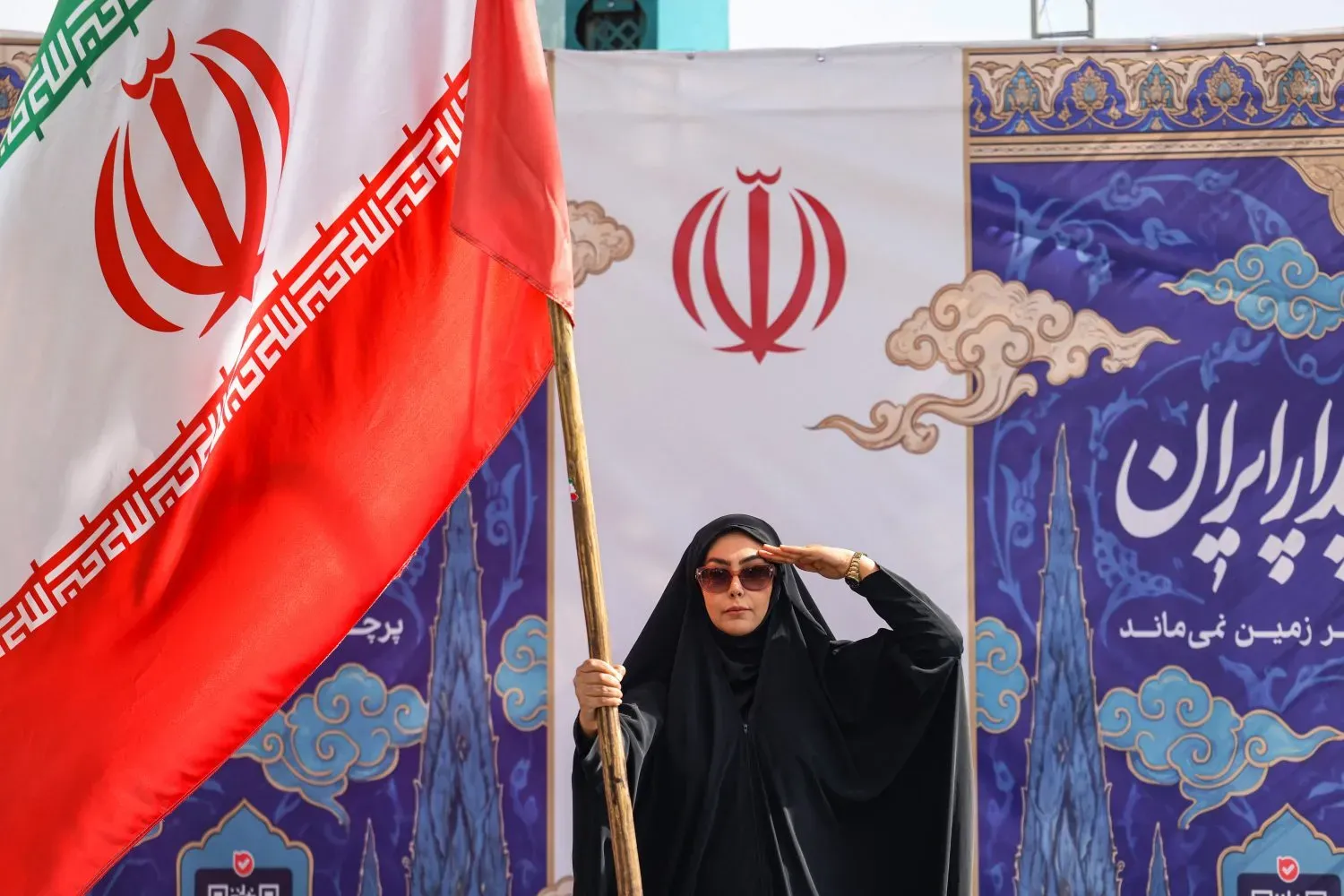
Foreign Policy frames Iran's "boiling frog" strategy as one Tehran believes is successfully hurting the West, built on incremental pressure that never quite triggers a decisive response. For decision-makers, the implication is that the contest is no longer over a single red line but over who gets to define what counts as normal.
The phrase belongs to Foreign Policy, and it is carrying a lot of weight: Iran's "boiling frog" strategy, the outlet writes, is one Tehran believes is working. The metaphor is the message. A frog dropped into boiling water jumps out; a frog in water warmed slowly does not. Translated into statecraft, the claim is that Iran does not need a single decisive blow to win. It needs a sequence of moves, each one small enough that no capital wants to be the one that declares it a casus belli. The pressure accumulates. The response never quite arrives. And on Foreign Policy's reading, Tehran looks at that asymmetry and concludes the strategy is paying off. That is the part worth sitting with, because it is a claim about the opponent's psychology, not about Iran's firepower.
Most deterrence thinking assumes a tripwire: cross this line and you get a response. The boiling-frog playbook attacks the line itself. It assumes the threshold is not a fixed geographic or legal boundary but a political one, set by whoever has to explain a response to voters, allies, and markets on a Tuesday morning. Push below that political threshold, repeatedly, and the threshold drifts upward without anyone formally moving it. Each incident gets priced as manageable. Each manageable incident becomes the new baseline against which the next one is judged. The strategy is less about escalation than about redefining the starting point.
For context, Iran's coercive toolkit has historically been assembled for exactly this kind of gradualism: aligned and proxy armed groups across the region, maritime friction in the Gulf, nuclear signaling calibrated as reversible steps, and cyber and drone capabilities that sit below the threshold of conventional attack. None of these is a declaration of war. Each is a bargaining chip that raises the cost of the status quo while staying inside the zone where a coalition can hold together. That is the design logic of a slow-burn campaign: it does not ask the West to make one hard decision, it asks the West to make the same easy decision a hundred times.
Why Tehran believes it is working comes down to asymmetry of cost. The price of escalation is visible and immediate for Western capitals: coalition management, legislative approval, oil price shocks, force protection, domestic political exposure. The price of not escalating is diffuse and deferred. Attention is finite, and it competes with every other theater bidding for the same bandwidth. Meanwhile the response menu has leaned heavily on sanctions, designations, and statements, instruments used so often that their marginal deterrent value decays with each round. A deterrent that fires constantly stops being read as a deterrent and starts being read as background noise.
The obvious vulnerability in any boiling-frog strategy is that the heat is being applied by people who can also misjudge the temperature. Gradualism compresses the margin for error. A local commander exceeding his brief, an interception that goes wrong, a strike that kills enough people to make ignoring it politically impossible: any of these can convert a deliberately sub-threshold campaign into a crisis that forces the response Tehran spent years avoiding. The strategy's worst enemy is not a firm Western ultimatum. It is an accident that makes the frog notice the water.
For operators, the practical consequence is that geopolitical risk stops being an event and becomes a running cost. Gulf shipping and marine insurance price a permanent friction premium rather than episodic spikes. Energy markets carry a slow-rising risk layer that is easy to underwrite and easy to under-price. Defense budgets shift toward munitions stockpiles, air and missile defense, and maritime presence, the capabilities that a sub-threshold campaign actually stresses. Sanctions compliance teams face a moving target, where each incremental designation changes the perimeter without changing the architecture. Emerging-market sovereign spreads and currency reserves absorb the second-order effects. None of this shows up as a single headline, which is precisely why boards tend to catch it late.
The deeper strategic point for anyone in a similar standoff is that this contest is not really about territory or weapons. It is about the definition of normal. If incremental pressure never produces a proportionate response, the pressure becomes the baseline, and the party that was supposed to be deterred has effectively won the argument without winning a battle. That is what Tehran appears to be counting on, according to Foreign Policy's assessment. The counter-move, historically, is not a larger version of the same response but an answer that changes the pricing: making the next increment visibly more expensive than the last, and making that clear before the next one is attempted.
Until then, the frog keeps sitting there, and everyone keeps insisting the water is fine.
This story's Key Insights and Take-aways are locked.
Create a free account to unlock Executive Actions for one credit.
Register to UnlockAlways free for Executives Club members. Join the Club
More in Politics

Fifth Circuit Kills Pregnant Workers' Law Over Pandemic Proxy Votes
A procedural ruling, not a policy one, has blocked a federal pregnancy-accommodation law and put every pandemic-era statute in the crosshairs ahead of an expected Supreme Court appeal.

Measles kills a Virginia child under 5, the state's first death of 2026
Virginia's health department confirmed the death but withheld the child's vaccination status, leaving schools, clinics and employers to plan around the one detail that would explain the most.

Former Brazilian President Bolsonaro Hospitalized with Intestinal Obstruction
The health status of the former far-right leader raises immediate questions about political stability and the trajectory of Brazil's conservative movement.