
Iraq Moves In on Kataib Hezbollah's Oil Town as Its Friday Deadline Slips
Baghdad's Federal Police took control of a new headquarters in Jurf al-Sakhar on Friday, but the group that ran the town for a decade now has a month to leave, not a day.
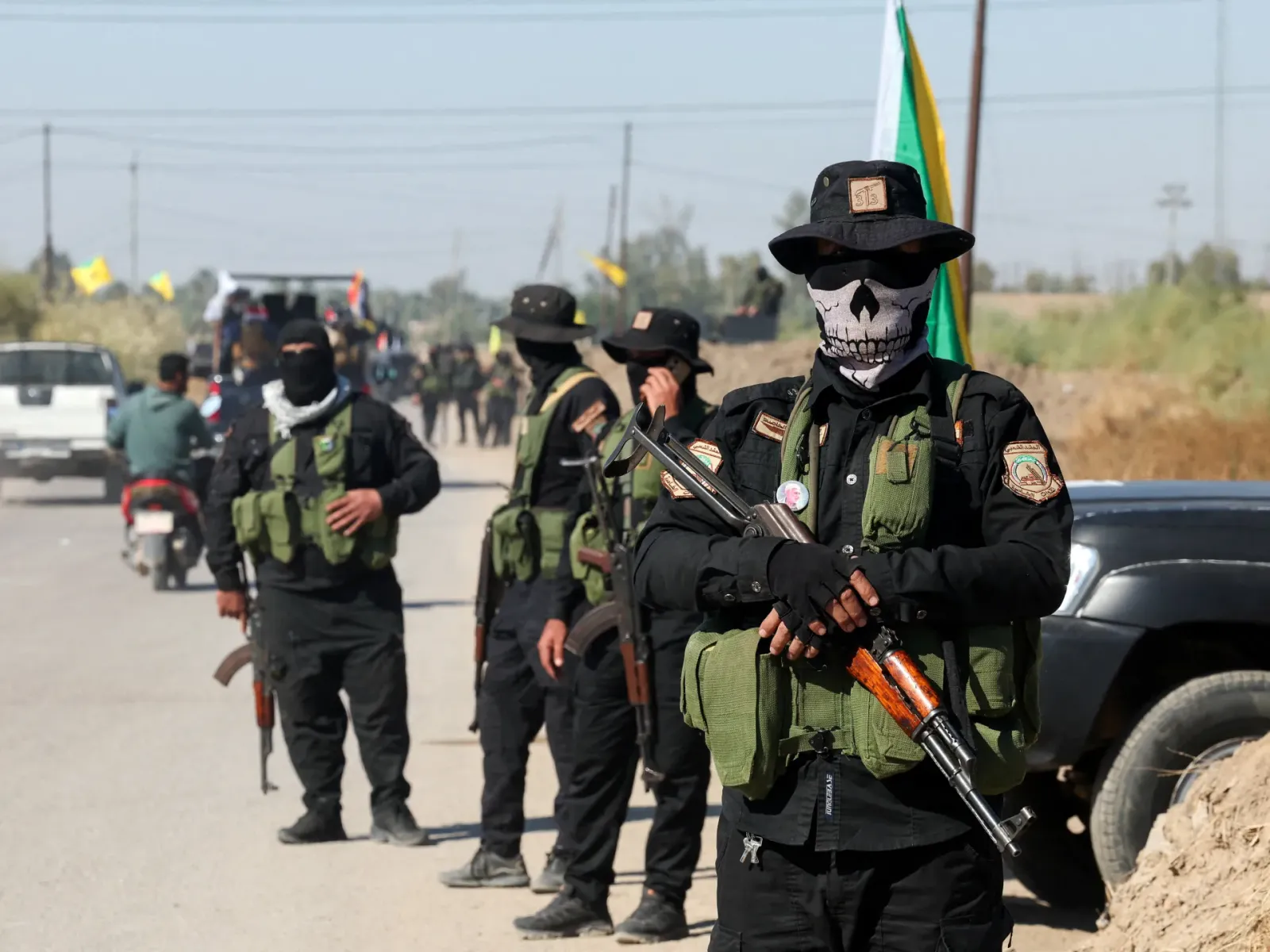
Iraqi Prime Minister Ali al-Zaidi's government deployed security forces into Jurf al-Sakhar on Friday and took over a new control headquarters in a town long held by Iran-aligned Kataib Hezbollah, after a probe raised suspicions the group stole hundreds of millions of dollars' worth of Iraqi oil through illicit refineries. The compromise deal gives the group a month to withdraw instead of Friday's deadline, making the next 30 days a live test of whether Baghdad can turn oil-revenue control into real leverage over armed factions.
Iraqi security forces rolled into Jurf al-Sakhar on Friday, taking over a town that Kataib Hezbollah, one of the country's most powerful Iran-aligned armed groups, has effectively run for more than a decade. The trigger was money. A government probe raised suspicions that the group had stolen hundreds of millions of dollars' worth of Iraqi oil through illicit refineries, and on Monday Baghdad announced it would take control of the town, which sits in Babil province about 60km southwest of Baghdad and is also known as Jurf al-Nasr. Nine senior security and oil officials were dismissed following the investigation into alleged oil smuggling. Kataib Hezbollah has denied the allegations of stealing oil. The group is believed to have thousands of trained fighters.
Here is the part worth reading twice. Baghdad gave Kataib Hezbollah a deadline of Friday to leave. Under the compromise deal sealed on Thursday, it gets a month. That gap is the story: a state that wants to look decisive, buying time instead of a fight. Lieutenant General Ahmed Hatem Hamid said on Friday that a control headquarters had been established in Jurf al-Sakhar and that the Federal Police would control the facility, according to the Iraqi News Agency. Iraq's Energy Police have also begun securing an oil pipeline running through the town, INA reported. Under the deal, a combined force of an Iraqi army brigade, a Federal Police battalion and an Energy Police regiment will protect oil pipelines in the area, with two brigades from the Popular Mobilisation Forces Commission, a collection of armed groups that are part of Iraq's official security forces, also participating.
Why the oil matters more than the optics. Jurf al-Sakhar sits on pipeline infrastructure, and analysts suspect the push for withdrawal is a calculated strategy to sever the financial arteries of armed factions that refuse to integrate into Iraq's state apparatus. That is the quiet mechanism at work here: not disarmament by decree, but revenue denial. Kataib Hezbollah is one of dozens of heavily armed pro-Iranian groups that hold semi-official status in Iraq, which is exactly what makes them hard to touch. They are not quite militia and not quite state. Baghdad has also come under pressure from the United States to reduce Iran's influence in the country, and the deployment is understood to have been driven by pressure from the US and its Gulf allies.
Prime Minister Ali al-Zaidi is walking the line between enforcing state authority and triggering a confrontation he may not control. Addressing government forces entering the town on Friday, he framed the operation carefully. "Everyone present there are your brothers," he told the troops, "the sons of this nation, and their blood is our blood." He also said the forces were "not waging war." But he insisted that his decision to restrict weapons to state control was final. That is the sentence to hold onto. Restricting weapons to the state is the demand every armed faction in Iraq has spent a decade avoiding, and it is the one that will decide whether this deal holds.
The deal did not come cheaply or quickly. Fadel Abu Raghif, a Baghdad-based security and strategic analyst, told Al Jazeera the agreement for Iraqi security forces to enter Jurf al-Sakhar came after lengthy and delicate talks with Kataib Hezbollah, following "in-depth negotiations, and after wrangling and a tug of war that lasted about two months or so." Highlighting the delicacy of the situation, Esmail Qaani, the commander of Iran's Islamic Revolutionary Guard Corps' Quds Force, had visited Iraq earlier this week to help defuse tension and seal the deal. Read that as a signal: Tehran had a stake in the outcome and chose to manage it rather than blow it up.
Context matters here. Kataib Hezbollah helped recapture Jurf al-Sakhar from ISIL, and its presence in the town has lasted more than a decade. Reporting from Babil province, Al Jazeera's Samer Al Kobeisi said the group's departure would allow the reopening of an area that has been closed for about 12 years, according to the government. Twelve years of closure is not a footnote. It is a measure of how much territory in Iraq has been governed by armed groups rather than ministries, and how slowly that map gets redrawn.
For anyone watching Iraq as a market, a security risk, or a test case for how states claw back power from armed actors, the next 30 days are the tell. The withdrawal is expected within a month, not on Friday. The Federal Police now hold the control headquarters. The Energy Police are on the pipeline. But the same compromise that put them there also legitimized a slower timeline and gave two PMF brigades a seat inside the new security architecture. If Kataib Hezbollah leaves and the oil flows under state guard, Baghdad has a template it can point to elsewhere. If the withdrawal stalls, the template becomes a warning: deadlines in Iraq are negotiable, and revenue is the lever that actually moves.
This story's Key Insights and Take-aways are locked.
Create a free account to unlock Executive Actions for one credit.
Register to UnlockAlways free for Executives Club members. Join the Club
More in Politics

Fifth Circuit Kills Pregnant Workers' Law Over Pandemic Proxy Votes
A procedural ruling, not a policy one, has blocked a federal pregnancy-accommodation law and put every pandemic-era statute in the crosshairs ahead of an expected Supreme Court appeal.

Measles kills a Virginia child under 5, the state's first death of 2026
Virginia's health department confirmed the death but withheld the child's vaccination status, leaving schools, clinics and employers to plan around the one detail that would explain the most.

Former Brazilian President Bolsonaro Hospitalized with Intestinal Obstruction
The health status of the former far-right leader raises immediate questions about political stability and the trajectory of Brazil's conservative movement.