
Iraq's Army Enters Kataeb Hezbollah Bastion Without Firing a Shot
Baghdad negotiated Jurf Al-Sakher out of militia hands instead of storming it, and that template now faces its real test: disarming the paramilitaries Iran spent a decade arming.
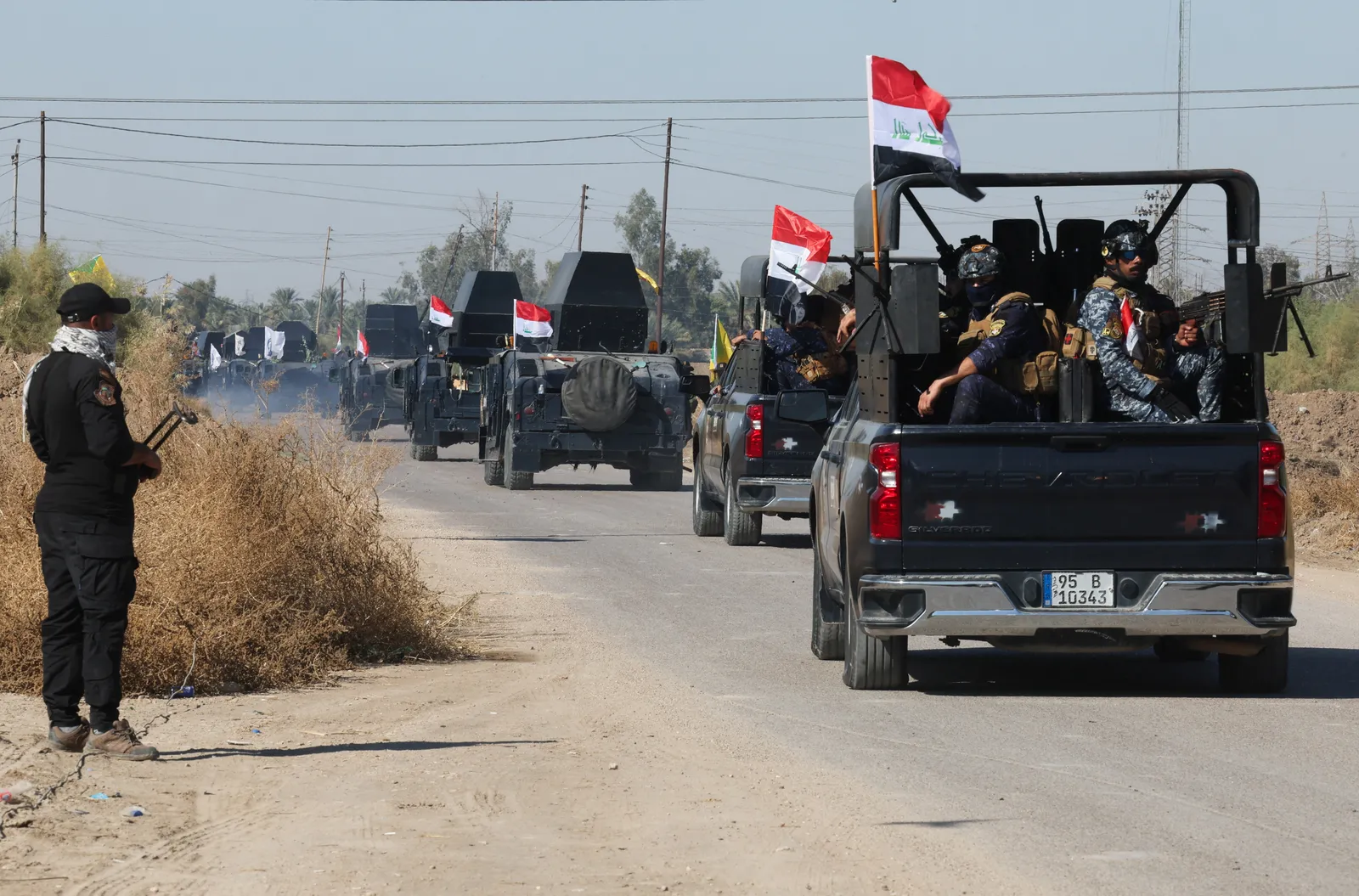
Iraqi government forces began asserting control over Jurf Al-Sakher from the Iran-backed militia Kataeb Hezbollah after negotiations, avoiding a military confrontation, with Prime Minister Ali Al-Zaidi stressing unity as he confronts the disarmament of paramilitary groups. The handover is a live test of whether Baghdad can claw back territory and authority from armed factions tied to Iran without igniting a wider confrontation.
Iraqi government forces have begun asserting control over Jurf Al-Sakher, the town long held by the Iran-backed militia Kataeb Hezbollah, and they did it without a firefight. The move came after negotiations, not an assault, according to Arab News, making it a rare case of Baghdad reclaiming ground from an armed faction by talking rather than shooting. Jurf Al-Sakher sits in Babil province, on the road that runs south toward Karbala, and it has been militia-held ground for most of the decade since it was emptied during the ISIS advance in 2014. That a government can walk back into a place like this at all is the headline. That it chose negotiation over force is the strategy, and the strategy is the part worth watching.
Prime Minister Ali Al-Zaidi framed the handover around unity, and tied it directly to the larger, unresolved question of disarming paramilitary groups. That is where the real difficulty lives. Taking one town is a tactical win. Disarming militias that have their own budgets, their own chains of command, their own media and their own political parties is a different order of problem entirely. Al-Zaidi's emphasis on unity is not decoration. In a system where armed factions sit inside the state as well as outside it, any move against them risks splitting the coalition that keeps the government standing. He is trying to take ground without taking casualties, political or literal.
For context, Iraq's paramilitary landscape was built in the war against ISIS. The Popular Mobilization Forces were assembled in 2014 from a patchwork of existing militias to blunt the group's advance, and in 2016 Iraqi law formally folded them into the state's security architecture. That law handed many factions official salaries, uniforms and legal cover while leaving their loyalties largely intact. Kataeb Hezbollah is among the most established of those factions and is aligned with Iran, and Washington has long designated it a terrorist organization. The practical result is a state that does not hold a monopoly on force. It shares it, sometimes uneasily, sometimes not at all.
That is exactly why the question hanging over this story, whether Iraq can break the grip of Iran-backed militias without triggering a wider confrontation, is the right one to ask. Iran's influence in Iraq runs through these groups: they are a lever, a deterrent and a bargaining chip rolled into one. A negotiated handover in Jurf Al-Sakher hints at a path that avoids the worst case. Pressure, politics and a face-saving exit can move a militia that a raid would only entrench. But it also exposes the limits. Negotiation works when the militia calculates that holding the ground now costs more than giving it up. It stops working the moment that math flips.
Systemic corruption is the other half of this story, and it is not a side issue. Iraq's state finances lean overwhelmingly on oil revenue, and armed groups have historically been embedded in the machinery that spends it, from procurement and contracts to checkpoints and local administration. Every dollar that flows through a parallel command structure is a dollar the government cannot direct. That is why the Jurf Al-Sakher handover matters beyond one town in Babil: it is a test of whether the state can convert formal legal authority into actual control on the ground, and whether the money follows.
If the model holds, it becomes a template. Other contested areas where militias have dug in for years would suddenly have a playbook that does not require a battle. Each successful handover strengthens the precedent and weakens the argument that only force moves these groups. Each failed one teaches the opposite lesson, and teaches it to everyone watching. The near-term signals to track are unglamorous but decisive: whether government forces actually stay in Jurf Al-Sakher rather than visiting it, whether disarmament moves from speeches into statutes with enforcement behind them, and whether the militias' political wings absorb the loss quietly or escalate somewhere else to rebalance.
For executives, investors and anyone with exposure to Iraq, the stakes are straightforward. A state that cannot guarantee its own territory is policed by its own forces carries a risk premium that shows up in insurance, in sovereign borrowing costs, in the willingness of foreign capital to commit to anything longer than a trading cycle. A state that can, even incrementally, starts to look investable in a way it has not for years. The Jurf Al-Sakher deal is small. Its meaning is not. Baghdad just proved that militias can be moved without a war. Now it has to prove it can do that twice.
This story's Key Insights and Take-aways are locked.
Create a free account to unlock Executive Actions for one credit.
Register to UnlockAlways free for Executives Club members. Join the Club
More in Politics

Fifth Circuit Kills Pregnant Workers' Law Over Pandemic Proxy Votes
A procedural ruling, not a policy one, has blocked a federal pregnancy-accommodation law and put every pandemic-era statute in the crosshairs ahead of an expected Supreme Court appeal.

Measles kills a Virginia child under 5, the state's first death of 2026
Virginia's health department confirmed the death but withheld the child's vaccination status, leaving schools, clinics and employers to plan around the one detail that would explain the most.

Former Brazilian President Bolsonaro Hospitalized with Intestinal Obstruction
The health status of the former far-right leader raises immediate questions about political stability and the trajectory of Brazil's conservative movement.