

Israel unanimously recognizes Armenian genocide, striking a fresh blow at Turkey’s position
Cabinet approval heads to parliament, escalating a Middle East diplomatic rift already inflamed by Gaza and Turkey-Israel trade cuts.
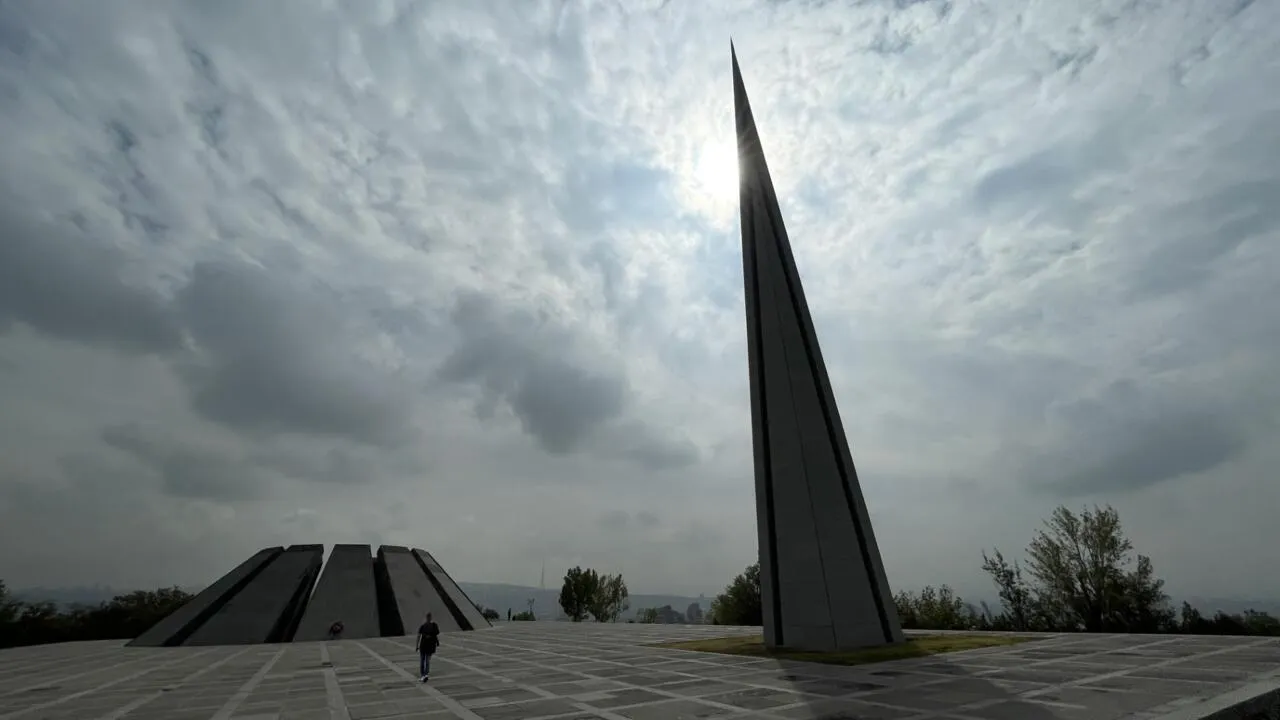
Israel’s government, unanimously, approved Foreign Minister Gideon Saar's proposal to recognize the Armenian genocide, with the decision still requiring ratification by parliament. For decision-makers tracking geopolitical risk, it deepens Turkey-Israel tensions and adds another flashpoint into alliance and trade calculations.
Israel’s cabinet unanimously approved Foreign Minister Gideon Saar's proposal to recognize the massacres of Armenians during World War I as genocide, a move widely interpreted as a rebuke to Turkey. The decision is dated Sunday, issued 29/06/2026 - 15:58, and it is not yet final: the cabinet’s action must still be ratified by parliament.
Saar framed the vote as both moral and historical duty, telling the cabinet at a meeting, according to a statement issued by his office, that “the time has come for Israel, as a Jewish state, to formally accept this position.” He also argued that the Armenian genocide remains subject to an “institutionalised campaign of denial and minimisation,” including “manipulative rewriting of history,” mainly by the Turkish government. The immediate story is straightforward. A cabinet decision puts Israel on record, even before parliamentary ratification, in a dispute that has shaped years of diplomatic alignment, especially with Turkey.
Why this matters is not only the historical label. Recognition is a political act with real-world consequences. Successive Israeli governments had avoided formally recognizing the Armenian genocide, in part to preserve relations with Turkey, once described in the source as one of Israel's closest strategic partners in the region. In other words, the default policy choice had been restraint, and this vote is a break from that long-running calculation. It signals a shift in what Israel is willing to risk diplomatically when the relationship with Turkey is already under stress.
That stress has accelerated since the war in Gaza erupted. The source notes that Turkey has repeatedly accused Israel of committing genocide in Palestinian territory, an accusation Israel strongly denies. The two governments are now arguing across multiple fronts, and rhetoric has turned sharper. Turkish President Recep Tayyip Erdogan has emerged as one of the fiercest critics of the war, repeatedly comparing Israeli leaders to Nazi officials. Netanyahu has hit back at Erdogan, calling him an “anti-semitic dictator who commits genocide against the Kurds.”
Meanwhile, the practical relationship has also deteriorated. Turkey has suspended most trade with Israel and become one of Hamas’s strongest diplomatic supporters, according to the source. In that context, Saar’s remarks were designed to separate this recognition from any attempt to portray it as retaliation. He said: “This is not an act of retaliation for the open hostility, along with the terrible rhetoric and the hostile action of Turkey, under Erdogan's leadership, against Israel.” Then he added: “The fact that Turkey promotes false narratives against Israel, does not grant it immunity from historical truths.” For executives and boards watching geopolitical risk, the point is simple: when states treat history disputes as part of an active conflict narrative, the spillover can affect trade lanes, partnerships, and regional access even beyond the immediate political sphere.
The cabinet move also introduces a broader regional domino effect. The source says Azerbaijan denounced Israel’s decision on Monday, calling it a matter of “serious concern,” and pointed out that Azerbaijan and Israel are allies while Azerbaijan’s closest foreign partner is Turkey. That hint matters because it shows how recognition can become leverage, not just symbolism. Even without diplomatic ties between Armenia and Turkey, Armenia and Turkey have signaled interest in warming relations in recent years, but recognition by Israel pulls Armenia’s cause further into the diplomatic mainstream.
For the Armenians seeking recognition, the argument centers on international acceptance of genocide characterization. The source states that Armenians seek recognition that mass killings of their people under the Ottoman Empire from 1915 to 1917 amounted to genocide. It adds that “they say 1.5 million died,” while Turkey strongly denies the accusation of genocide and says that both Armenians and Turks died as a result of the First World War, putting the death toll in the hundreds of thousands. This is exactly the kind of disagreement that can endure for generations, but Israel’s decision suggests it is now willing to accept the diplomatic fallout rather than keep the question in limbo.
The vote lands in a wider landscape of recognition. The source says so far, 32 countries have recognized the genocide, including the United States (in several resolutions of the House of Representatives and the Senate from 1920 to 2019 and also in President Biden’s declaration in 2021), Italy, Argentina, Brazil, Germany, France, Poland, the Czech Republic, Canada, Russia, Greece, Cyprus, the Vatican, and also Lebanon and Syria. Marking 20 years since France “upheld the truth” and recognized the Armenian Genocide is also referenced in the source. The strategic takeaway for decision-makers is that Israel is aligning itself with a set of states that have already made the choice, at the cost of confronting Turkish denial narratives directly.
Second-order implications are where executives should pay attention. If Ankara reacts through diplomatic channels, trade, or regional posture, the aftershocks could ripple into energy, logistics, investment screening, and even secondary sanctions risk where histories are treated as ongoing political fights. And because the cabinet decision must still be ratified by parliament, the story does not end today. The near-term question is how quickly Israel translates cabinet approval into binding national policy, and what that does to already tense Turkey-Israel and Turkey-driven regional calculations.
This story's Key Insights and Take-aways are locked.
Create a free account to unlock Executive Actions for one credit.
Register to UnlockAlways free for Executives Club members. Join the Club
More in Politics

RFK Jr. rejects Bill Cassidy’s ‘breaking promises’ charge as “not true,” meeting disclosed
Kennedy says he met Cassidy about a month ago and told him the Louisiana GOP critiques are untrue.

AARP Ohio poll shows Vivek Ramaswamy and Jon Husted trailing Democrats
A June 14-16 AARP survey finds tight Ohio races, with Democratic nominee Amy Acton leading Ramaswamy.

State Department confirms 3 Americans dead in Venezuela earthquakes as consular teams coordinate
What the deaths mean for U.S. response, risk planning, and duty-of-care workflows when disaster strikes abroad.