

Israeli tanks roll west of Gaza's Yellow Line as Nuseirat families flee
A line drawn by the October 2025 ceasefire is now the edge of a new Israeli operation, sending families out of Nuseirat and testing how much of the truce actually holds.
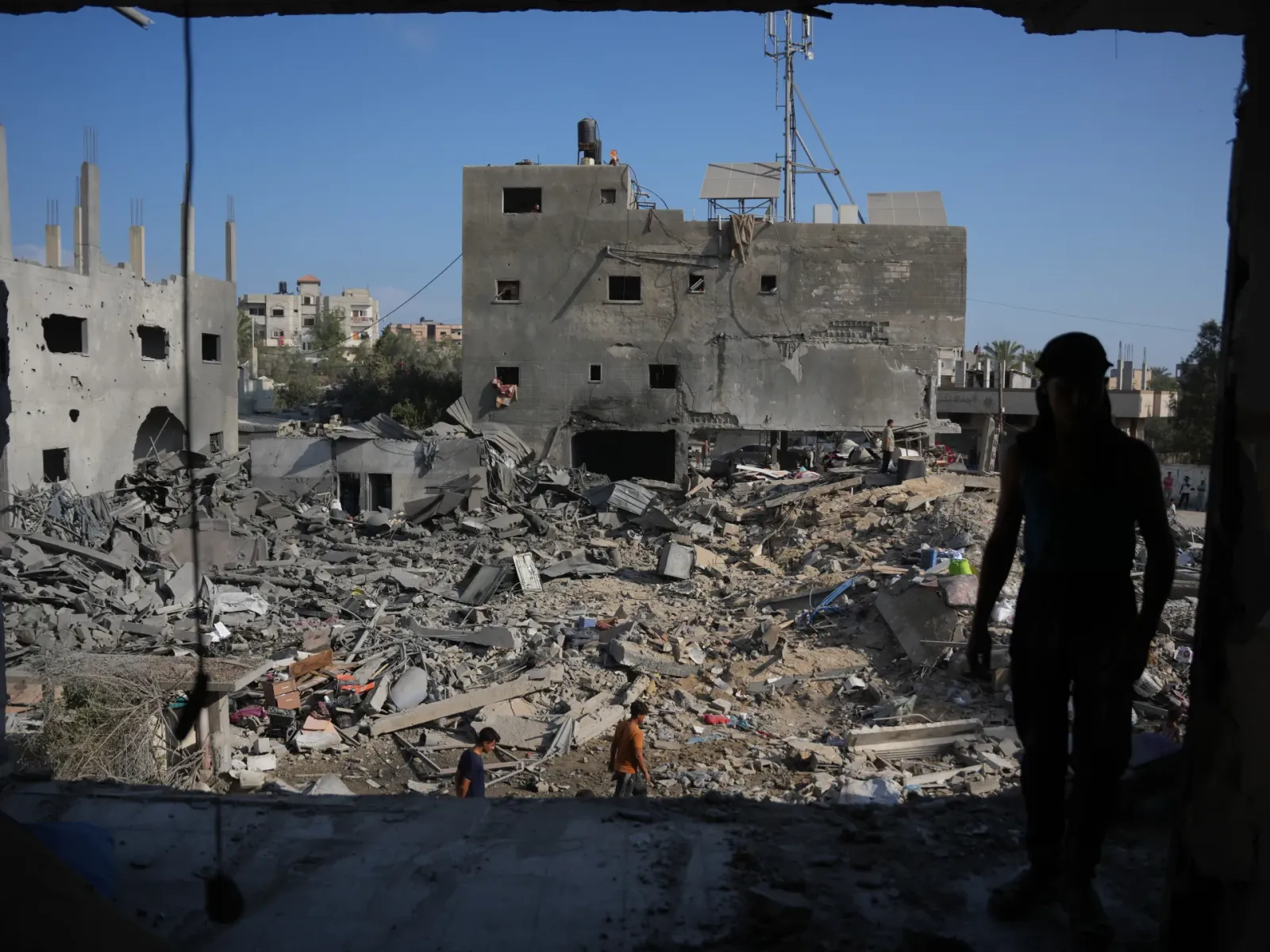
Israeli forces opened a new operation in central Gaza west of the 'Yellow Line' on Wednesday, killing three Palestinians according to hospital officials and sending families fleeing the northern edge of the Nuseirat refugee camp. The move tests whether the October 2025 ceasefire's demarcation line functions as a boundary or merely a starting position, with direct consequences for displacement, aid movement, and escalation risk across the strip.
Israeli tanks were operating on Wednesday near Salah al-Din Street, east of the Nuseirat refugee camp and north of the Bureij camp, as Israel opened a new operation in central Gaza. Hospital officials told Al Jazeera that three Palestinians had been killed. Al Jazeera correspondents reported shooting by drones and shelling alongside the armor, and said families fled the northern part of the Nuseirat camp as well as areas near the Israeli military operations. The headline fact here is geography: this is not a strike on the edge of the strip, it is movement into the middle of it, next to the road that stitches Gaza together from north to south.
The Israeli army said the operation, west of the "Yellow Line", was aimed at "eliminate a threat" to its forces operating in the area. The Yellow Line demarcates the Israeli-occupied area of Gaza and was established under the October 2025 Gaza "ceasefire". In its statement, the military added: "We reserve the freedom to act and manoeuvre whenever necessary to eliminate any immediate threat in the Gaza Strip." That sentence is the whole story. A ceasefire line that comes with a standing reservation to cross it is less a border than a baseline, and Wednesday showed what the reservation looks like on the ground.
An Israeli air strike targeted the town of al-Mughraqa, north of the Nuseirat camp, killing one person and injuring several others, an official at al-Awda Hospital told Al Jazeera. That strike landed inside a wider day of violence. Before the announcement of the Israeli operation, two Israeli drone attacks on the Gaza Strip killed at least two people, hospital officials said. Al-Shifa Hospital reported that one person was killed and others were wounded in an attack on the Sheikh Ijlin neighbourhood in southwestern Gaza City. Al-Aqsa Martyrs Hospital reported one person was killed in a separate attack on Deir el-Balah in central Gaza, where the hospital had earlier reported an injury.
Gaza's Ministry of Health said on Wednesday that hospitals recorded seven deaths and received 15 wounded people in the previous 24 hours. Six people were killed by Israel over that period, the ministry said, while one died from injuries caused by an earlier attack. Read those numbers next to the day's events and a pattern emerges: the toll is not concentrated in a single headline strike. It accumulates across neighbourhoods and hospitals, published in 24-hour windows, which is how the ministry has been reporting its counts.
Nuseirat is one of the refugee camps that has historically grown into a dense urban district, and it has historically absorbed people displaced from elsewhere. When families flee its northern edge, they are often moving for the second or third time, and each move strips away another layer of the logistics that make daily life possible: shelter, water points, clinic access, the ability to keep children in one place. The source does not say how many people left on Wednesday. It says families fled, which is enough to register as a displacement event rather than a rumour.
Salah al-Din Street is the spine. It runs the length of the Gaza Strip and has served as the main north-south route for people, goods, and ambulances. Armor operating near it is not a symbolic gesture; it is a statement about movement. When the road is contested, the practical questions arrive fast: can aid move, can patients reach hospitals, can families relocate to somewhere they judge safer. The Israeli military frames the operation as threat elimination, not territorial expansion. The distinction matters politically. On the ground, both look like tanks, and both produce the same decision for a family: stay or go.
The October 2025 ceasefire created the Yellow Line as the demarcation of the Israeli-occupied area. Any such line has to answer one question: is it a freeze or a floor? If forces on one side reserve the right to act beyond it whenever they identify a threat, the line functions as a notification system rather than a barrier. That is not unique to this conflict. Historically, ceasefire lines that lack a monitoring mechanism with teeth tend to erode through exactly this kind of incremental operation, each one small enough to be described as tactical and each one shifting the facts on the ground.
For anyone tracking the region, the read is straightforward. First, watch whether the operation stays local to Nuseirat and Bureij or expands along the line. Second, watch the displacement numbers, which are the clearest signal of how residents themselves are pricing the risk. Third, watch the casualty reporting from hospitals, which arrives daily and is the most granular public record available. The strategic stake is the ceasefire itself. A truce that permits "freedom to act and manoeuvre" is being tested in public, and Wednesday's operation is the test.
This story's Key Insights and Take-aways are locked.
Create a free account to unlock Executive Actions for one credit.
Register to UnlockAlways free for Executives Club members. Join the Club
More in Politics

Fifth Circuit Kills Pregnant Workers' Law Over Pandemic Proxy Votes
A procedural ruling, not a policy one, has blocked a federal pregnancy-accommodation law and put every pandemic-era statute in the crosshairs ahead of an expected Supreme Court appeal.

Measles kills a Virginia child under 5, the state's first death of 2026
Virginia's health department confirmed the death but withheld the child's vaccination status, leaving schools, clinics and employers to plan around the one detail that would explain the most.

Former Brazilian President Bolsonaro Hospitalized with Intestinal Obstruction
The health status of the former far-right leader raises immediate questions about political stability and the trajectory of Brazil's conservative movement.