
Jensen Huang Is Out at Nvidia. Kress Answers With Raises and Equity.
Nvidia's interim CEO Collette Kress used her first all-hands to promise across-the-board raises and more equity, a retention play every board facing a founder exit should study.
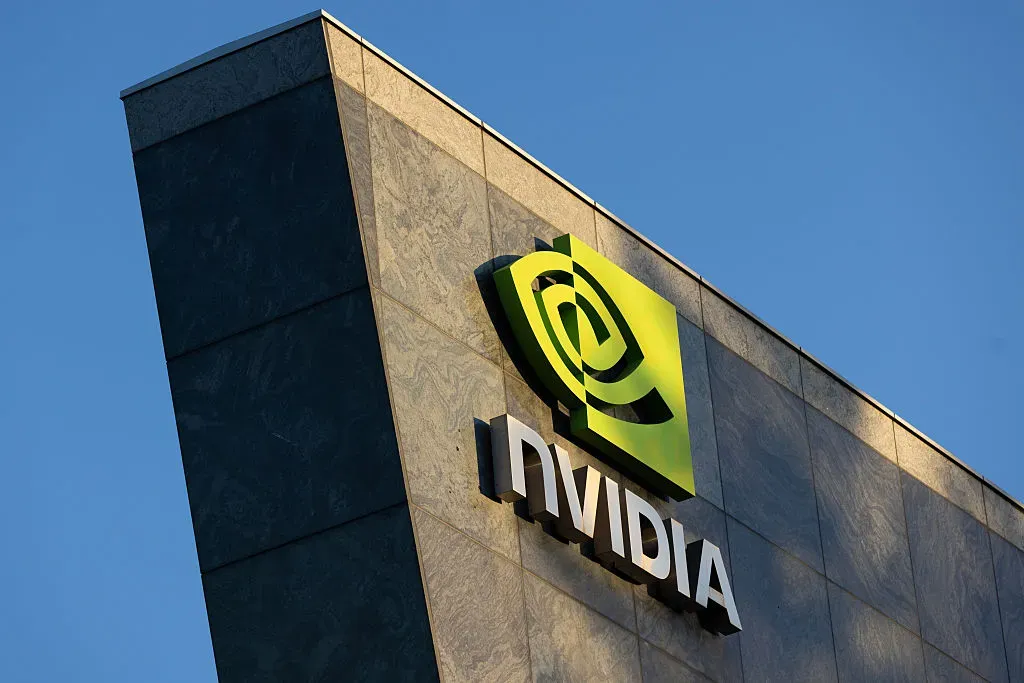
Nvidia interim CEO Collette Kress told employees at the company's first all-hands since Jensen Huang's ouster that compensation would rise across the board and that more equity was coming. For boards and executives, the move shows how fast a leadership crisis becomes a compensation and retention problem that outlasts the interim leader who solved it.
Collette Kress, Nvidia's interim chief executive, opened the company's first all-hands meeting since Jensen Huang's ouster with the one lever an interim leader can pull immediately: money. According to WIRED, Kress promised employees an increase in compensation across the board, plus more equity. The gathering was the first companywide moment of the post-Huang era, and the headline item was not a product roadmap or a strategy reset. It was pay. That ordering is the story. When a founder is removed, the people who stayed are the asset most at risk, and Kress moved to lock them down before anything else. The message to the workforce was simple: the company changed leaders, not its willingness to pay.
For anyone who runs a company, the sequence matters more than the specifics. A founder exits. The person now holding the title temporarily promises raises and equity. That is a retention play wearing the clothes of a morale play, and it tells you what the board feared most. Nvidia's value sits in its people, not its buildings, and the engineers who built its position in AI chips are exactly the people rival recruiters call first. Historically, founder departures at technology companies trigger flight risk among the executives and senior engineers most loyal to the founder. Kress's answer was to make staying more lucrative than leaving.
Compensation is the classic interim-CEO tool because it requires no strategy. An interim chief typically has a narrow mandate: keep the lights on, keep critical people, hand a functioning company to a permanent successor. Big strategic bets are usually off the table, partly because the next CEO may reverse them. Pay is different. It is immediate, visible, and it lands with every employee at once. Equity adds a second layer. Grants that vest over several years are designed to make leaving expensive, which is precisely what a company wants when its most valuable employees are being courted. The trade-off is that equity is not free: it dilutes existing shareholders and creates an obligation that outlasts the interim leader who granted it.
That is the part boards should sit with. Across-the-board raises are a recurring cost, not a one-time gesture. They compound through every future budget, and they are politically difficult to reverse once granted. Equity grants carry the same long tail, spread across vesting schedules that will still be running when a permanent CEO is in the chair. Kress made a promise on behalf of a company she does not permanently run. Whoever takes the job inherits both the goodwill and the bill, and will be judged on whether the raises stick. If they are clawed back, the retention problem returns with interest.
The governance context matters too. Boards rarely remove a founder-CEO unless they conclude that keeping him costs more than removing him, and that calculation is usually about strategy, control, or performance. What the all-hands reveals is the second half of the calculation: what the board thought it would lose by acting. A compensation increase announced in the immediate wake of an ouster is a signal that leadership judged an exodus to be the more immediate threat. Investors reading the tea leaves should treat it as a data point about internal confidence, not just a line item.
The backdrop is a talent market that has been brutally competitive for AI specialists. Companies at the center of the AI buildout compete for a limited pool of engineers who can design chips, write the software stack, and scale data centers. That scarcity gives employees leverage, and it gives a newly leaderless company a problem. Rivals do not need to win a bidding war against Nvidia's brand; they only need to convince a handful of key people that the post-Huang Nvidia is a different, riskier place to work. Raises and equity are the fastest counterargument available.
For peers in similar seats, the lesson is about preparation, not panic. Key-person risk is easy to name in a board deck and hard to price in a crisis. The cheapest time to decide how much authority an interim CEO has over compensation is before an interim CEO exists. Companies that pre-agree that authority can move in hours. Companies that do not end up improvising in front of their entire workforce, which is exactly the moment when a promise is hardest to walk back and most likely to be scrutinized by the next leader.
The open question is durability. Raises announced in a crisis are easy to celebrate and hard to sustain, and the real test comes when a permanent CEO arrives with a mandate to reset priorities. If the increases hold, Kress will have bought Nvidia something more valuable than calm: continuity. If they do not, the company will have taught its best people that its promises expire with its interim leaders.
This story's Key Insights and Take-aways are locked.
Create a free account to unlock Executive Actions for one credit.
Register to UnlockAlways free for Executives Club members. Join the Club
More in Business

S&P 500 Enters Correction, Down 10% From Its High on AI Worries
The index's slide past the 10 percent line is a symbolic verdict on investor mood, and the AI trade that powered the rally is now the thing testing it.

Dow and S&P 500 enter correction as Nasdaq logs worst week since 2020
All 11 S&P 500 sectors fell more than 1% in the same week for the first time since April 2025, a breadth signal that matters more than any single index level.

Chip stocks lose $2.3 trillion in a week, worst run in 25 years
A $2.3 trillion weekly wipeout in semiconductors is forcing every board with an AI story to ask whether it owns a thesis or just a crowded trade.