
Jensen Huang Steps Down Amid Scandal, Threatening Nvidia's AI Supremacy
The personal fallout from the Nvidia CEO's resignation could have massive geopolitical consequences for the global AI race.
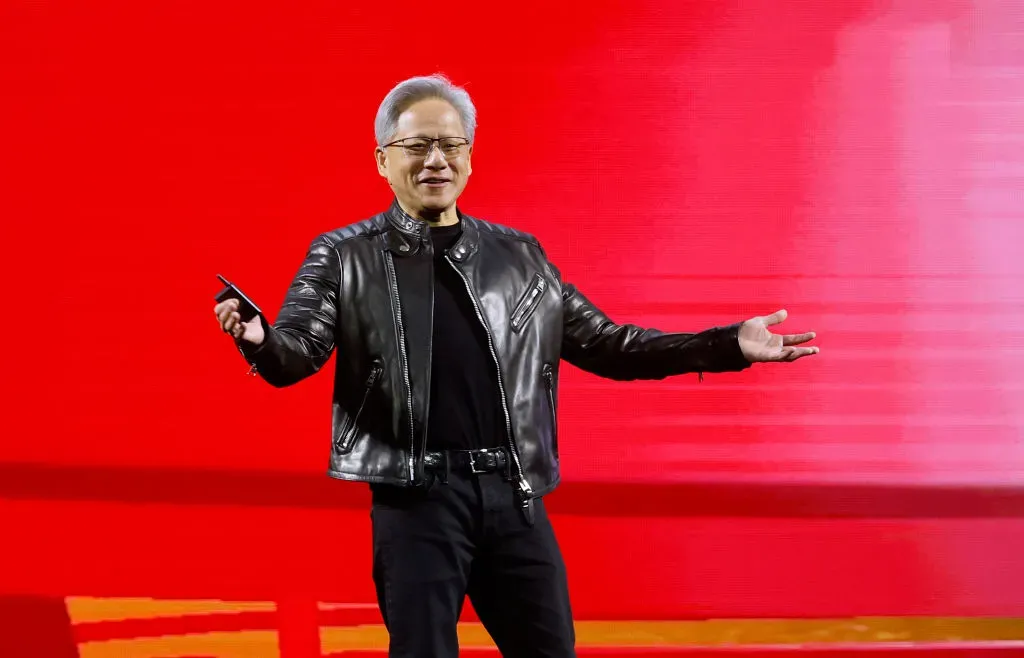
Jensen Huang has resigned as CEO of Nvidia following a personal scandal involving an affair. This sudden leadership change introduces significant uncertainty into the company's trajectory during a critical period of global AI competition.
The tech world is reeling from the news that Jensen Huang, the visionary CEO of Nvidia, has stepped down from his role at the chip giant. The reason cited for the departure is a personal affair, a revelation that has sent shockwaves through Silicon Valley and beyond. But this isn't just another executive scandal; it is a seismic event with potential global implications. The resignation of a figure as central to the modern technology landscape as Huang introduces a layer of instability at a moment when Nvidia's dominance is arguably most critical to global economic and military strategy.
What makes this departure so far more than a standard corporate shakeup is the context of the ongoing, high-stakes race to develop advanced Artificial Intelligence infrastructure. Nvidia is not just a chip maker; it is the primary engine driving the AI revolution. Its GPUs are the foundational hardware upon which the world's most powerful AI models are built. Therefore, the stability and strategic direction of Nvidia are inextricably linked to the geopolitical tensions between the United States and China. The personal crisis at the helm of the company now casts a shadow over the very infrastructure that is defining the next era of computing.
To understand the gravity of this moment, you have to appreciate the sheer scale of Nvidia's influence. Under Jensen Huang's leadership, the company has successfully positioned itself as the indispensable backbone of the AI boom. Its specialized hardware, particularly the H100 and subsequent generations of GPUs, are the only tools capable of training and running the massive, complex AI models that define today's technological breakthroughs. This isn't a niche market; it is the central nervous system of the global AI industry. When a leader who has been instrumental in building that infrastructure steps away, the market doesn't just lose a CEO; it loses a key architect of the modern digital economy.
This brings us to the national security angle, which is the most critical takeaway for any decision-maker. The competition between the U.S. and China in AI is not merely about market share; it is a proxy for global technological supremacy. Control over the advanced chips and the underlying software ecosystems is viewed by both Washington and Beijing as a matter of national survival. Nvidia's position is therefore a strategic asset, a crucial lever in this technological arms race. Any perceived instability within the company, whether from leadership changes, regulatory scrutiny, or internal discord, can be interpreted by competing global powers as a vulnerability, potentially impacting the flow of critical technology and altering the balance of power.
For investors and operators, the immediate concern is the leadership transition. Who takes the reins? Can the incoming executive maintain the momentum and strategic vision that Jensen Huang cultivated? The market will be watching closely to see if the company can navigate this personal and professional turbulence without losing its competitive edge. The ability of the board to manage this transition while simultaneously addressing the immense pressure of geopolitical scrutiny will define the next chapter of Nvidia's history.
Furthermore, this event raises broader questions about corporate governance and the intersection of personal life and corporate responsibility at the highest levels of technology. In an era where tech leaders are often seen as quasi-public figures, the fallout from personal conduct has always carried weight. When that conduct intersects with a company that holds such immense strategic importance to national security, the stakes escalate from a PR nightmare to a matter of global economic stability. The board must now not only manage the internal fallout but also proactively address the external perception of risk.
Ultimately, the resignation of Jensen Huang is a powerful reminder that even the most dominant, seemingly unshakeable entities in the global economy are subject to human factors. The challenge now facing Nvidia is to rapidly stabilize its leadership, reassure global partners and regulators, and ensure that the relentless pursuit of AI supremacy remains the absolute, unwavering focus, regardless of who is at the top of the org chart. The future of AI infrastructure depends on it.
This story's Key Insights and Take-aways are locked.
Create a free account to unlock Executive Actions for one credit.
Register to UnlockAlways free for Executives Club members. Join the Club
More in Technology

Anthropic mathematician claims Claude helped crack the Riemann hypothesis
If the proof holds, AI has toppled math's most famous open problem; if it does not, it is a case study in announcing breakthroughs before anyone verifies them.

AI's $4 Trillion Wipeout Erases Nasdaq's Gains for the Year
A brutal week took roughly $4 trillion off the AI sector and left the Nasdaq flat for the year, and the damage ran the full length of the supply chain.

Anthropic mathematician says AI proved the Riemann hypothesis. Verification will take time.
A single unverified claim from inside Anthropic now sits against more than 160 years of open mathematics, and the gap between asserting a proof and surviving peer review is the entire story.