
Judge approves Bayer's $7.25bn Roundup payout, potentially ending 65,000 cancer claims
A St. Louis judge called the deal 'fair, reasonable and adequate', giving the German giant its best shot in nearly a decade at capping the Roundup litigation that has weighed on the company.
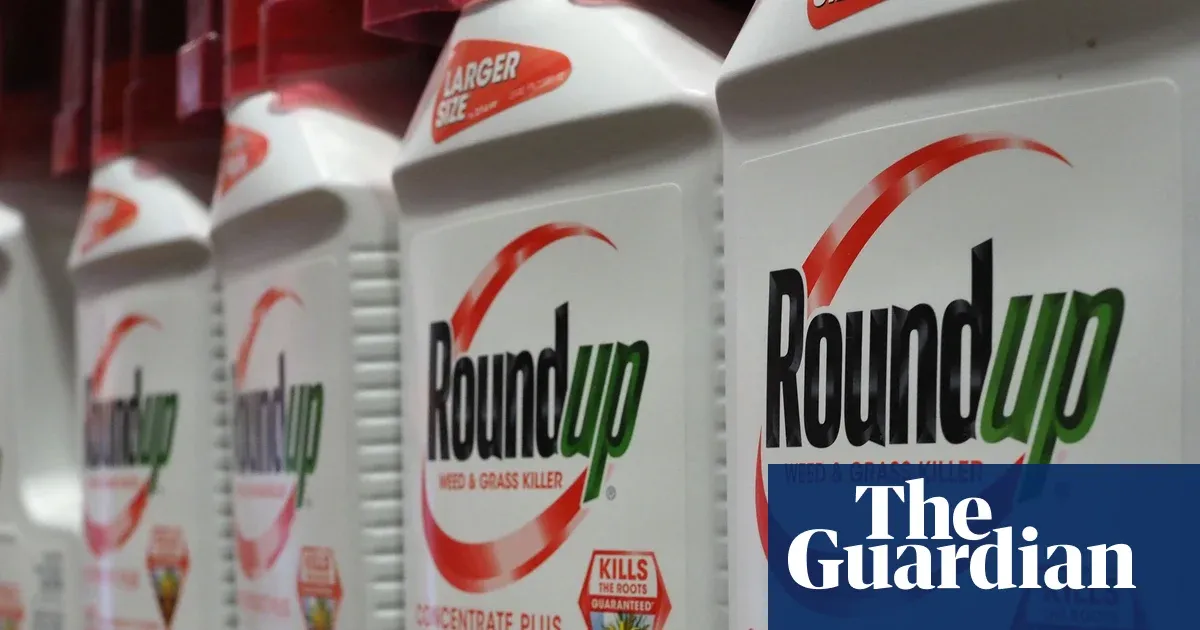
Judge Timothy Boyer of a Missouri state court approved Bayer's $7.25bn settlement of roughly 65,000 claims alleging its weedkiller Roundup causes cancer, finding the deal 'fair, reasonable and adequate'. For any board carrying long-tail liability, the ruling is a live case study in what it costs to convert an open-ended litigation overhang into a single, budgetable number.
A Missouri judge just handed Bayer the ending it has spent nearly a decade chasing. On Friday, Judge Timothy Boyer of a state court in St. Louis approved the German company's $7.25bn settlement of lawsuits alleging that its weedkiller Roundup causes cancer, finding the deal "fair, reasonable and adequate." The agreement covers about 65,000 claims from people who said they developed cancer after using the product, and it potentially resolves litigation that has weighed on Bayer for close to ten years.
The headline number is $7.25bn. The number that explains why Bayer agreed to it is 65,000. That is the volume of claims the company was carrying, each one a potential jury trial and a fresh round of coverage about the world's best-known weedkiller. Spread the settlement across those claims and you land at a little over $110,000 each, though real deals never divide that neatly: payouts typically track the severity of the illness and the strength of the evidence behind each case. What Bayer bought for $7.25bn is not vindication. It is an exit, and a judge has now signed off on it.
For context on how a chemical company ended up here: Roundup's active ingredient is glyphosate, one of the most widely used herbicides on earth, and it arrived at Bayer through the 2018 acquisition of Monsanto. That deal was pitched as a way to build an agricultural powerhouse with seeds, traits and crop protection under one roof. Instead it imported a liability that has dominated Bayer's relationship with investors ever since. The litigation has run for close to a decade, spanning state courts, appeals and settlement talks, and it has repeatedly forced management to explain to shareholders why a bet on farming became a bet on tort law.
The dispute rests on a genuine scientific split. Regulators in the United States and Europe have largely kept glyphosate on the market, while the World Health Organization's cancer research arm classified it as probably carcinogenic to humans in 2015. That divergence is the engine of the whole fight: plaintiffs point to the classification, Bayer points to the regulators, and juries get to choose. For a company selling a product into farm fields and garden centers in dozens of countries, that is an uncomfortable place to stand, because the legal question and the regulatory question do not have to be answered the same way.
What Friday's approval does is narrow the battlefield. A settlement of this size, covering tens of thousands of claims, converts an open-ended stream of trials into a defined, budgetable number. That matters for more than the income statement. Mass litigation consumes executive attention, complicates disclosure, spooks lenders and gives every activist investor a ready-made argument. Removing it lets a board talk about pipeline, margins and capital allocation instead of depositions. The word "potentially" in the framing is doing real work, though. Approval by a state court is not the same as finality, and settlements of this kind can still face appeals, objections and the possibility of new claims from people who were not part of the deal.
The second-order effects are where this gets interesting for anyone running a large company. Bayer has now shown what it costs to close out a mass-tort overhang of this scale: a figure in the billions, paid in exchange for certainty rather than a verdict. Peers in chemicals, agriculture, consumer products and pharma will read that as a benchmark. Boards sitting on their own slow-burning liability will be asked a sharper question at the next strategy review: is it cheaper to fight, or to price the risk and move on? The answer depends on claim counts, insurance, the science and, crucially, whether a settlement actually forecloses future plaintiffs or simply resets the clock.
For Bayer specifically, the strategic stakes are now about what happens to the freed-up capacity. A company that has spent close to a decade defending a weedkiller has spent a decade of management time, legal fees and reputational capital that could have gone elsewhere. If the settlement holds, the test is whether that attention flows into the pharmaceutical pipeline and the crop science business, or whether new litigation and lingering scientific doubt keep the overhang alive in a different form. Investors will not wait long to find out. The stock reaction to a clean resolution is usually faster than the legal reality that follows it.
The broader lesson for executives is about how risk gets priced when it is allowed to sit. Bayer's problem was never a single lawsuit. It was thousands of them, accumulating quietly until they became a fixed feature of the company's story. Friday's ruling gives the company a chance to close that chapter. Whether it does depends on what comes next, and on whether the market believes the number is final.
This story's Key Insights and Take-aways are locked.
Create a free account to unlock Executive Actions for one credit.
Register to UnlockAlways free for Executives Club members. Join the Club
More in Business

S&P 500 Enters Correction, Down 10% From Its High on AI Worries
The index's slide past the 10 percent line is a symbolic verdict on investor mood, and the AI trade that powered the rally is now the thing testing it.

Dow and S&P 500 enter correction as Nasdaq logs worst week since 2020
All 11 S&P 500 sectors fell more than 1% in the same week for the first time since April 2025, a breadth signal that matters more than any single index level.

Chip stocks lose $2.3 trillion in a week, worst run in 25 years
A $2.3 trillion weekly wipeout in semiconductors is forcing every board with an AI story to ask whether it owns a thesis or just a crowded trade.