

Judge clears McDonald's sex abuse case to proceed as ex-worker demands change
A judge has ruled the legal case against McDonald's can go ahead, and the former worker behind it says the chain must change how it treats younger employees.
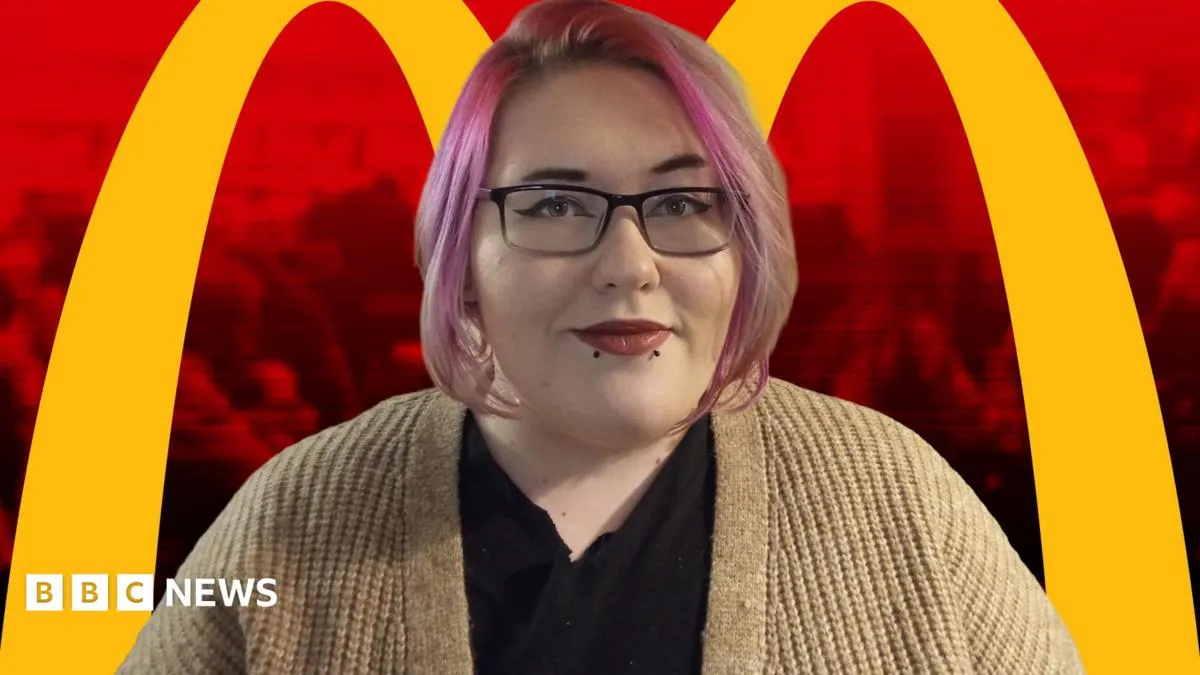
A judge has ruled that a legal case against McDonald's can proceed, after a former worker called on the chain to "change the way they treat younger employees." For decision-makers, the ruling turns a single complaint into a live discovery process, putting franchise labour practices, the safeguarding of young staff and brand-level duty of care under scrutiny.
A judge has ruled that the legal case against McDonald's can go ahead, handing the former worker behind it a procedural win and a much louder microphone. The response was not a victory lap. It was a demand: the chain should "change the way they treat younger employees." That single sentence is the story in miniature. The ruling keeps the claim alive; the demand tells you what the person who brought it believes is broken.
The line that has travelled furthest out of this case is the one about the youngest people on the rota: "They were waiting for the younger girls to turn 18." Read it plainly and the allegation is about the treatment of teenage staff in a workplace where a first job is often a teenager's first encounter with adult power. The judge's decision does not validate that allegation. It clears the case to be tested, which is a different thing, and for McDonald's a more expensive one.
Procedural rulings rarely make headlines, and that is exactly why this one matters. When a judge allows a case to proceed, the machinery switches on: disclosure of documents, witness statements, internal policies, training records and the slow, unglamorous grind of building a record. Most claims never reach that point. The ones that survive early dismissal tend to get bigger rather than smaller, because a public ruling is also a signal. Other current and former staff who recognise the pattern now know there is a live case to join, to cite, or simply to point at when they raise their own complaint.
For McDonald's, the structural question is who carries the duty. Global fast-food brands typically run a mix of company-owned restaurants and franchised outlets, and employment responsibility usually sits with the franchisee who hires, rosters and pays the crew. The brand, meanwhile, owns the logo, the training standards and the reputation. Claims that survive early dismissal often end up probing how far a brand's duty of care reaches into outlets it does not directly operate. That is the uncomfortable part for every franchisor: the reputational blast radius is global even when the employment relationship is local.
Then there is the workforce itself. Fast food is a first-job industry. It hires young, it trains fast, and it runs on schedules built around school and college. That combination is a business model, not an accident, and it produces a specific kind of risk: a large, young, transient population with limited experience of workplace norms and limited leverage to complain. Safeguarding, escalation routes and whistleblowing channels stop being HR paperwork in that setting. They become the control environment, and they are the first thing a claimant's lawyers will ask to see.
So why should anyone outside this case care? Because the exposure is not confined to one brand or one country. Any consumer-facing business that employs large numbers of young people, whether hospitality, retail, delivery or entertainment, carries the same structural features: high turnover, thin management layers at the store level, and a brand promise that runs far ahead of what any single shift manager actually does. Investors have spent a decade treating human capital as a soft topic. Cases like this are how it becomes a hard one, showing up in litigation provisions, insurance renewals, recruitment costs and, eventually, in how regulators and legislators frame the duty of care owed to minors at work.
Watch three things from here. First, scope: whether the claim stays individual or attracts others, which changes both the legal risk and the length of the news cycle. Second, discovery: what internal policies, complaint logs and training records surface, because those documents tend to define the reputational story regardless of how the case ends. Third, spillover: whether other chains with young workforces get named, subpoenaed, or simply asked the same uncomfortable questions by their own staff and their own investors.
None of this is a finding of wrongdoing. A case proceeding is a case proceeding, and the judge has not ruled on the merits. But the former worker's demand is the part boards should sit with, because it is cheap to answer and expensive to ignore. "Change the way they treat younger employees" is not a legal standard. It is a management one, and it is now attached to a case that a judge has said can go ahead.
This story's Key Insights and Take-aways are locked.
Create a free account to unlock Executive Actions for one credit.
Register to UnlockAlways free for Executives Club members. Join the Club
More in Business

S&P 500 Enters Correction, Down 10% From Its High on AI Worries
The index's slide past the 10 percent line is a symbolic verdict on investor mood, and the AI trade that powered the rally is now the thing testing it.

Dow and S&P 500 enter correction as Nasdaq logs worst week since 2020
All 11 S&P 500 sectors fell more than 1% in the same week for the first time since April 2025, a breadth signal that matters more than any single index level.

Chip stocks lose $2.3 trillion in a week, worst run in 25 years
A $2.3 trillion weekly wipeout in semiconductors is forcing every board with an AI story to ask whether it owns a thesis or just a crowded trade.