
Katz: Israel Stays in Lebanon Until Hezbollah Disarms and Hamas Is Dismantled
Washington wants Beirut to take control of Hezbollah's arsenal; Israel's defense minister says his troops stay put until that happens, leaving Lebanon trapped between two demands it cannot satisfy at once.
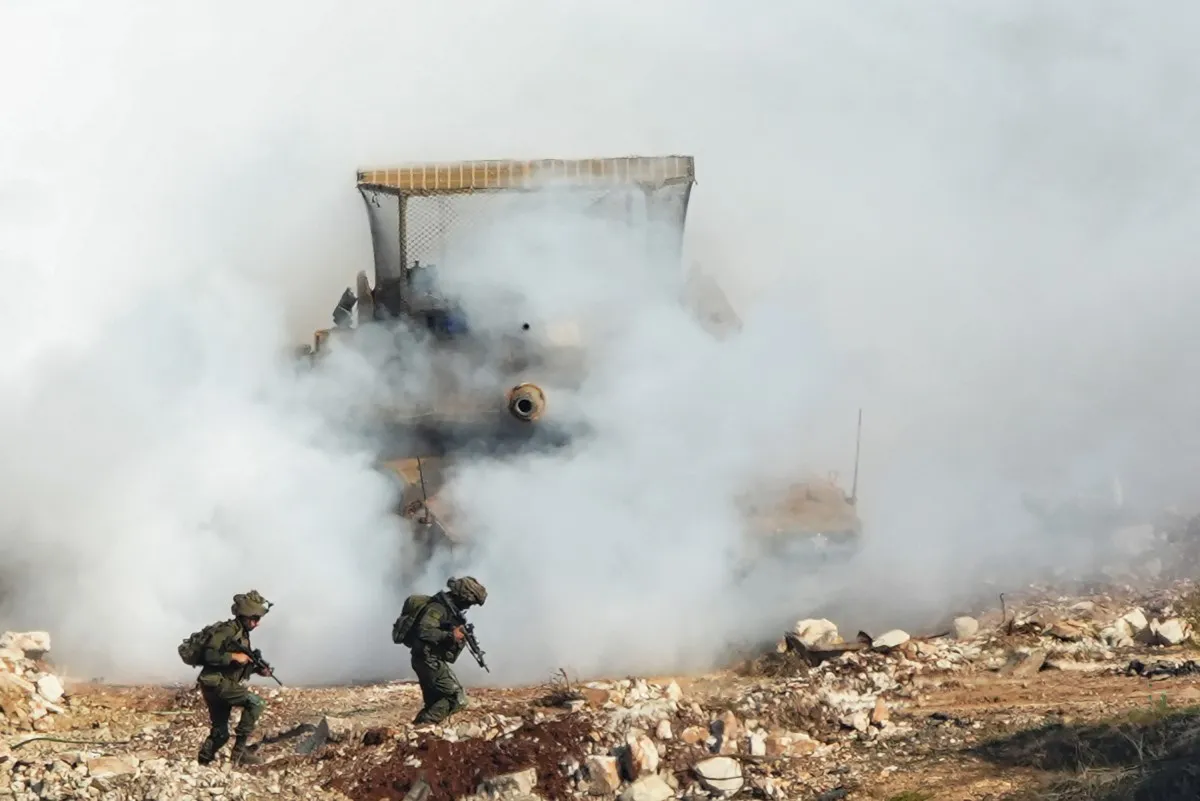
Israeli Defense Minister Israel Katz said Israel will not withdraw from its current positions in southern Lebanon or redeploy its forces until Hezbollah is disarmed and Hamas is dismantled, even as Washington presses Beirut to restore state control over arms. Those two demands block each other, which means Lebanon's ceasefire framework, its reconstruction prospects and any timeline for Israeli withdrawal now hinge on a sequencing problem no single party can solve.
Israel's defense minister just made Lebanon's hardest problem harder. Israel Katz said Israel will not withdraw from its current positions in southern Lebanon or redeploy its forces until Hezbollah is disarmed and Hamas is dismantled. Two conditions, stated flatly, aimed at the same question that has shadowed every ceasefire on Israel's northern border: when do Israeli troops actually go home? Katz's answer is, in effect, not yet, and not on a timetable Beirut controls.
That single statement is the trap. The other half of the vise is Washington, which is pressing Beirut to restore state control over arms, meaning the Lebanese state would take responsibility for Hezbollah's arsenal. Put the two demands side by side and the problem is obvious: Israel will not leave until Hezbollah disarms, and Beirut cannot credibly disarm Hezbollah while Israel occupies Lebanese territory. Each side's precondition is the other side's impossibility.
Hezbollah is not a militia operating in a vacuum. It is an armed movement with a political bloc inside Lebanon's parliament and cabinet, and its core public argument for keeping its weapons is that they deter exactly the kind of Israeli presence Katz is now promising to maintain. Force the state to confront the group and you risk a domestic conflict the Lebanese army, historically underfunded and deliberately kept weaker than sectarian militias, is not built to win. Ask Lebanese politicians to negotiate the arsenal away and you are asking them to pay a price they have avoided for decades. Washington's demand is reasonable on paper and near-impossible in practice, and Katz's statement makes it more impossible, not less.
For context, this standoff is not new. The 2006 war between Israel and Hezbollah ended with UN Security Council Resolution 1701, which called for the disarmament of armed groups in southern Lebanon and for the area south of the Litani River to be free of weapons outside the control of the Lebanese state and UN peacekeepers. Nearly two decades later, that provision has never been fully implemented, which is why the phrase "state control over arms" keeps reappearing in every diplomatic communique. The November 2024 ceasefire that halted the most recent round of full-scale fighting was built on a similar architecture: Lebanese army deployment in the south, Israeli withdrawal, and a mechanism to keep Hezbollah from rebuilding. Katz's statement signals that the withdrawal half of that bargain is now conditional on the disarmament half, and that Israel intends to hold the ground it occupies as leverage until it gets what it wants.
The Hamas condition deserves its own paragraph, because it changes the geometry. Linking Israeli withdrawal from Lebanon to the dismantling of Hamas means the clock on southern Lebanon is now partly set in Gaza. Beirut has no authority over Hamas, no leverage with it and no ability to deliver on that condition. Any Lebanese official asked to guarantee the terms Katz laid out is being asked to sign for an outcome decided somewhere else entirely, by actors who answer to a different war.
The economics raise the stakes further. Lebanon has been in financial freefall since 2019, with a collapsed currency, a hollowed-out banking sector and a reconstruction bill that runs into the billions, and no credible path to outside money while armed groups operate outside state control. Gulf states and Western lenders have historically tied support to exactly the thing Washington is now demanding: a state with a monopoly on the use of force. That means the disarmament question is not only a security file. It is the gate on reconstruction money, on electricity, on the deposits Lebanese households lost. Every month without a resolution is another month the country stays locked out of the capital it needs.
For decision-makers watching from outside, the practical takeaway is about sequencing, not intentions. Nobody in this standoff has said anything they do not mean. Israel means it will stay. Washington means it wants Beirut to take the weapons. Hezbollah means it will not hand them over while Israeli forces are on Lebanese soil. The variable is the order in which those positions get tested. The near-term indicators: whether a phased withdrawal framework emerges, whether Washington pairs its demand with money and security guarantees for Beirut, and whether the Lebanese army gets the funding and mandate to move south in force. Watch the language in the next round of statements from both capitals. Any softening on sequence is the real signal; any hardening on conditions is the signal that the standoff has hardened into the status quo.
Lebanon sits at the intersection of a frozen occupation, an unresolved arsenal and a broke state, and Katz's statement removes the ambiguity that made the last year of diplomacy possible. For anyone with exposure to the region, whether through sovereign debt, reconstruction contracts or the shipping and energy routes that cross the eastern Mediterranean, the message is that a resolution everyone has been hoping would arrive soon now depends on two disarmaments that no single actor can deliver. That is a longer timeline than most have been assuming, and it is the kind of longer timeline that quietly reprices everything around it.
This story's Key Insights and Take-aways are locked.
Create a free account to unlock Executive Actions for one credit.
Register to UnlockAlways free for Executives Club members. Join the Club
More in Politics

Fifth Circuit Kills Pregnant Workers' Law Over Pandemic Proxy Votes
A procedural ruling, not a policy one, has blocked a federal pregnancy-accommodation law and put every pandemic-era statute in the crosshairs ahead of an expected Supreme Court appeal.

Measles kills a Virginia child under 5, the state's first death of 2026
Virginia's health department confirmed the death but withheld the child's vaccination status, leaving schools, clinics and employers to plan around the one detail that would explain the most.

Former Brazilian President Bolsonaro Hospitalized with Intestinal Obstruction
The health status of the former far-right leader raises immediate questions about political stability and the trajectory of Brazil's conservative movement.