
Kushner's Albania resort sparked a 100,000-person revolt
A luxury project in a protected lagoon became the fuse for Albania's biggest anti-corruption protests in decades, with lessons for foreign investors.
Jared Kushner, son-in-law of the American president, planned an ultra-luxury resort in a protected Albanian lagoon, helping ignite protests that grew into a 100,000-person revolt against Prime Minister Edi Rama's government. For executives, the episode shows how a single high-profile project can turn local corruption, environmental protection, and elite access into a national political crisis.
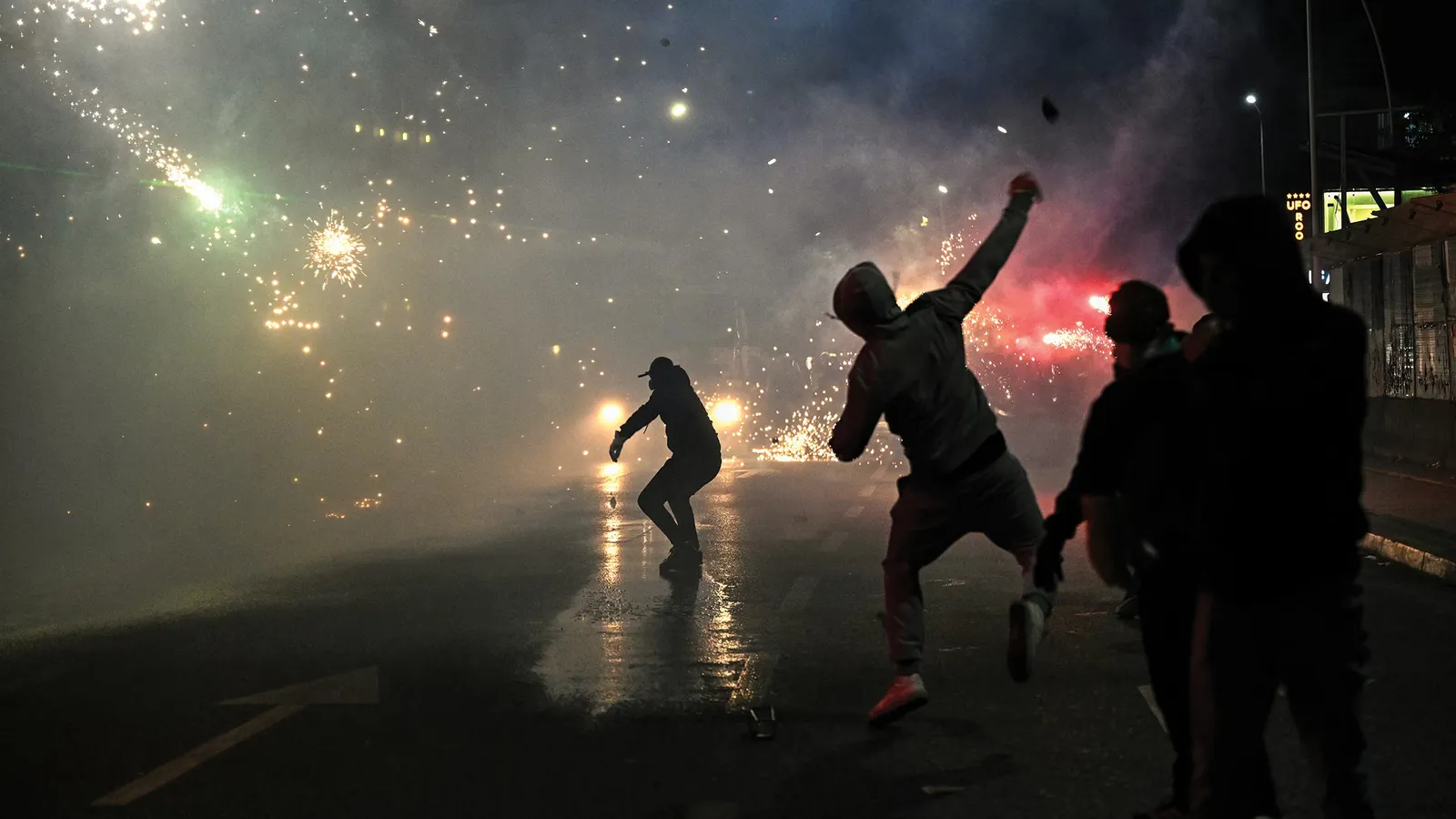
Jared Kushner, the son-in-law of the American president, sparked a revolution in Albania. His plans for an ultra-luxury resort in a fragile nature preserve in the country's south, where flamingos gather, first lit the protests in May. By October, the movement had entered a volatile new phase. On the eighth day of violent protests in Tirana, some 3,000 people marched through the capital. They passed shattered bus shelters, broken shop windows, and government buildings blackened by fire. At their peak in mid-June, crowds had grown to an estimated 100,000. What began as outrage over Kushner's project had morphed into a broad revolt against Albania's political elite.
The project itself is enormous. In February 2024, Albania's Parliament, in Prime Minister Edi Rama's grip, passed a law allowing resorts of five stars or more to be built in nature sanctuaries. Three weeks later, Kushner posted renderings on Instagram: a 657-acre resort with a yacht club, casino, and beachfront housing that a leaked project document calls "Billionaire Villas." The average annual salary in Albania is roughly $14,000. Later that year, a government committee led by Rama gave Kushner and his partners "strategic investor" status to build another resort on a nearby island, qualifying them for fast-track permitting and state-sponsored perks, including a cleanup of unexploded ordnance. The island was once a Soviet submarine base. Kushner has not been accused of wrongdoing. A Miami businessman who sold Kushner and his partners land for the resort is being investigated by Albanian prosecutors for allegedly forging the deeds and laundering money for drug gangs. All of those accused maintain their innocence.
The flashpoint was a strip of beach between the Adriatic Sea and a lagoon. The area had been a legally protected landscape since 2004. Loggerhead turtles lay eggs in the dunes. Mediterranean monk seals, some of the world's rarest mammals, hunt in the waters. Then razor-wire fencing went up. A video spread across Albanian social media showing a protester at Kushner's lagoon site, a fisherman with ancestral ties to the land, being beaten and dragged away by the developers' private security guards. The man later claimed that the guards put guns to his head. State police officers stood doing nothing until protesters, galled by the abduction, were on the verge of a riot. Megi Ibrahimi, a 20-year-old student at the Polytechnic University of Tirana, watched the video in a cafe in May. "It felt like our dignity was being dragged through the dunes," she said. The protests at the resort site spread overnight to the capital, two hours' drive to the north. Demonstrators carried signs that said "Albania is not for sale" and held daily protests through the summer.
Outrage toward Kushner's project mushroomed into a broad set of anti-government grievances, including corruption, school conditions, and living costs. Albania is one of Europe's poorest countries. From a nation of 2.3 million, some 40,000 citizens leave each year. The list of prominent politicians recently charged with corruption by a special prosecutor's office, created under pressure from the European Union and the United States, includes a former prime minister, a deputy prime minister, a former president, and the mayor of Tirana, who presides from his jail cell. Rama and his center-left Socialist Party have held power for 13 years. Party leaders, protesters told me, influence who gets jobs, contracts, and government services. In a 2025 survey, nearly 10 percent of public-university students admitted that they had offered bribes for better grades. Ibrahimi, the daughter of a teacher and a retired municipal worker, graduated second in her high-school class in the small inland town of Përmet. She could easily join the emigrants seeking better schools and jobs abroad. But she wants to stay. "I'm Albanian, and I want to live in my country," she said.
Rama has dug in. A charismatic former professional basketball player and an accomplished painter, he has been elected to four consecutive terms and has zealously marketed Albania to the outside world, seeking tourists and private investors. He has made admission to the European Union his government's highest priority. "There is absolutely no chance that the investment will stop as long as I am here," he told Reuters in early June. As summer ended and the days shortened, people with kids and careers started to attend the protests less often. Ibrahimi and her friends came to believe that the responsibility for change in Albania lay with their generation. Her grandparents had suffered through the worst years of communism. The protests were shaping up to be the most significant civic movement in Albania since pro-democracy students toppled the statue of the late dictator Enver Hoxha, and with it nearly five decades of communism, in 1991.
For executives, the Albania case is a warning about political risk that does not show up on a standard spreadsheet. A government can grant "strategic investor" status, fast-track permits, and even ordnance cleanup. But those favors can also tie a project to an unpopular incumbent and turn a real-estate deal into a symbol of elite impunity. The environmental setting raises the stakes further. A protected lagoon with loggerhead turtles and Mediterranean monk seals is exactly the kind of asset that global investors prize and local communities defend. When the average annual salary is roughly $14,000, a resort with a casino and "Billionaire Villas" can read less like development and more like expropriation of national dignity. The reputational fallout can travel far beyond Albania, especially when the developer is connected to the American president's family.
The strategic stakes for peers in similar roles are clear. Boards and deal teams need to map the political economy around a project, not just the land title and the tax incentives. They need to ask who benefits, who loses access, and whether the local population sees the deal as legitimate. In the United States, corruption is a top concern: nearly 90 percent of Americans, a 20-year high according to Gallup, see it as widespread, and in an October CNBC survey voters ranked corruption as their top issue, ahead of food costs. But for many Americans, the issue seems remote. In Albania, it touched lives intimately. The protests may ebb as winter arrives, but the generation that filled the streets is not going away. Kushner's resort plan remains. Rama says the investment will not stop. The gap between elite deals and public dignity is now the real story.
This story's Key Insights and Take-aways are locked.
Create a free account to unlock Executive Actions for one credit.
Register to UnlockAlways free for Executives Club members. Join the Club
More in Politics

Fifth Circuit Kills Pregnant Workers' Law Over Pandemic Proxy Votes
A procedural ruling, not a policy one, has blocked a federal pregnancy-accommodation law and put every pandemic-era statute in the crosshairs ahead of an expected Supreme Court appeal.

Measles kills a Virginia child under 5, the state's first death of 2026
Virginia's health department confirmed the death but withheld the child's vaccination status, leaving schools, clinics and employers to plan around the one detail that would explain the most.

Former Brazilian President Bolsonaro Hospitalized with Intestinal Obstruction
The health status of the former far-right leader raises immediate questions about political stability and the trajectory of Brazil's conservative movement.