
Lammy to Burnham: Take the UK Back Into the EU
The former deputy PM's call lands after Burnham reopened the UK's long-term future debate, putting Labour's Brexit stance back in play.
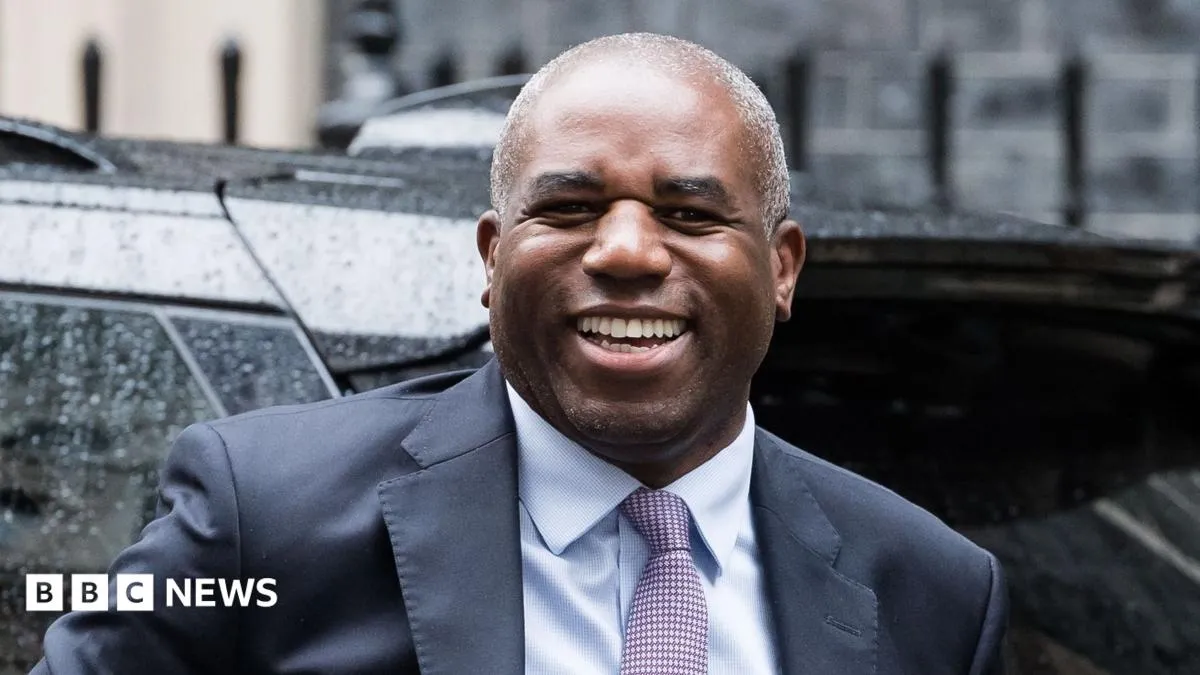
David Lammy has urged Andy Burnham to take the UK back into the EU, an intervention that follows Burnham reopening a debate over the UK's long-term future. For executives, the move signals that Britain's post-Brexit settlement may be re-entering active political contention, with implications for trade, regulation, and investment planning.
David Lammy, the former deputy prime minister, has urged Andy Burnham to take the UK back into the EU. The intervention, reported by BBC Politics, lands after Burnham reopened a debate over the UK's long-term future. That is the headline fact, and it matters because it puts the question of Britain's relationship with Europe back on the table at a moment when many executives had assumed the post-Brexit settlement was locked.
The timing is the story. Burnham, a senior Labour figure and Mayor of Greater Manchester, had already reopened a debate over the UK's long-term future. Lammy's move turns that debate into a direct call for re-entry. For anyone running a company with UK-EU exposure, the signal is that the political risk around Brexit is not frozen. It is live, and it can move.
For context, the UK left the EU in 2020. The Trade and Cooperation Agreement governs the current relationship, but it leaves significant friction: customs checks, regulatory divergence, limits on services trade, and reduced mobility for workers. Businesses have adapted, often by setting up EU subsidiaries or duplicating compliance. But the costs are real, and they compound. The debate Burnham reopened is about whether that settlement is permanent or whether the UK should seek a closer, more ambitious relationship. Lammy's intervention suggests at least one senior figure wants to push that conversation toward full re-entry.
Re-entry, in practice, would mean accepting the EU's rules, budget contributions, and free movement. That is why the debate is so charged. It is not a technical trade question. It is a question about sovereignty, migration, and the UK's place in the world. Lammy and Burnham are not the first to raise it, but their combination of establishment weight and regional power makes the argument harder to dismiss as nostalgia.
Political gravity is the constraint. For years, the major parties have treated EU re-entry as a fringe position. Labour's official stance has been to make Brexit work, not reverse it. But the political landscape can shift when economic pressure meets electoral calculation. Burnham has a base in Greater Manchester and a reputation for testing national arguments from outside Westminster. Lammy, a former deputy prime minister, adds national security and foreign policy credibility. Together, the two names make the debate harder for the Labour leadership to ignore.
Executives should read this as a leading indicator, not a policy change. Nothing has been decided. The UK is not rejoining the EU tomorrow. But the Overton window, the range of policies considered acceptable, may be moving. If re-entry becomes a live question, companies with UK-EU supply chains, talent pipelines, and regulatory exposure will need scenario plans. They will also need to engage earlier, because the terms of any future debate will be shaped long before any referendum or treaty.
Second-order effects matter. A reopened EU debate touches Northern Ireland, Scotland, the City of London, manufacturing, agriculture, and tech. It affects how the UK negotiates with Brussels on everything from financial services equivalence to data adequacy to research funding. It also affects the UK's attractiveness as a base for global companies. Uncertainty can freeze investment, but clarity, even about a long process, can unlock planning. The worst outcome for boards is a decade of drift.
The strategic stakes are simple. If Lammy and Burnham succeed in pushing re-entry back into the mainstream, the UK's economic model could be renegotiated. If they fail, the current friction remains the baseline. Either way, the debate is no longer dormant. For CEOs, CFOs, and boards, the action is to map exposure, watch the political signals, and prepare for a world where the UK-EU relationship is once again a variable, not a constant.
This story's Key Insights and Take-aways are locked.
Create a free account to unlock Executive Actions for one credit.
Register to UnlockAlways free for Executives Club members. Join the Club
More in Politics

Fifth Circuit Kills Pregnant Workers' Law Over Pandemic Proxy Votes
A procedural ruling, not a policy one, has blocked a federal pregnancy-accommodation law and put every pandemic-era statute in the crosshairs ahead of an expected Supreme Court appeal.

Measles kills a Virginia child under 5, the state's first death of 2026
Virginia's health department confirmed the death but withheld the child's vaccination status, leaving schools, clinics and employers to plan around the one detail that would explain the most.

Former Brazilian President Bolsonaro Hospitalized with Intestinal Obstruction
The health status of the former far-right leader raises immediate questions about political stability and the trajectory of Brazil's conservative movement.