
Lawmakers Push Trump to Press Xi on Two Detained Americans in Shenzhen
A Thursday summit in Shenzhen is the leverage window for Youlin Chen and Min Zin, both designated wrongfully detained, and the lawmakers pressing their cases want it used.
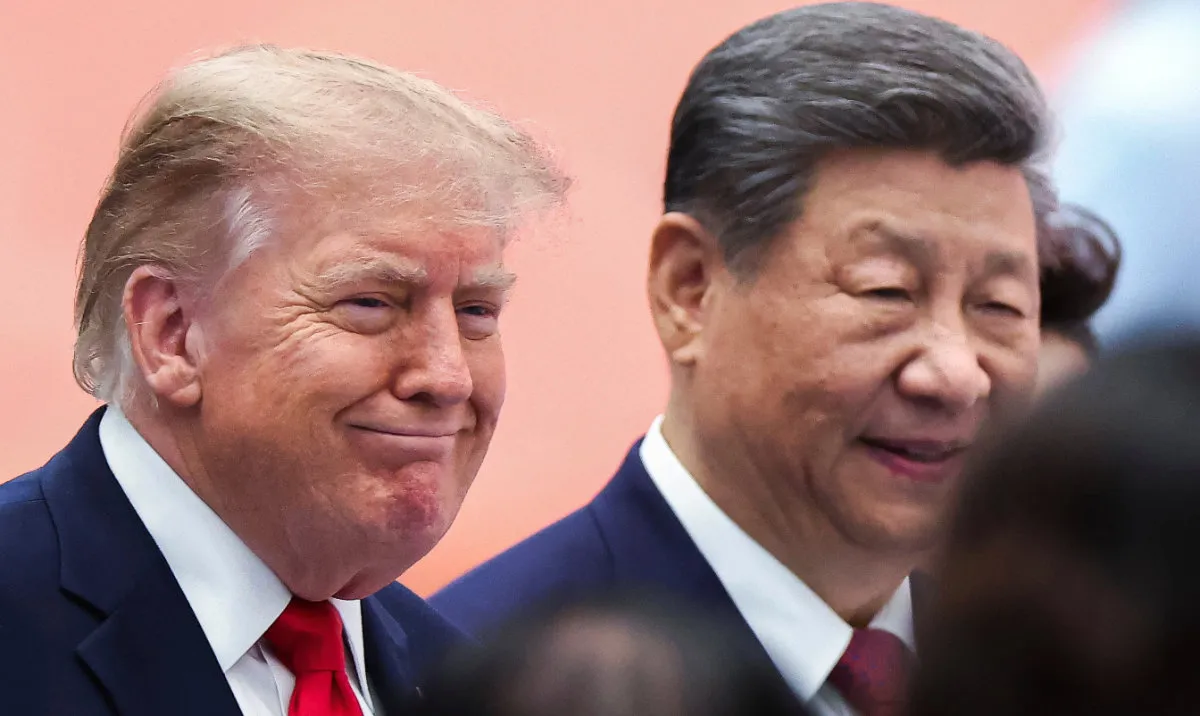
Republican lawmakers led by House Select Committee on China chairman John Moolenaar urged President Donald Trump to press Xi Jinping on two Americans designated as wrongfully detained, Youlin Chen and Min Zin, plus political prisoners, when the leaders meet in Shenzhen on Thursday. The outcome will signal whether leader-level summits still move individual detention cases, a read that matters to any company with staff, capital, or deals exposed to China.
Republican lawmakers on Wednesday urged President Donald Trump to press Chinese leader Xi Jinping to free two Americans designated as wrongfully detained, along with political prisoners, when the two leaders meet in Shenzhen on Thursday. The Americans at the center of the push are Youlin Chen and Min Zin, and advocates for both say they expect Trump to raise their cases directly with Xi. The signatories include John Moolenaar, chairman of the House Select Committee on China, Robert Aderholt, chairman of the House Values Action Team, and Chris Smith. The ask is narrow on paper and enormous in practice: two names, one meeting, and a window that closes the moment the leaders leave the room.
Wrongfully detained is not a rhetorical flourish in Washington. It is a formal US government determination that a citizen is being held unjustly, and it moves a case out of routine consular channels into a specialized apparatus built to negotiate, coordinate sanctions, and keep a family's file in front of senior officials. That distinction matters because the lawmakers are not asking a court to move or a bureaucracy to process paperwork faster. They are asking a president to spend the scarcest currency in statecraft, personal leverage with another head of state, on two specific people.
Summits are the rare moments when that leverage is live. A leader-to-leader meeting compresses months of diplomatic grinding into a single conversation and gives both sides something to trade, which is why the days surrounding a sit-down are when a case that has gone quiet can suddenly move. The timing here is the story: the lawmakers' push landed Wednesday, one day before the Shenzhen meeting. Advocates read that proximity as their best shot at forcing the issue onto the agenda rather than into a communique's footnotes.
The pressure is also coming from inside Trump's own coalition, which raises the domestic cost of a silent summit. Moolenaar chairs the House Select Committee on China, one of the chamber's dedicated China-focused bodies, and the involvement of the Values Action Team points to a faith-and-freedom constituency that treats religious persecution and political imprisonment as core concerns rather than side issues. A president who has the meeting and does not raise the cases invites the charge at home that he held leverage and chose not to use it. That is a cheap attack to make and an expensive one to absorb.
Beijing has historically rejected the wrongful detention framing, treating such cases as matters for its own judicial system and resisting what it characterizes as outside interference. That mismatch is the core obstacle. Washington is asking for a political decision; the answer often comes back in legal language. When releases do happen, they typically arrive as part of a broader package negotiated around a high-level meeting rather than as a concession argued on a single case's merits. Which is exactly why advocates want the ask made at the top, and made now.
For executives with China exposure, the case is a reminder that the operating environment includes people risk, not just tariff and regulatory risk. Detentions, exit bans, and wrongful detention designations sit at the intersection of geopolitics and duty of care, and they rarely announce themselves in advance. Companies with staff traveling to or based in China typically maintain travel-risk protocols, legal escalation paths, and contingency plans for precisely this scenario. Boards are increasingly asking whether those protocols are current, and whether anyone in the C-suite owns the answer.
There is a second-order effect for dealmakers too. Every high-profile detention case adds friction to the assumption that executives can move freely across the world's second-largest economy, and friction of that kind shows up in travel policy, insurance, and the willingness of senior talent to take China-facing roles. It also shapes how companies read the temperature of the relationship: a summit that produces a humanitarian gesture signals a working channel, while a summit that produces nothing signals that the channel is narrower than the market assumed.
Watch three things after Thursday. First, whether Trump raises the cases publicly, which converts a private ask into a public commitment that is harder to walk back. Second, whether Beijing responds with any humanitarian gesture, which would suggest a broader negotiation is live. Third, whether the lawmakers escalate, since a summit ask that goes nowhere usually produces new legislation, new sanctions designations, or both. For Youlin Chen, Min Zin, and their families, the meeting is the moment the pressure either converts into movement or resets to zero.
This story's Key Insights and Take-aways are locked.
Create a free account to unlock Executive Actions for one credit.
Register to UnlockAlways free for Executives Club members. Join the Club
More in Politics

Fifth Circuit Kills Pregnant Workers' Law Over Pandemic Proxy Votes
A procedural ruling, not a policy one, has blocked a federal pregnancy-accommodation law and put every pandemic-era statute in the crosshairs ahead of an expected Supreme Court appeal.

Measles kills a Virginia child under 5, the state's first death of 2026
Virginia's health department confirmed the death but withheld the child's vaccination status, leaving schools, clinics and employers to plan around the one detail that would explain the most.

Former Brazilian President Bolsonaro Hospitalized with Intestinal Obstruction
The health status of the former far-right leader raises immediate questions about political stability and the trajectory of Brazil's conservative movement.