
Leaven is winning over the bakers who built their names on live cultures
A lab-grown leavening shortcut is courting high-end bakers and pizza makers whose reputations rest on painstaking live-culture fermentation, and the consistency math is forcing a rethink.
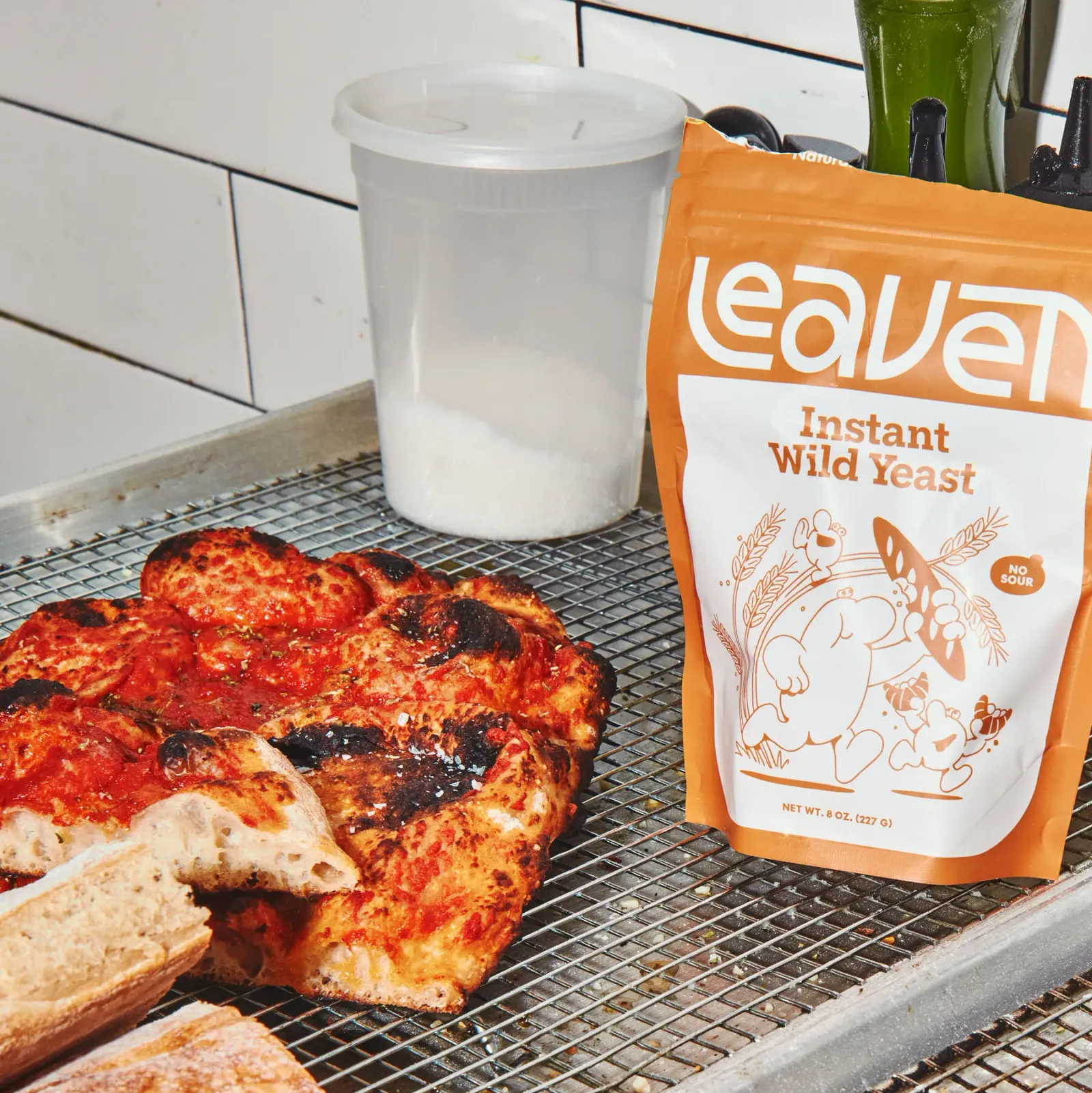
Leaven, a lab-grown leavening shortcut, is winning over high-end bakers and pizza makers who built their reputations on the painstaking use of live cultures. That reversal puts a question mark over the craft premium independent bakeries and pizza brands charge, and over how defensible a live starter really is as a moat.
Leaven, a lab-grown shortcut, is doing something the artisan food world did not see coming: it is winning over the high-end bakers and pizza makers who built their reputations on painstaking live-culture fermentation. These are the people who feed a starter every day, guard it, and explain it to customers like a member of the family. They are also the people now taking the meeting.
That is the reversal at the center of the story. For years, the pitch of the craft baking movement has been that time and biology do something no shortcut can replicate. A sourdough starter is a living colony of wild yeast and bacteria, kept alive by daily feeding and sensitive to temperature, humidity and the particular flour it is fed. Historically, that sensitivity is exactly what bakers sold: a loaf that could only come from this kitchen, this culture, this baker. The idea that the same cohort would adopt a lab-grown substitute is not a small concession. It is a rewrite of the value proposition.
The reason is arithmetic. A live culture is cheap to keep and expensive to run. It demands labor on a schedule that does not care about staffing, it produces variable results from batch to batch, and it generates waste when a dough does not behave. For a single-room bakery, that variability is charm and a story. For an operator trying to open a fourth or fifth location, or to supply wholesale accounts with a consistent product, it is a problem that shows up on the P&L every week. A leavening input grown in a lab and delivered with predictable performance removes a variable that has never been fully controllable.
Pizza makers feel this most acutely. High-end pizza has spent years moving toward naturally leavened dough, longer fermentations and a crust that signals craft. The catch is that a signature dough is the hardest thing to replicate across sites. Every new oven, every new city, every new crew resets the biology. A shortcut that delivers a reliable rise would let a growing brand protect the thing customers actually notice, which is consistency, without asking a new hire to inherit a decade of tacit knowledge.
The counterargument is the moat. For many of these businesses, the live culture is the intellectual property. It cannot be copied by a competitor, it cannot be bought off a shelf, and it is the reason a customer pays a premium for a loaf or a pie. If leavening becomes a commodity input that anyone can order, differentiation has to move somewhere else: flour sourcing, fermentation technique, oven management, service, brand. That is a real strategic shift, and it is not obviously a bad one. It just means the story on the menu and the economics in the back office have to be rebuilt around something other than the starter.
There is also a regulatory layer that tends to arrive late in these conversations. For context, new food ingredients in the United States typically reach the market either through FDA approval as a food additive or under the GRAS framework, in which a substance is deemed generally recognized as safe by qualified experts. In the European Union, novel food rules apply to ingredients without a significant history of consumption. The reporting does not spell out which pathway Leaven took, and that gap matters for anyone planning to put it on a label, because the words available to describe an ingredient are often narrower than the words available to market it.
Zoom out and the pattern is familiar. The story frames the shift in the language of automation, asking whether an automated shortcut is coming for the sourdough starter. That is the same arc that reshaped coffee, beer and cheese: a craft practice gets studied, codified, standardized and sold back to the industry as an input. The craft does not disappear. It gets concentrated in fewer hands, and the premium attached to it gets renegotiated.
For operators, the useful question is not whether lab-grown leavening is good or bad. It is which parts of your process are genuine craft that customers pay for, and which parts are maintenance cost dressed up as craft. Answer that honestly and the Leaven decision makes itself. For everyone else, the stake is simpler: the loaf you pay a premium for may soon be leavened by something grown in a lab, and the price may not move at all.
This story's Key Insights and Take-aways are locked.
Create a free account to unlock Executive Actions for one credit.
Register to UnlockAlways free for Executives Club members. Join the Club
More in Business

S&P 500 Enters Correction, Down 10% From Its High on AI Worries
The index's slide past the 10 percent line is a symbolic verdict on investor mood, and the AI trade that powered the rally is now the thing testing it.

Dow and S&P 500 enter correction as Nasdaq logs worst week since 2020
All 11 S&P 500 sectors fell more than 1% in the same week for the first time since April 2025, a breadth signal that matters more than any single index level.

Chip stocks lose $2.3 trillion in a week, worst run in 25 years
A $2.3 trillion weekly wipeout in semiconductors is forcing every board with an AI story to ask whether it owns a thesis or just a crowded trade.