
Lenovo leaks Legion Go Beam, a cheap handheld as rivals hit $2,000
Leaked images show Lenovo re-entering the budget handheld market, where a decent gaming PC now runs $1,000 to $2,000.
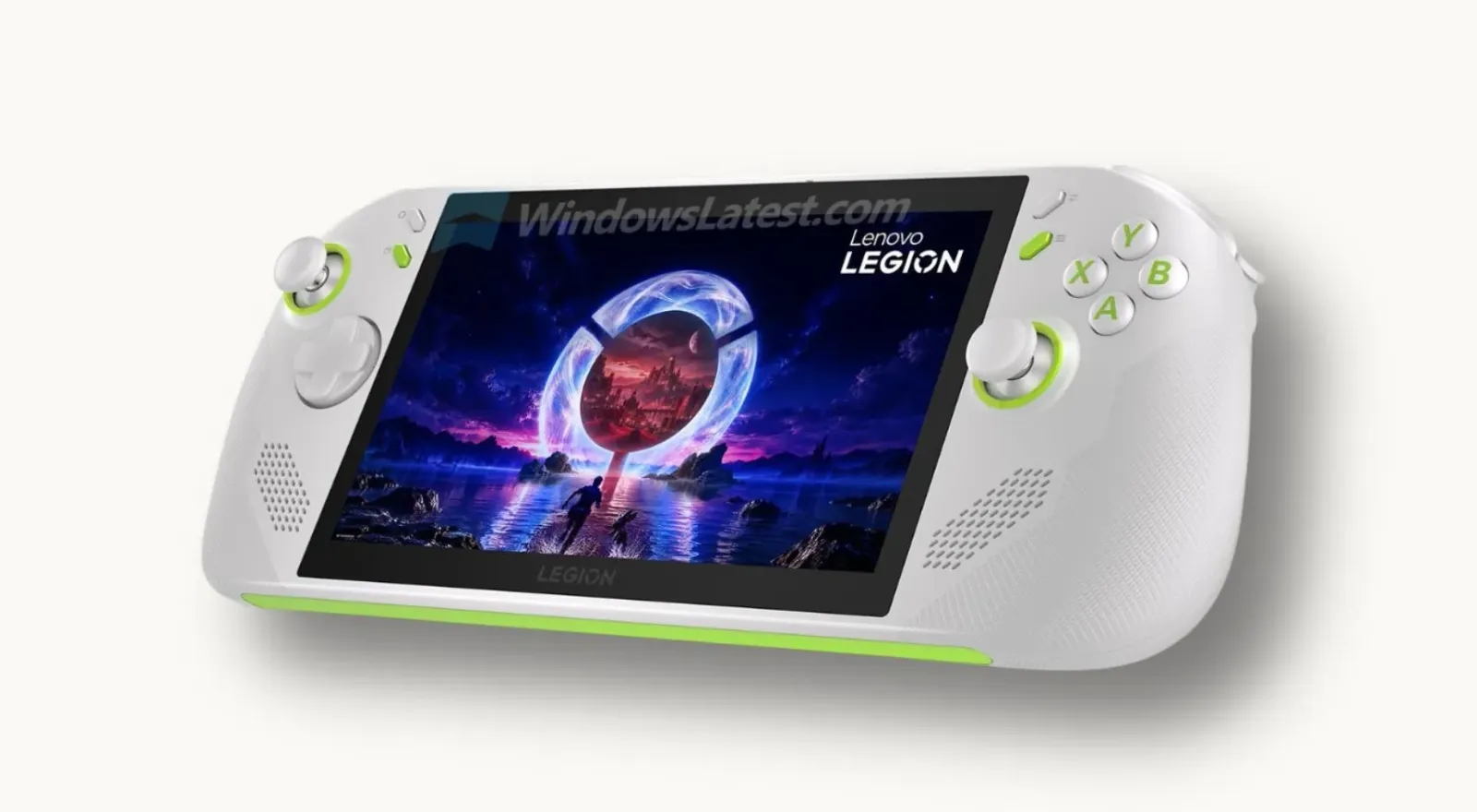
Lenovo appears set to launch the Legion Go Beam, a budget handheld gaming PC leaked by Windows Latest, after hiking prices on its Legion Go 2 and Legion Go S. For hardware executives, the move signals a fresh fight over the category's price floor, where component costs have pushed decent devices toward $1,000 and beyond.
Lenovo looks like it is about to do the thing it spent the last year making look impossible: sell a cheap handheld gaming PC again. Leaked images published by Windows Latest, and reported by The Verge, show a device called the Legion Go Beam, and there is no question it is positioned as a value alternative to even Lenovo's least expensive Legion Go S variant. That matters because the bar for cheap in this category has moved violently. A decent handheld can easily cost $1,000 today, and $2,000 is not out of reach. Lenovo has not confirmed the device, the price, or the specs, so treat the leak as a signal, not a launch.
For a stretch, Lenovo looked like it had quietly exited the budget end of the market. The company hiked prices on the Legion Go 2 and the Legion Go S far higher than other RAM-starved competitors, a move that read as surrender to component costs rather than a bet on volume. When your cheapest model drifts toward four figures, you are no longer competing with consoles or with the entry-level Windows handhelds that built the category. The Beam, if it ships, is Lenovo reversing that retreat.
The images show the same big stippled grips and triggers that made the Legion Go line comfortable to hold, which suggests Lenovo is keeping the ergonomics buyers liked. The tell is on the top edge: one USB-C port instead of two. That is a small line item with a loud meaning. Ports, controllers, and connectors are exactly where hardware teams trim cost when they need a lower bill of materials. Fewer ports typically means fewer components, a simpler board design, and cheaper assembly. Lenovo is not hiding the value positioning; it is engineering for it.
The handheld PC category is young enough that its price floor is still being fought over. Valve's Steam Deck proved there was mass demand for a portable machine that plays PC games, and a wave of Windows-based rivals followed, including Lenovo's own Legion Go line. The pitch was always the same: console-like convenience with a PC library behind it. The problem is that the pitch gets weaker as the price climbs. At a few hundred dollars, a handheld is an impulse buy next to a phone or a console. At $1,000 or $2,000, it is a considered purchase that competes with a gaming laptop, a desktop build, or simply not buying anything.
The source of that climb is memory. The Verge describes rivals as RAM-starved, and that framing is the whole story. Memory pricing has historically been one of the most volatile inputs in consumer hardware, swinging hard enough to reshape product roadmaps within a single cycle. When RAM gets expensive, every handheld maker faces the same math: absorb the cost and lose margin, or pass it on and lose the buyer. Lenovo chose to pass it on with the Go 2 and Go S. A cheaper Beam suggests the company now thinks it can build a device that dodges the worst of that squeeze, or that it is willing to take a thinner margin to hold the shelf space.
Value models are not just about volume. They are about ecosystem. A cheaper handheld pulls new buyers into a platform, and those buyers then spend on games, accessories, and the next upgrade. That is the logic consoles have run for decades. It is also why a budget Lenovo device is a bigger threat to rivals than a halo product. If Lenovo can hit a price that undercuts the field while keeping the grips and triggers that made the Legion Go feel premium, it forces every other Windows handheld maker to answer on price, not just on specs. And price wars in hardware compress margins for everyone, including the company that starts them.
None of this is confirmed. The leak is images, not a spec sheet, and Lenovo has not announced a launch date, a price, or availability. The Beam name itself comes from the leak. Readers should hold two questions: what chip is inside, and what does it cost. A cheap handheld with a weak chip is a discount, not a value. A cheap handheld with a competent chip is a category reset. The second-order question is whether Lenovo can sustain the price if memory costs move again, because a value product that gets repriced upward in six months burns the trust it was built to earn.
For anyone building or buying in consumer hardware, the lesson is about positioning under input-cost pressure. Lenovo's retreat from the low end was rational when components were scarce and expensive. Its apparent return is a bet that the low end is where the volume, and the future customers, actually live. If the Beam lands at a genuinely aggressive price, expect competitors to follow with stripped-down SKUs of their own, and expect the definition of a decent handheld to shift back down. If it lands expensive, the leak becomes a footnote and the $1,000 floor holds. Either way, the next few months of pricing will tell you more about the health of this category than any spec sheet.
This story's Key Insights and Take-aways are locked.
Create a free account to unlock Executive Actions for one credit.
Register to UnlockAlways free for Executives Club members. Join the Club
More in Technology

Anthropic mathematician claims Claude helped crack the Riemann hypothesis
If the proof holds, AI has toppled math's most famous open problem; if it does not, it is a case study in announcing breakthroughs before anyone verifies them.

AI's $4 Trillion Wipeout Erases Nasdaq's Gains for the Year
A brutal week took roughly $4 trillion off the AI sector and left the Nasdaq flat for the year, and the damage ran the full length of the supply chain.

Anthropic mathematician says AI proved the Riemann hypothesis. Verification will take time.
A single unverified claim from inside Anthropic now sits against more than 160 years of open mathematics, and the gap between asserting a proof and surviving peer review is the entire story.