
Less Than a Month to Fund Government, and Democrats Want to Talk Iran
With neither party holding a strategy and Republicans slow on full-year spending bills, the funding deadline is turning into a referendum on the administration's Iran policy.
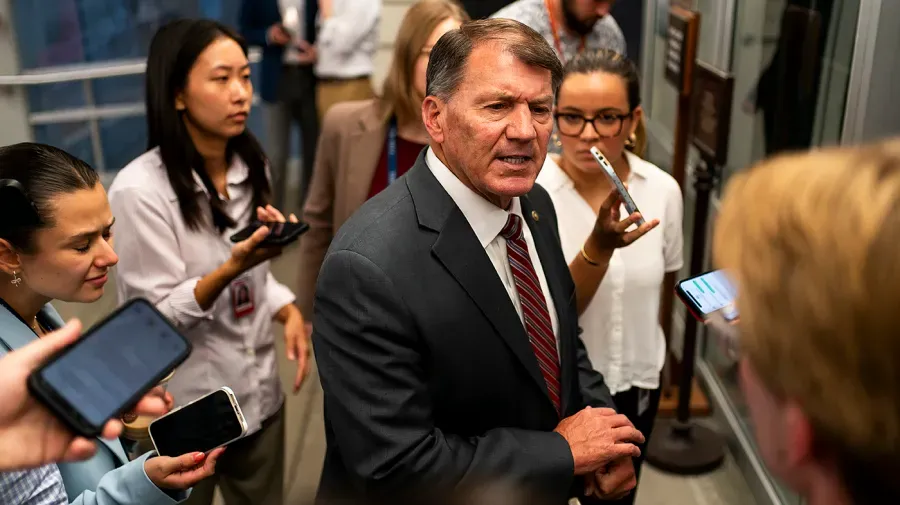
Congress has less than a month to fund the government, neither party has coalesced around a strategy, and Democrats are targeting President Trump's Iran war while Republicans, who hold the majority until January, have moved slowly on full-year spending bills. The consequence for decision-makers: a compressed calendar raises the odds of a stopgap or a funding lapse, putting federal contractors, regulated industries and anyone waiting on federal approvals directly in the path.
Congress has less than a month to fund the government, and neither party has settled on a battle plan. The shape of the fight, per The Hill: Democrats are targeting President Trump's Iran war as their central line of attack, while Republicans, who still hold the majority until January, have moved slowly on full-year spending bills and now have only a handful of weeks to find a way through. That combination, a hard deadline, an unresolved strategy on both sides, and a foreign policy fight injected into a must-pass bill, is what separates this round from the routine brinkmanship Washington has practiced for years.
Start with the machinery. Federal agencies are funded through annual appropriations bills, and Congress is supposed to pass them before the fiscal year begins. It rarely does. When the calendar runs short, lawmakers typically fall back on a continuing resolution, a stopgap that keeps agencies running at prior levels, or a larger omnibus package that bundles the bills together. If neither passes before the deadline, agencies shut down: non-essential functions stop, federal employees are furloughed, and the political blame game starts immediately. The Hill's reporting indicates the slow Republican pace on full-year bills has already narrowed the options, which pushes the debate toward a stopgap or a year-end package rather than a tidy, on-time set of individual bills.
The Iran angle is where this gets interesting. A funding bill is one of the few pieces of legislation that has to move, which makes it one of the few moments when the minority party holds real leverage. By targeting the administration's Iran policy, Democrats are converting a spending deadline into a venue for oversight and a public argument about the war. Expect the conflict to surface less as a line item than as a frame: oversight demands and messaging that force Republicans to defend the administration's foreign policy on the same day they are asking for votes to keep the government open.
Republicans' problem is arithmetic and time. They keep the majority until January, which means the members voting on this package are not necessarily the ones who will own the next round. That creates a familiar temptation: punt the hard choices into a stopgap, avoid a shutdown before the holidays, and let the next Congress wrestle with the top-line numbers. The risk is that punting rarely lowers the temperature. Stopgaps tend to stack up, and each one pushes the same unresolved arguments, including the Iran fight, closer to the next deadline.
For operators and investors, the practical question is exposure. Historically, shutdowns have been short and their macro footprint modest, but the effects are lumpy and specific. Federal contractors stop getting paid on schedule. Agencies slow permits, inspections, grants and loan processing. Economic data releases can be delayed, which means markets trade on rumor instead of numbers. Agencies typically publish contingency plans weeks ahead, and the pressure lands on small vendors and workers first, long before any headline GDP number moves.
A fight framed around Iran also pulls defense spending into the frame. Military operations, sustainment and any related supplemental funding tend to sit near the center of these debates, and oversight provisions can become as contested as dollars. For defense primes and their subcontractors, the difference between a clean appropriations bill and a long stopgap is the difference between new starts moving forward and programs sitting at prior-year levels for months. That is the quiet cost of a funding fight that never quite resolves, and it compounds every time the deadline slips.
What to watch over the next few weeks: whether leadership introduces a stopgap, how long it runs, and whether the Iran argument stays rhetorical or becomes a floor fight over amendments. The Hill's reporting makes clear that neither party has coalesced around a strategy, which means the next move belongs to whoever blinks last. For executives in regulated and federally dependent industries, the sensible posture is to model a short lapse, confirm which contracts and approvals are exposed, and resist assuming the deadline slips. For everyone else, the takeaway is simpler: the fight over Iran is now a fight over the federal budget, and the budget is the one bill that always comes due.
This story's Key Insights and Take-aways are locked.
Create a free account to unlock Executive Actions for one credit.
Register to UnlockAlways free for Executives Club members. Join the Club
More in Politics

Fifth Circuit Kills Pregnant Workers' Law Over Pandemic Proxy Votes
A procedural ruling, not a policy one, has blocked a federal pregnancy-accommodation law and put every pandemic-era statute in the crosshairs ahead of an expected Supreme Court appeal.

Measles kills a Virginia child under 5, the state's first death of 2026
Virginia's health department confirmed the death but withheld the child's vaccination status, leaving schools, clinics and employers to plan around the one detail that would explain the most.

Former Brazilian President Bolsonaro Hospitalized with Intestinal Obstruction
The health status of the former far-right leader raises immediate questions about political stability and the trajectory of Brazil's conservative movement.