
Longtime Etsy Sellers Are Shuttering Shops Over AI Policy. Etsy Won't Budge.
Etsy is defending terms that let it train AI on seller listings, and its veterans are walking; here is what the standoff signals for every platform built on other people's work.
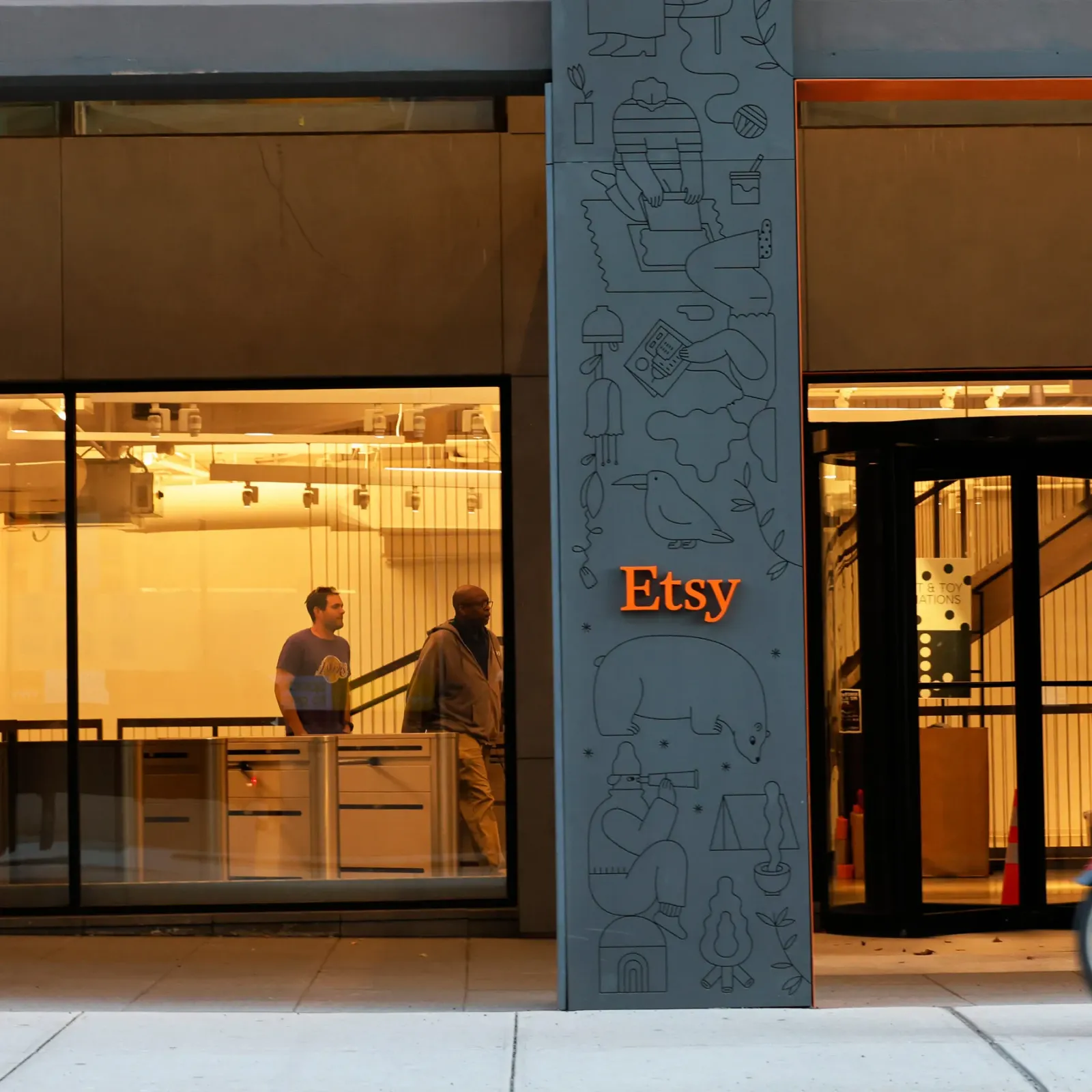
Etsy is standing behind a policy that allows the marketplace to use seller work to train artificial intelligence, even as numerous longtime users close their shops in protest. The standoff is an early, clean test of whether the creative supply that makes a marketplace valuable will keep supplying it under broad AI licensing terms.
Etsy sellers are shutting their shops, and the trigger is not fees, shipping costs, or a demand slump. It is a policy. Numerous longtime users of the online marketplace have left because they do not want their work training artificial intelligence, and Etsy has defended the policy rather than reverse it. Two sentences, one standoff: sellers are voting with their storefronts, and the company is holding its ground. This is the first clean test of whether the creative supply that makes a marketplace worth visiting will tolerate having its output treated as free raw material for AI models.
Etsy's entire pitch, for context, is that it is not a warehouse. It is a marketplace built on handmade, vintage, and independently made goods, where the person who made the thing is usually the person you buy it from. That matters here because the sellers walking away are described as longtime users, not fly-by-night dropshippers. In marketplace economics, tenure is the asset: long-standing shops carry review histories, repeat customers, and catalog depth that a new seller cannot simply replicate. When veterans leave, they take trust with them, and trust is the reason buyers show up in the first place.
Here is the plain-English version of the fight. Generative AI systems learn by ingesting enormous volumes of images and text and absorbing the patterns inside them. Few datasets are better suited to teaching a model what a product looks like than a marketplace full of clean product photography, with each image paired to a written description and a title. For a seller, the photo of a hand-thrown mug or a hand-stitched jacket is not marketing garnish. It is the work itself, often the single most expensive thing they produce. Which is why the objection is not abstract technophobia. It is a claim about ownership: my photographs and my words are my inventory, and I did not agree to donate them.
Legally, the ground is murky in a way that has historically favored platforms. Copyright generally protects human-authored creative work, including original photographs and product descriptions, but the terms of service a seller clicks through govern what the platform may do with that content. Historically, those terms were written to cover displaying listings, running ads, and promoting shops. As AI training became a business requirement, platforms have had to choose whether to ask permission, offer an opt-out, or simply take a broad license and explain the reasoning later. Etsy chose to defend its policy, which places it on the broad-license side of that line, and its sellers appear to be answering accordingly.
The exit math for a seller is ugly but not irrational. Leaving means giving up a built-in audience, a search algorithm that already ranks them, and years of accumulated reviews. Most small operators cannot rebuild that on their own website overnight. But staying means accepting terms they say they never agreed to. For a craft seller whose entire identity is authorship, that trade can be worth the hit, and enough sellers making that calculation at once becomes a supply problem, not a public relations problem. Marketplaces do not lose buyers first. They lose the inventory that made buyers show up.
Platforms that take this position typically make a few arguments: that broad content licenses are standard industry practice, that AI improves search, discovery, and fraud detection, and that an opt-out regime would leave a model trained on a biased, self-selected slice of the catalog. Those are real arguments. They are also arguments that treat consent as a compliance checkbox rather than a product feature. The risk for Etsy is specific. The same authenticity that differentiates it from mass-market competitors is the thing its sellers now accuse it of diluting. A marketplace that cannot promise its goods were made by humans has a harder time promising anything at all.
The second-order effects are where this gets expensive. Creators across platforms are watching to see whether walking out actually costs a company anything, and a visible Etsy retreat would set a precedent that organized seller pressure beats blanket terms. A visible Etsy hold would set the opposite precedent. Regulators in multiple jurisdictions are circling the same territory from a different direction, weighing transparency and consent rules for how creative and personal data feeds AI systems. And competitors that host creative supply now have a cheap differentiator sitting on the table: an explicit, seller-friendly AI clause. Expect that to become a recruiting pitch.
What to watch now is whether the departures are a wave or a warning shot, and whether Etsy adjusts the terms, adds an opt-out, or simply absorbs the churn. For executives at any company sitting on a mountain of user-generated content, the lesson is blunter than the headlines suggest. Your terms of service are now a brand document, read by the people who supply your inventory, and they will price your ambiguity into their decision to stay. Boards should assume that any AI clause written before this fight will be re-litigated after it. The sellers have made their position clear. Etsy has made its own.
This story's Key Insights and Take-aways are locked.
Create a free account to unlock Executive Actions for one credit.
Register to UnlockAlways free for Executives Club members. Join the Club
More in Business

S&P 500 Enters Correction, Down 10% From Its High on AI Worries
The index's slide past the 10 percent line is a symbolic verdict on investor mood, and the AI trade that powered the rally is now the thing testing it.

Dow and S&P 500 enter correction as Nasdaq logs worst week since 2020
All 11 S&P 500 sectors fell more than 1% in the same week for the first time since April 2025, a breadth signal that matters more than any single index level.

Chip stocks lose $2.3 trillion in a week, worst run in 25 years
A $2.3 trillion weekly wipeout in semiconductors is forcing every board with an AI story to ask whether it owns a thesis or just a crowded trade.